


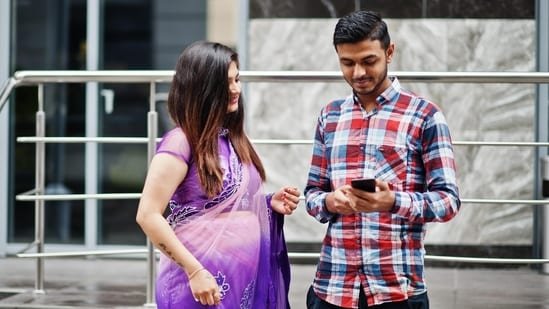
In a society where the traditional ‘fixed script’ often prioritises family expansion after marriage, a growing number of Indian couples are opting for a different path. A two-month-old discussion on the r/AskIndia subreddit has shed light on the lived reality of DINK (dual-income, no-kids) couples, with one couple sharing: ‘Being DINKs in India is oddly… peaceful?’ Also read | ₹81,600: ‘Most realistic expenses'”>Bengaluru DINK couple breaks down monthly budget of ₹81,600: ‘Most realistic expenses’
Living ‘deliberately, not by default’
The conversation was sparked by a Redditor’s post clarifying that they and their partner are not ‘anti-kids’, but rather ‘very intentional’ about their decision. The original post highlighted several ‘honest upsides’ of the child-free lifestyle in a high-pressure environment like India.
“What surprised me is how quietly positive this lifestyle feels, especially in an Indian context where life usually follows a fixed script,” the Redditor wrote. The post cited ‘financial breathing room without guilt’ and the ‘freedom to take risks with career, health, and relocation’ as primary benefits. The Redditor shared that their life is now defined by ‘decisions driven by choice, not deadlines,’ leading to ‘less constant anxiety about doing everything right’.
Navigating social skepticism
Choosing to remain child-free in India often invites unsolicited advice rather than direct hostility. The Redditor noted that reactions from family and peers are rarely ‘outright criticism’ but instead take the form of persistent tropes: from ‘You’ll change your mind’ and ‘But who will take care of you later?‘ to ‘Life feels empty without kids, no?’ To these questions, the Reddit user offered a grounded perspective: “Maybe. Maybe not. But right now, it feels like we’re living deliberately, not by default.”
Career mobility and emotional safety nets
For many, the DINK lifestyle provides a critical safety net in an increasingly volatile job market. One Redditor commented on the post and shared how being child-free allowed them to prioritise their mental health over a paycheck.
“Being a DINK allowed me to leave my job when things got bad for me,” the person shared, adding, “I don’t think that would’ve been possible if I had a kid. Having a child could have made me happy, but the stress that comes along would have definitely made my situation much worse.”
The Redditor also noted the importance of total certainty before entering parenthood: “I believe one should only have a child if they are 100 percent convinced that they want one.” They observed that while some manage parenthood ‘effortlessly’, others who weren’t entirely sure ‘love their kids immensely but also have some regrets if not a lot’.
Financial stability in a tough economy
The sentiment is shared by some Indians living abroad, who find that the child-free path offers a way to navigate global economic pressures. One 35-year-old scientist, who was clear about her stance a decade ago, described a life of simple fulfilment. “The economy is terrible, but without kids it’s manageable,” she said, adding, “We just bought a house, have two cats and grow our own fruit and veg. I didn’t have a great childhood, and I am finally happy to live freely.”
While Indian census data traditionally focuses on household size, global and regional reports show a shifting tide in how couples view wealth and family. A 2021 study published in PLOS One found that childfree adults are just as satisfied with their lives as parents. As per a 2024 Forbes report, ‘the median net worth of childless couples reached $399,000 in 2022, over $150,000 more than that of couples with children’, according to the US-based Federal Reserve’s Survey of Consumer Finances.
As for the DINK couples of India, the choice isn’t about rejecting family — it’s about redefining what a fulfilling life looks like in the 21st century. As one Reddit user poignantly summarised: “Oftentimes people try to convince others because they are not secure in their own choices. Children are so tricky.”
Note to readers: This report is based on user-generated content from social media. HT.com has not independently verified the claims and does not endorse them.
This article is for informational purposes only.
