


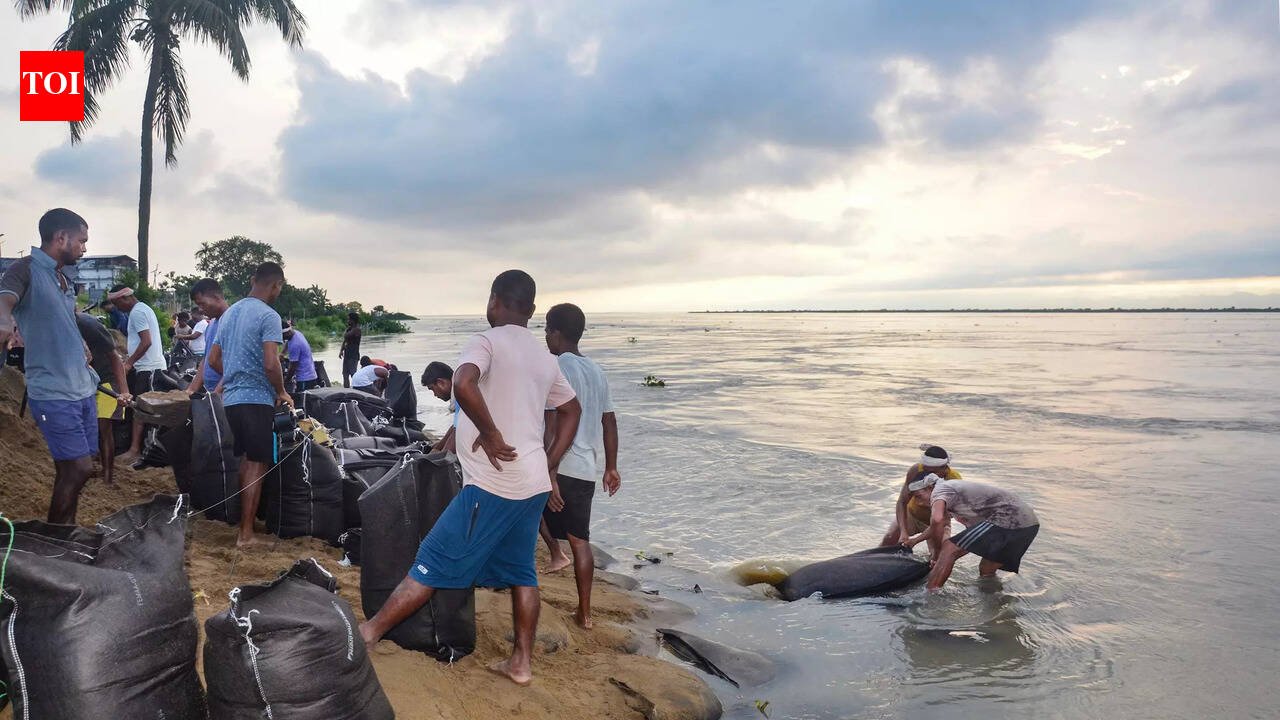
Dibrugarh: With the monsoon season just two months away, the Dibrugarh district administration has rolled out an aggressive roadmap for flood mitigation.On Monday, district commissioner Bikram Kairi chaired a high-level review meeting at the DC’s conference hall, directing all departments to transition into an “active readiness” mode. The meeting, organised by the District Disaster Management Authority (DDMA), comes as the region prepares for the seasonal rains, typically expected in the first week of June. Given Dibrugarh’s historical vulnerability to the Brahmaputra’s rising levels, the administration is focusing on a pre-emptive strategy to minimise displacement and damage.The meeting was attended by the district’s administrative machinery officials, including co-district commissioners, the CEO of the zila parishad, revenue circle officers and assistant commissioners. Key frontline agencies such as the state disaster response force (SDRF) and civil defence were also present.Addressing the gathering, DC Kairi stressed that the next 60 days are crucial for fortifying the district’s defences. He said preparedness is not just about having a plan on paper but involves the physical readiness of embankments, the availability of relief materials and the responsiveness of first responders. He added that the administration aims for seamless coordination where no department operates in isolation.“Our primary goal is to minimise the impact on life and property. Every department must treat the next eight weeks as a critical period for infrastructure checks and logistical planning. We cannot wait for the first wave of floods to test our systems — they must be robust well in advance,” the district commissioner said.The DC reviewed the status of critical infrastructure and issued specific directives for the coming weeks. The water resources department has been tasked with immediate inspection of all embankments, ensuring that any weak points or breaches are reinforced before May. Simultaneously, circle officers were directed to identify high-ground areas for relief camps and ensure these locations are equipped with functional sanitation and clean water sources. Departments were also instructed to stockpile essential food items, medicines and livestock fodder in areas that traditionally become cut off during peak floods.
