
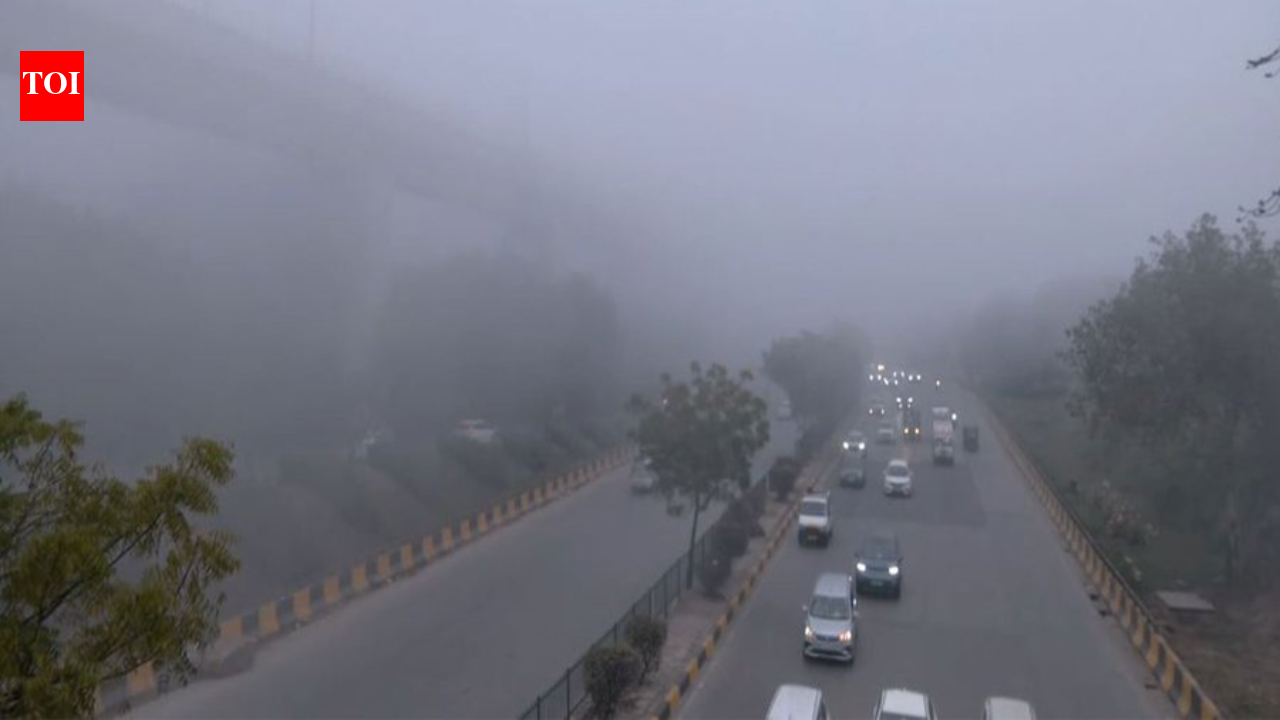
NEW DELHI: Several parts of the national capital experienced dense fog on Tuesday morning, with the Air Quality Index (AQI) at 256 at 7 am, placing air quality in the poor category, according to the Central Pollution Control Board (CPCB).Monitoring stations across the city reported AQI levels ranging from poor to very poor. Ashok Vihar recorded 287, Bawana 239, Burari 234, Anand Vihar 334 and Chandni Chowk 324. Dwarka Sector 8 reported 293, ITO 248, while Mundka stood at 297 and Wazirpur 316.Other areas included Okhla Phase-2 at 310, Rohini 281, Punjabi Bagh 295, and RK Puram 300. Lower readings were recorded in Narela (168) and Alipur (212), according to the CPCB.According to the India Meteorological Department (IMD), visibility dropped to 100 metres at both Palam and Safdarjung in the early hours.As per AQI classification, a reading between 0 and 50 is considered ‘good’, 51 to 100 ‘satisfactory’, 101 to 200 ‘moderate’, 201 to 300 ‘poor’, 301 to 400 ‘very poor’, and 401 to 500 ‘severe’.The temperature in Delhi was around 12 degrees Celsius at 7 am, the India Meteorological Department (IMD) reported.Meanwhile, dense fog reduced visibility in NCR, causing disruption to traffic and slow commutes for morning travellers.Meanwhile, on Sunday, Leader of the Opposition in the Lok Sabha, Rahul Gandhi, called for a parliamentary debate on air pollution and urged the government to ensure “enough money” in the Union Budget to tackle the issue.In a Facebook post, Gandhi read messages from citizens, and in a self-made video, he urged Prime Minister Narendra Modi to declare air pollution a national health emergency.In the video, he said, “It is about time the government allows a discussion in Parliament and the Prime Minister should declare pollution a national health emergency… We need to come together and develop a serious plan… We need to make sure there is enough money in the budget to tackle this problem.”Sharing the post, the Congress leader wrote, “Over the last few days, I’ve read thousands of messages from Indians about what pollution is doing to their lives. What stood out was fear – fear for children, for parents, for tomorrow – felt by families in cities across India. Pollution is no longer just an environmental issue; it is a national health emergency. Parliament must discuss it. The government must act. And this Budget must put real resources behind real solutions. Indians are not asking for reports or rhetoric. They are asking for clean air.”The Budget session will span 30 sittings over 65 days, concluding on April 2. The two Houses will adjourn for a recess on February 13 and reconvene on March 9, allowing the Standing Committees to examine the Demands for Grants of various ministries and departments.(With Agency Inputs)
