
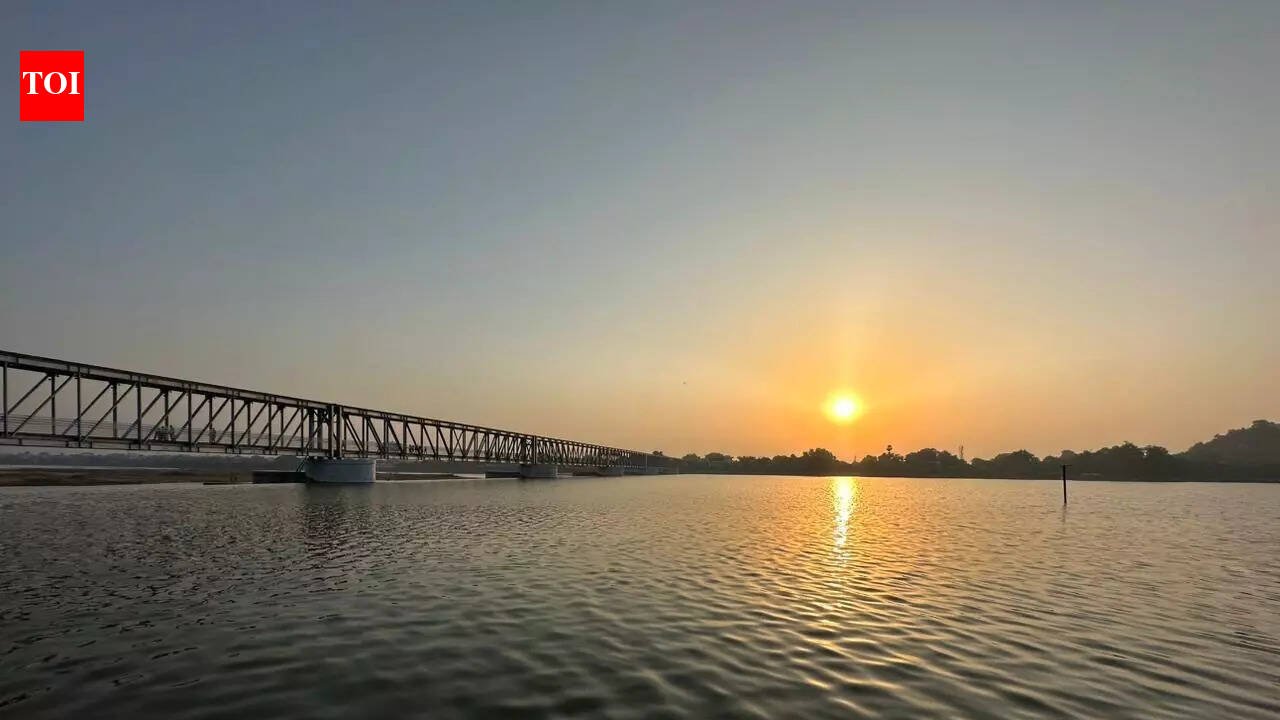
Patna: A new study by researchers at the Central University of South Bihar (CUSB) has identified key priority zones for rejuvenating the Falgu river basin, offering scientific insights that blend modern analytical tools with traditional ecological practices to revive the culturally significant river in Gaya.Published in the latest edition of the international journal Spatial Information Research, the findings hold major significance given the exceptional religious and cultural value of the Falgu River, a sacred site for year-round Hindu ‘Pinddaan’ rituals and home to prominent temples such as Vishnupad and Mangla Gauri—one of the 18 Maha Shaktipeeths—despite the river’s increasingly drying channel.The study, conducted by Prafull Singh and Bibhukalyan Mohapatra of CUSB’s geology department, notes that sustainable river rejuvenation cannot rely solely on engineering measures or policy mandates. Instead, it calls for a balanced integration of traditional ecological knowledge, community participation, and contemporary scientific and technological tools.According to the researchers, such a multidimensional approach offers strong potential for restoring the ecological health of the Falgu and strengthening the social systems linked to it.Singh explained that the Falgu originates from the confluence of the Lilajan and Mohana rivers near Bodh Gaya, with their headwaters in the Simaria highlands of Chatra district on the Hazaribagh Plateau. The basin drains a substantial portion of the Chotanagpur Plateau and spans Jharkhand and Bihar.The research team adopted an integrated, application-oriented methodology combining field observations, river morphology, geospatial analysis, and machine-learning techniques to identify critical sub-watersheds requiring urgent intervention, particularly in degraded upper catchments. The study delineates priority watersheds with high potential to support river-flow restoration and basin-wide rejuvenation, Singh said.He added that these findings should be further strengthened through detailed hydrogeological, geomorphological, sedimentological and geophysical investigations to develop a comprehensive and implementable strategy for restoring the Falgu River basin and sustaining its flow.Singh also noted that the research outcomes align closely with national initiatives such as the National Mission for Clean Ganga (NMCG) and the Atal Bhujal Yojana (ABY) under the Union Ministry of Jal Shakti, and can directly support evidence-based river-basin management and policy implementation.
