


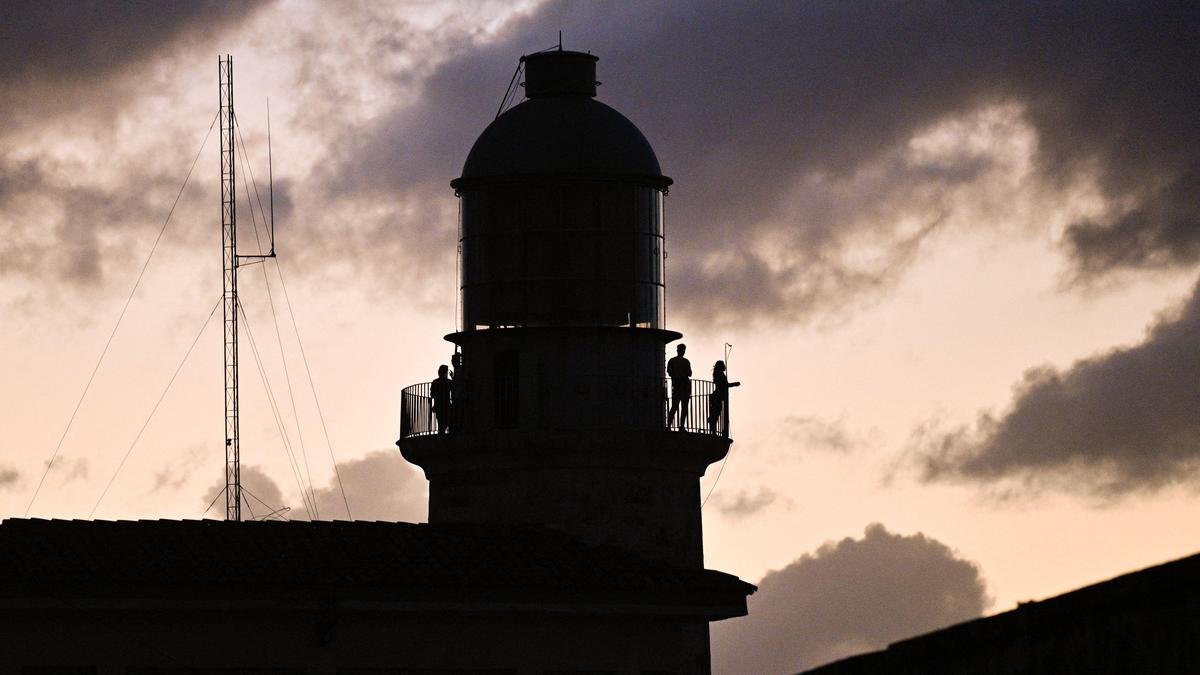
People stand on a balcony during a nationwide blackout in Havana on March 21, 2026.
| Photo Credit: AFP
A power outage struck the entire island of Cuba on Saturday (March 21, 2026), the Energy Ministry said, in the second nationwide blackout in less than a week as its grid struggles under a U.S. oil blockade.
Buildings began to lose power in Havana before nightfall, shortly before 6:30 pm (2230 GMT) and just five days after the previous one plunged the country into darkness.
A “total disconnection” of the national electricity system took place, the Energy Ministry said in a post on X, adding that work had begun to restore power.
Cuba’s latest blackout underscores deepening economic crisis | In pictures
City lights during a blackout, leaving around 10 million people without power amid a U.S.-imposed oil blockade, in Havana on March 16, 2026. While Cuba produces 40% of its petroleum and has been generating its own power, it hasn’t been sufficient to meet demand as its electric grid continues to crumble.
People gather on a street during a blackout as Cuba’s, in Havana on March 16, 2026. President Miguel Díaz-Canel on Friday (March 13) said the island had not received oil shipments in three months and was operating on solar power, natural gas and thermoelectric plants.
People walk on a street during a blackout in Havana on March 16, 2026. A massive outage over a week ago affected the island’s west, leaving millions without power. Another major blackout affected western Cuba in early December.
Street vendors chat on the Malecón during a blackout in Havana on March 16, 2026. This was the third major blackout in Cuba over the past four months.
People walk on the street during a blackout in Havana on March 16, 2026. President Miguel Díaz-Canel on Friday (March 13) said that the government has had to postpone surgeries for tens of thousands of people.
Gladys Valdes, 76, prepares coffee during the blackout, in Havana on March 16, 2026. “Cuba right now is in very bad shape,” President Donald Trump said, a day after Cuba’s third nationwide blackout in four months as the socialist island’s economy suffers under U.S. sanctions.
People sit on the side of a street during a blackout. The government also has blamed its woes on a U.S. energy blockade after President Donald Trump in January warned of tariffs on any country that sells or provides oil to Cuba.
A person stands on a balcony during a blackout as Cuba’s national electric grid collapsed, in Havana on March 16, 2026. The Trump administration is demanding that Cuba release political prisoners and move toward political and economic liberalisation in return for a lifting of sanctions.
A motortaxi drives on a street during a blackout, in Havana on March 16, 2026. William LeoGrande, a professor at American University who has tracked Cuba for years, said the country’s energy grid hasn’t been maintained properly and its infrastructure is “way past its normal useful life.”
A man uses a flashlight during a blackout as Cuba’s, in Havana on March 16, 2026. State-owned media reported that by late on March 16, 2026, power had been restored to 5% of residents in the capital, Havana, representing some 42,000 customers.
A view of Havana city with the National Capitol building in the background, as Cuba reconnected its electrical grid across much of the island, according to the Energy and Mines Ministry, in Havana, Cuba on March 17, 2026. Cuba’s Ministry of Energy and Mines said on X that the island had restored the electrical system in the western town of Pinar del Rio and the southeastern province of Holguin and that some “microsystems” were beginning to operate in various territories.
1/3
The blackout occurred as an international aid convoy began to arrive in Havana this week, bringing sorely-needed medical supplies, food, water and solar panels to the island.
Cuba’s ageing electricity generation system is in shambles, with daily power outages of up to 20 hours the norm in parts of the island, which lacks the fuel needed to generate power.
But since the January 3 US ouster of Cuba’s top ally, Nicolas Maduro of Venezuela, the island’s economy has been hammered further as President Donald Trump maintains a de facto oil blockade.
No oil has been imported to the island since January 9, hitting the power sector while also forcing airlines to curtail flights to the island, a blow to the all-important tourism sector.
The crisis in the country of 9.6 million people comes as Trump has made no secret of his desire to see regime change in Havana.
The blackouts as well as regular shortages of food, medicine and other basics are spurring frustrations, with demonstrators vandalizing a provincial office of the Cuban Communist Party last weekend.
lt/jgc
Published – March 22, 2026 06:50 am IST
