
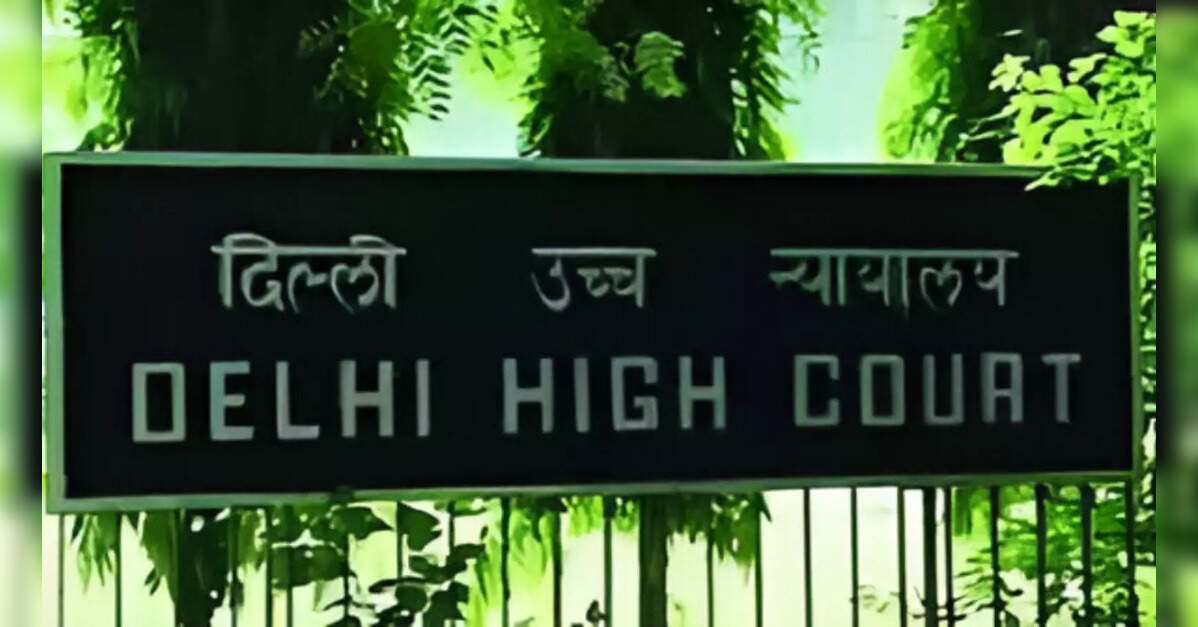
New Delhi, Criticism of the government, as long as it does not incite violence, was completely permitted in a democracy and cannot amount to “disaffection against India” to justify invoking UAPA, Foundation for Media Professionals on Thursday contended before the Delhi High Court.
The high court on Thursday began hearing a challenge to certain provisions of the Unlawful Activities (Prevention) Act.
Senior advocate Arvind Data appeared on behalf of the petitioner association before a bench of Chief Justice D K Upadhyaya and Justice Tejas Karia, and contended that the “vague” nature of “disaffection” in the UAPA put citizens, especially journalists, in a “boundless sea of uncertainty” and was therefore arbitrary.
Datar said the petition assailed UAPA’s section 2(1)(o)(iii) on “unlawful activity” which “causes or intended to cause disaffection against India” as well as the blanket prohibition on anticipatory bail under section 43D(4).
The petition, he added, also challenged the validity of proviso to section 43D (5) as it allowed a trial court to rely on a police case diary, a document having no evidentiary value, to deny bail.
“We are more specifically concerned as journalists … So basically, journalist articles, which criticise a particular policy, unfortunately have invoked imprisonment in our cases, and we have a complete table of journalists who are in jail. Some have been granted bail on bail, but some are still incarcerated … for criticising policies,” said the senior counsel.
“At the heart of it is (that) a journalist is under the constant fear that any kind of criticism would amount to disaffection towards India. I may criticise a mining policy. I may criticise any particular policy. It may show India in a bad light. But as long as they are not inciting violence (or) promoting violence, it is not unlawful. That’s democracy,” he added.
Underlining a citizen’s freedom of speech under the Constitution, Datar submitted that “disaffection”, being “undefined”, “unexplained” and “without any boundary”, was capable of the “grossest” abuse.
“It also, in fact, has been misused extensively,” he remarked, adding that the provision seriously curtailed Article 19(1)(a) that guarantees freedom of speech by punishing the unlawful activity of causing or intending to cause “disaffection towards India” with imprisonment of up to seven years, effectively without any bail or anticipatory bail.
“Disaffection puts the citizen in a boundless sea of uncertainty. What I think is disaffection may not be thought so by somebody else,” Datar stated.
The lawyer argued that permitting a trial court, in matters of bail, to form a prima facie opinion on the accusations on the basis of a police case diary was contrary to the law.
The law is that the case diary cannot be relied upon as it was not evidence of any fact and can only be used to contradict the investigating agency, he added.
“Many journalists are in jail for 600-700 days because they (the trial courts) see the case diary and say yes (there is a prima facie case),” he said.
Datar also said the petition challenged UAPA provisions on notifying terrorist outfits.
The court listed the matter for further hearing on March 17.
The court was dealing with petitions transferred from the Supreme Court, as well as the petition filed before it by the Foundation for Media Professionals against the UAPA provision, which criminalises membership of an unlawful association.
On February 4, 2025, the top court sent to the high court petitions by Sajal Awasthi, Association for Protection of Civil Rights (APCR) and Amitabha Pande, which challenge the amendments in UAPA provisions empowering the state to designate individuals as terrorists and seize properties.
The pleas also challenge provisions to arrest and restricted bail under the UAPA. PTI
