


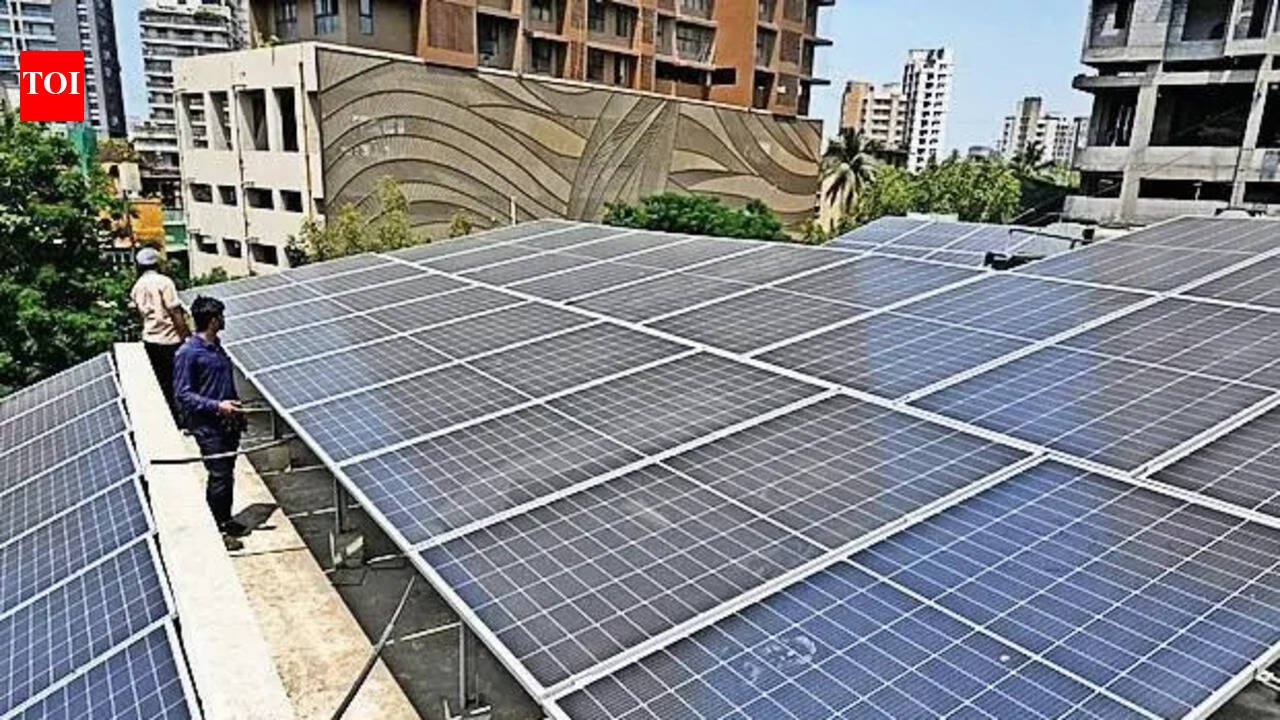
In the 1980s, Nagesh Nayak, owner of Cafe Mysore in Matunga, rigged up a contraption more commonly found on factory floors. He installed a gas-powered boiler to pipe pressurised steam to his cooking range. As the steam condensed back into water in these vessels, it cooked food faster and more evenly.It wasn’t fuel scarcity that motivated Nagesh, an electrical engineer-turned-restaurateur, to innovate. Dagadi kolsa, or rock coal, that fired his burners was plentiful. He simply wanted to reduce his use of the smoky, polluting fuel.Forty years later, his son Naresh has raised the bar on clean cooking all the way to the roof. Solar panels on the terrace generate energy that feeds into the grid, which in turn helps discount his bills. Indirectly, “solar energy powers about 50% of our cooking,” says Naresh. Piped natural gas takes care of the rest, including more energy-intensive processes such as deep-frying. “Eventually,” he says, “nearly everything will run on electricity.“According to the Institute for Energy Economics and Financial Analysis, electricity-based devices can be 14% cheaper than PNG and 37% cheaper than non-subsidised LPG. Renewables reduce the bill further. Fuel diversification, says Naresh, “is a safeguard against a future where infrastructural risks and fuel shortages are real risks to a business.” That safeguard is gaining ground across the food service sector, as kitchens explore more resilient alternatives to LPG.Saili Jahagirdar, proprietor of Zillionth Bistro in Pune, discovered pellet stoves. These burn pellets of compressed agricultural residue such as rice, soybean and corn husk. Such stoves aid energy self-reliance and also tackle the waste problem. When her gas supply was cut last month, Jahagirdar sourced two single-burner cookstoves and 20 kg of agri-waste pellets from Samuchit Enviro Tech. These, along with four large induction burners, have kept her operations going.The shift came with a learning curve. The pellet stove, for instance, had to be refuelled every 30 minutes, demanding careful planning to use the flame efficiently. “The 10kg stove has a longer fuel cycle, but those were sold out,” says Jahagirdar, whose outlay was Rs 75,000 for the stoves and about Rs 100 a day for pellets. Cooking on a pellet stove can take longer than on LPG due to its lower energy output and operating temperature. “But we’ve noticed that slow cooking improves the quality of the food —noodles are bouncier, and rice is fluffier,” Jahagirdar says. She plans to continue using induction and pellet stoves even after LPG supply normalises.Biomass is also the fuel of choice at the ElringKlinger Automotive Components plant in Pune, where the canteen runs on two industrial-grade pellet stoves. Tejas Rajendra Shelke, a junior purchase executive, says the stoves have been working without a hitch, turning out meals of pulao and a vegetable dish for the facility’s 2,000 workers across three shifts. The kitchen serves four meal slots a day, each catering to 250–300 people.The surge in adoption is already straining supply chains. Piyush Himmatbhai Patel, owner of Manpacking Industries, a biofuels company in Chhatrapati Sambhajinagar, says biomass pellets are now in short supply as customers who used to buy 5 kilos of the fuel are now buying 5 tonnes.Others up the supply chain are also feeling the strain. Ecosense Appliances, which manufactures biofuel stoves, has added a new production shift. They’ve received 500 inquiries since early March—from large hotel chains to small cafés and canteens—and sold 350 stoves this past month. They usually sell 5-10 a month. “For years, we tried to position pellets as a sustainable alternative to LPG, but without success,” says director Ketaki Kokil. She adds the surge may be temporary—likely to last only until LPG supply stabilises—but it has sparked a wider conversation on alternative fuels.The crisis could prove to be a turning point for cleaner energy in kitchens, agrees Priyadarshini Karve, founder and MD of Samuchit Enviro Tech who has been advocating alternate fuels for decades. “With LPG, we put all our eggs in one basket. At the same time, we’re contributing to global warming since LPG is a fossil fuel,” she says. “We need to integrate clean, alternative energy sources into our cooking for better energy security.”
