


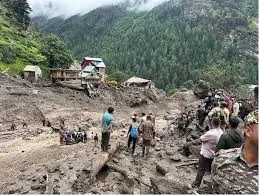
Over the years, the Kashmir valley has been witnessing warmer winters, erratic snowfall, shorter springs, and summers that are both hotter and drier. For a place whose economy and culture are deeply tied to its fragile ecology, climate change is no longer an abstract global debate – it is a lived crisis shaping everyday life in Kashmir.
A Warming Valley
Many studies pointed out that temperatures in Jammu & Kashmir have shown a clear warming trend. Local studies and meteorological data suggest that average temperatures have risen by about 1–1.5°C over the past century, with a sharper increase since the 1980s (Bhat et al., 2019; IMD, 2020). Residents have already sensed the change: snow that once arrived reliably in December now often comes late, in shorter, more intense spells – or not at all.
The winter of 2023–24, one of the driest in recent memory, saw Srinagar record almost no significant snowfall during the core winter months. Traditional calendars and local sayings about snow and rain – once accurate enough to guide sowing and harvesting – are increasingly unreliable. For farmers, orchardists and shepherds, this unpredictability is as damaging as the overall warming.
Glaciers in Retreat, Rivers at Risk
Kashmir’s rivers – Jhelum, Chenab, Lidder, Sindh and their tributaries – draw lifeblood from the Himalayan glaciers and snowfields. But these are shrinking. Studies across the western Himalaya indicate that many glaciers have been retreating steadily, with some losing significant area over the last few decades. Glaciers in the Pir Panjal and Greater Himalayan ranges that feed Kashmir’s rivers are no exception.
Initially, glacial melt can increase river flows and create a deceptive sense of water abundance. Over time, however, reduced ice mass means declining summer flows, sharper seasonal extremes and greater flood–drought cycles. The devastating 2014 floods in the Jhelum basin were a stark warning of how extreme rainfall events, combined with reduced carrying capacity of rivers and encroached floodplains, can turn climate stress into human catastrophe.
On the other side of the cycle, drier winters and hotter summers raise the risk of drought, affecting both drinking water and irrigation. Rural areas in south and north Kashmir increasingly report drying springs, deeper hand‑pumps, and seasonal water scarcity. In a region historically called the “abode of snow,” the fear of future water insecurity is now very real.
Agriculture and Horticulture Under Stress
Kashmir’s economy and employment structure make it particularly vulnerable. Agriculture and horticulture still support a large share of the population. Apple, walnut, and saffron – three iconic products of the Valley are all climate‑sensitive.
Warmer winters mean fewer “chilling hours,” which many temperate fruit trees need to flower and fruit properly. Orchardists from Shopian to Sopore report shifts in flowering time, increased pest attacks and more frequent frost damage, as early budding coincides with sudden cold snaps. Changing rainfall patterns also affect the spread of diseases like scab in apples, raising input costs and reducing yields.
Saffron, once thriving on the karewas of Pampore, is another victim. Declining snowfall, erratic rains and groundwater stress have contributed to declining productivity over the past two decades. Government-supported sprinkler irrigation and the National Saffron Mission have provided partial relief, but the crop remains highly vulnerable to climate variability.
These shifts have social consequences. Smaller, climate-sensitive holdings mean that even one bad season can push families into debt. Young people, already facing high unemployment, watch traditional livelihoods become more uncertain, fuelling rural–urban migration and, in many cases, migration outside the region.
Forests, Biodiversity and New Risks
Kashmir’s forests – from the coniferous slopes of the Pir Panjal to the mixed broadleaf forests in the valley – are both buffer and victim of climate change. Rising temperatures and prolonged dry spells increase the risk of forest fires, which have become more frequent in parts of Jammu & Kashmir in recent years. Each fire destroys not just trees but also undergrowth, soil quality and wildlife habitat.
Shifting temperature and precipitation patterns are changing the distribution of plant and animal species. Alpine meadows that host medicinal plants and summer pastures for nomadic communities like the Gujjars and Bakerwals are under pressure from both climate stress and human activity. For communities whose cultural identity is tied to seasonal migration, such ecological changes are existential, not just economic.
Health, Urbanisation and Everyday Impacts
Climate change is also a public health issue in Kashmir. Hotter summers and heatwaves, once rare in the Valley, are becoming more common. This aggravates cardiovascular and respiratory illnesses, particularly among the elderly and urban poor. Warmer conditions can also alter the spread of vector-borne diseases.
Urban centres like Srinagar face a dual challenge: climate stress combined with rapid, often unplanned, urbanisation. Wetlands and floodplains – once natural sponges for excess rainfall – have been encroached upon for housing, roads and commercial complexes. The shrinking of the Hokersar, Wular and other wetlands is well documented. When heavy rains coincide with high flows in the Jhelum, the city’s narrowed channels and lost wetlands leave little room for the water to go.
Policy Responses and their Limits
Governments at both the Union and UT levels have begun acknowledging these risks. Jammu & Kashmir has prepared a State Action Plan on Climate Change, focusing on water, agriculture, forests and disaster management. Schemes promoting high-density apple plantations, drip irrigation, and weather-based crop insurance aim to make agriculture more resilient.
In the energy sector, hydropower remains central to official plans, but there is growing recognition of the need for better environmental safeguards, sediment management and ecological flow norms. Rooftop solar, small-scale renewables, and improved energy efficiency in buildings are slowly entering policy discussions.
However, implementation gaps are wide. Local communities and panchayats are often not fully involved in planning. Climate projections are rarely translated into village-level action plans. Data sharing between departments remains weak. Without robust local institutions and transparent monitoring, even well-designed schemes fall short on the ground.
Initiatives and the Path to Sustainability
Despite these challenges, the struggle for a sustainable future in Kashmir is not only a story of vulnerability; it is also a story of quiet resilience and local innovation.
In parts of south and central Kashmir, farmers’ groups, NGOs and researchers are experimenting with climate-resilient varieties of apple and paddy, organic methods, and diversified cropping patterns to reduce risk. Traditional water harvesting structures are being revived in some villages, alongside modern techniques like drip and sprinkler irrigation.
Youth-led groups in Srinagar and other towns are campaigning for wetland protection, solid waste management and air‑quality awareness. Tree‑planting drives are common, though experts caution that they must be accompanied by protection of existing forests and careful choice of native species to be truly climate‑smart.
Tourism, too, is beginning to see a slow shift toward eco‑tourism models – homestays, low-impact trekking, and community-managed destinations – that aim to reduce environmental pressures while supporting local livelihoods. If guided by clear regulations and community consent, such models can help balance economic aspirations with ecological limits.
Towards a Just and Sustainable Future
Building a sustainable future for Kashmir in the age of climate change is not merely a technical challenge. It is a question of justice, governance and vision. Those who have contributed the least to global greenhouse gas emissions, small farmers, shepherds, orchardists, and artisans, are among the first to bear the costs.
Protecting and restoring ecosystems – glaciers, forests, wetlands and rivers as a core development goal, not an afterthought. Creating dignified green livelihoods for youth, in sectors such as sustainable agriculture, waste management, renewable energy and eco‑tourism.
Above all, it requires treating climate change not as a distant environmental issue, but as the central development challenge of our time. The choices made in the next decade about land use, water, energy, cities and forests will decide whether future generations inherit a Kashmir of receding snowlines and recurring disasters, or a valley that has adapted with wisdom and fairness.
(Author is Asst Professor, Environmental Science, working in HED)
