


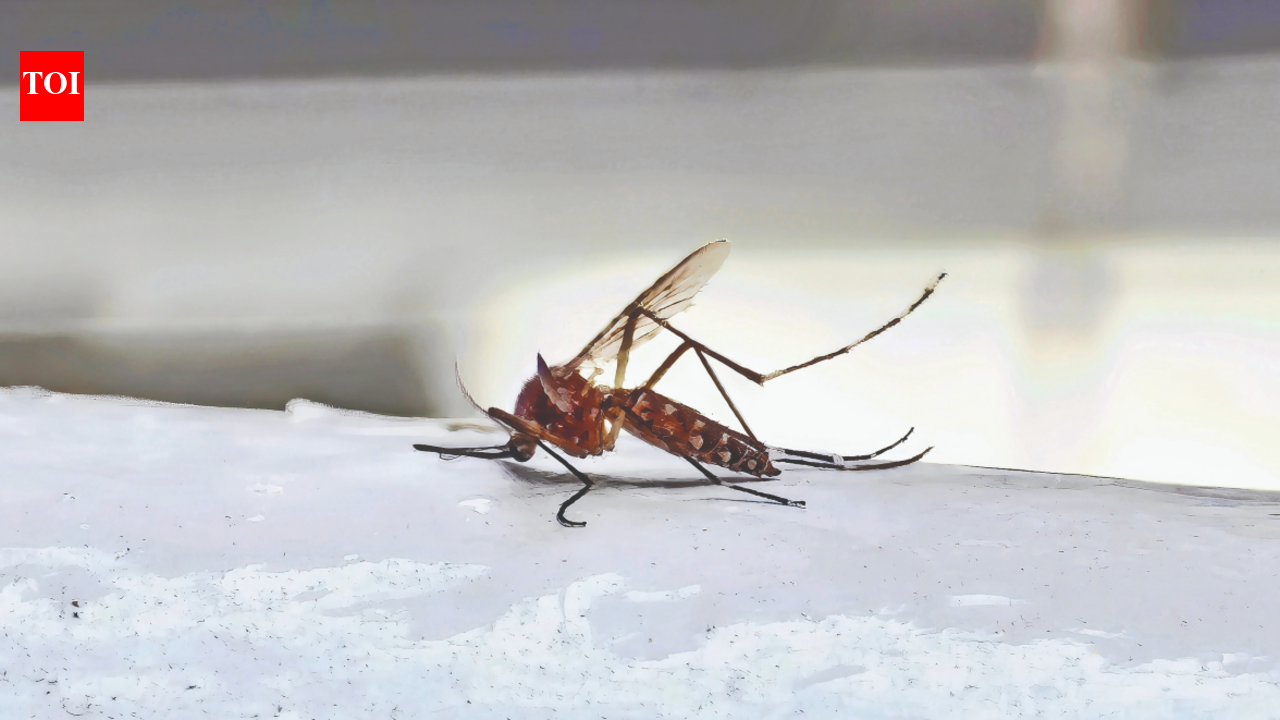
At a time Chennai relies heavily on chemical fogging for mosquito control, and impractical civic attempts such as fixing nets over drains draw flak, a new field study suggests the solution may lie inside the city’s water tanks. The study found that a natural insecticide derived from soil bacteria can kill malaria-causing Anopheles stephensi mosquitoes at the breeding stage and prevent fresh emergence for several weeks.The research, led by scientists from ICMR–Vector Control Research Centre (VCRC) in collaboration with Greater Chennai Corporation (GCC), tested a biolarvicide called Natular in common urban breeding habitats including overhead water tanks and domestic water containers in north Chennai zones Tiruvottiyur, Tondiarpet and Royapuram.Natular uses spinosad, a natural insecticidal compound produced by the soil bacterium Saccharopolyspora spinosa, to kill mosquito larvae in water. The researchers say it targets the larvae’s nervous system, causing paralysis and death.Researchers evaluated three formulations: slow-release tablet, granular formulation and a liquid emulsifiable concentrate, across rainy, winter and summer seasons. “The tablet, which maintained 80% reduction for about nine weeks, was found to be most effective,” says Ananganallur Nagarajan Shriram, corresponding author of the study published in Plos One. Candasamy Sadanandane, first author, says it can be “effectively used as a component of urban malaria vector management”.Malaria continues to be reported sporadically in Chennai, particularly in dense neighbourhoods where Anopheles stephensi breeds in overhead tanks, sumps and water storage containers and transmits parasites such as Plasmodium falciparum and P. vivax. In 2025, Tamil Nadu recorded 321 cases, including 121 in Chennai.GCC’s present mosquito control strategy includes source reduction, larviciding in water bodies, and insecticide spraying. The civic body uses pyrethrum 2% extract in indoor spaces, malathion, an organophosphate insecticide, for outdoor fogging, and temephos, another organophosphate larvicide, in domestic water tanks.GCC deploys 3,566 workers and 854 machines for rivers and canals. However, these resources were not deployed for vector control during a spike in mosquito complaints earlier this year.Experts caution it cannot replace basic public health measures. “Natular may be less toxic and have longer residual effects, but it cannot substitute sanitation and engineering measures,” says Dr K Kolandasamy, former director of public health.Three options
- Dispersible tablet: Most effective. One tablet in 200l of water, achieved 90%–100% reduction in larval and pupal density for 8–9 weeks across seasons
- Granular formulation: Applied at 0.074mg/l, suppressed larvae by 91%–100% for 4–5 weeks
- Emulsifiable concentrate: Applied at 0.073mg/l, achieved complete reduction for about two weeks
Methods used now
- Larvicides: Temephos (organophosphate) and Bti (soil bacterium) are routinely used as larvicides in India; toxic to humans
- Fogging (adulticide) chemicals: municipal fogging commonly uses pyrethroid insecticides, which can irritate skin, eyes and airways and may pose risks with repeated exposure
