


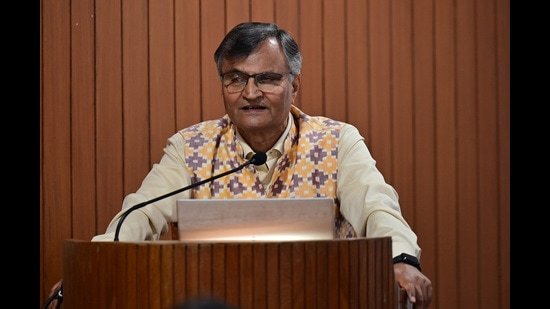
A strong push for reimagining agriculture in Punjab and Haryana emerged at a high-level colloquium held at the Centre for Research in Rural and Industrial Development (CRRID), where policymakers, economists and sector experts called for a calibrated shift towards diversification, sustainability and higher farmer incomes.
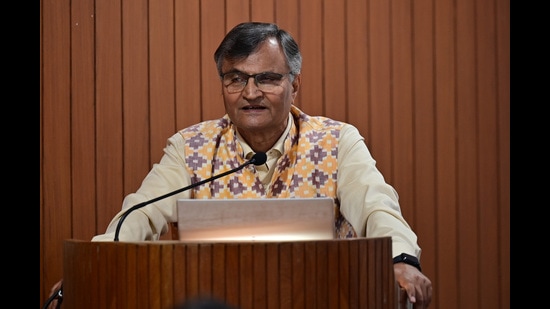
Organised by the Chandigarh Citizens Foundation (CCF) in collaboration with the Centre for Research in Rural and Industrial Development (CRRID) and the Indian Council for Research on International Economic Relations (ICRIER), the colloquium brought together key stakeholders to deliberate on pathways for transforming the region’s farm economy.
Delivering the keynote address, NITI Aayog member Ramesh Chand underlined that agricultural transformation must be guided by three core principles- growth, sustainability and remunerative employment. He stressed that diversification alone cannot be seen as a “silver bullet” and must be pursued alongside improvements in existing cropping systems such as rice, wheat, cotton and mustard.
Chand highlighted the growing potential of maize, citing rapid technological advancements and rising productivity in states like Tamil Nadu and Andhra Pradesh. However, he cautioned that structural challenges such as poor drainage in Punjab could hinder its expansion. “Diversification has to be planned and region-specific. Overproduction of any single crop without market support can lead to failure,” he said, advocating for a “one district, one product” approach.
He also emphasised the need to promote high value crops, agroforestry and private investment in post harvest infrastructure, while suggesting innovative policy tools such as price insurance to reduce farmers’ dependence on minimum support price (MSP)-based systems. Calling for a shift in mindset, he noted that “all revolutions are the result of gradual evolution,” driven by a strong policy narrative and institutional support.
Following this, agricultural economist Ashok Gulati stressed that any meaningful reform would require close coordination between the Centre and states. He argued that boosting farmers’ incomes and ensuring long-term sustainability must remain the twin pillars of policy interventions.
Gulati flagged the ecological stress caused by the rice wheat cycle, pointing to declining water tables, soil degradation, rising greenhouse gas emissions and loss of biodiversity. He noted that India’s rice production has reached surplus levels, with exports accounting for nearly 40% of global trade, leading to depressed prices and mounting buffer stocks.
He also highlighted distortions in the current subsidy regime, particularly the heavy subsidy on urea, which has led to imbalanced fertiliser use and environmental damage. Suggesting a shift towards direct benefit transfers or nutrient based pricing, Gulati called for “repurposing” rather than reducing subsidies.
A key proposal discussed was incentivising farmers to shift from paddy to pulses and oilseeds by offering assured payments over a five-year period, funded through savings in fertiliser and power subsidies. “This is not additional expenditure but smarter use of existing resources,” he said.
Gulati further underscored the importance of strengthening agricultural markets and value chains, arguing that farmers often lose more in marketing than in production. He advocated a “market-first” approach linking production decisions to demand, improving storage, processing and logistics, and exploring export opportunities, particularly to the Middle East.
Adding another dimension to the discussion, agricultural economist Sukhpal Singh pointed to systemic gaps in policy implementation, marketing infrastructure and farmer participation. He criticised policy inconsistencies, lack of support for farmer producer organisations (FPOs), and inadequate focus on market linkages, especially for high-value crops like fruits and vegetables.
Singh highlighted that diversification efforts often fail due to weak market systems, price volatility and absence of institutional backing. He called for transparent policies, better regulation of markets and greater inclusion of small farmers in decision making processes.
The colloquium also featured the release of an ICRIER report on diversification strategies, a policy dialogue on crop neutral incentives, and a roundtable on export pathways from Amritsar aimed at strengthening agricultural value chains.
Experts agreed that while Punjab and Haryana possess strong natural advantages fertile soils, extensive irrigation and robust connectivity the transition to a more diversified and sustainable agricultural model will require coordinated policy action, investment in infrastructure, and a shift in both farmer behaviour and governance frameworks.
