


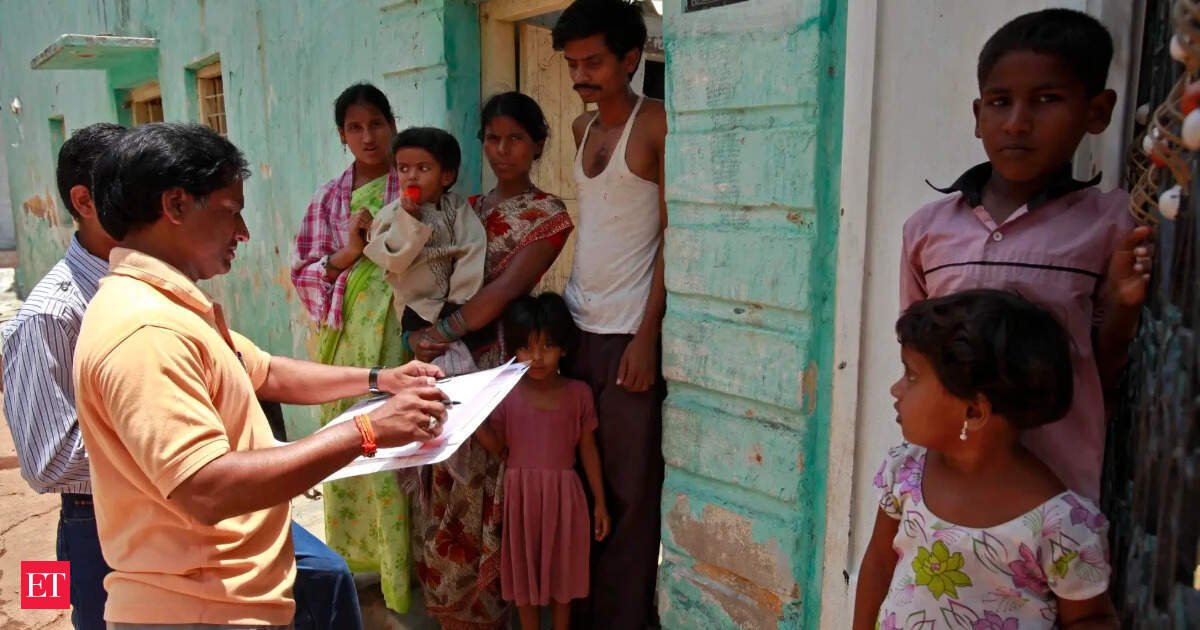
The upcoming census will be the world’s largest and India’s first fully digital population enumeration.
“Earlier, census data was first collected on paper and then digitised, making compilation a time-consuming process. Collection of data digitally will ensure Census 2027 datasets are out much faster,” he said.
Also Read: Government releases 33 FAQs for first phase of Census
Narayan appealed to citizens to participate actively and provide accurate information, emphasizing that census data is vital for shaping policy and socio-economic interventions.
The first 15 days of the 45-day house-listing operations (HLO) phase are dedicated to self-enumeration, another first in the history of the Indian census. Over the following 30 days, more than 30 lakh enumerators will carry out field visits. “We expect Bengal to also notify its HLO schedule soon,” he added. The HLO phase, starting April 1 across eight states and UTs including Delhi’s NDMC and cantonment areas, will be followed by population enumeration in February 2027. March 1, 2027, will serve as the reference date, except in a few snow-bound regions.
During population enumeration, individual data on religion, fertility, socio-economic status, migration, and—after 1931—for the first time, caste, will be collected. The RGI noted that questions for Phase-2, which includes the caste count, will be notified later.When asked about the delinking of the National Population Register (NPR) updation from Census 2027 and its possible connection with the Special Intensive Revision of electoral rolls, Narayan dismissed any correlation.
Also Read: First phase of Census to begin on April 1, no documents needed for process, govt says
He assured that individual data collected will remain strictly confidential under the Census Act. “It cannot be shared with any govt agency, accessed under RTI or produced before the courts. Only aggregated statistical data will be used for tabulation purposes,” he said.
Census 2027 will be conducted via a mobile app, while a web portal will manage and monitor census and house-listing activities. Block creation will use a web mapping application, and respondents will not need to provide any documents.
Regarding caste enumeration, Narayan said, “There are many suggestions on how to collect caste information. All those will be considered, and the best shall be picked and questions framed and finalised accordingly.” On the risk of individuals misreporting caste to avail benefits, he clarified, “Only aggregate statistical information is made public. Individual data cannot be used to derive any benefit from any scheme.”
(With TOI inputs)
