


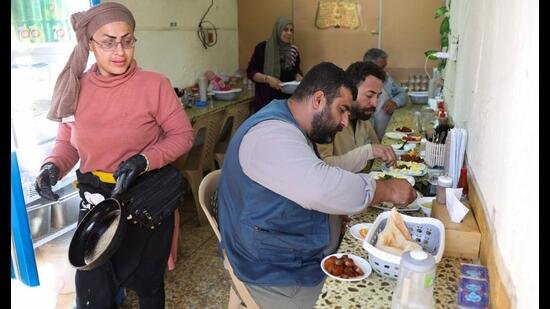
The environment for women entrepreneurs in India has never been better than it is today. Thanks to focussed government schemes and increasing awareness that, though they face barriers, they still have a chance to build something for themselves, more women are launching their own businesses across the country.

Businesses by women are being set up at an unprecedented pace across sectors. Kinara Capital’s MSME Insights Report 2024 analysed 44,821 micro, small and medium enterprises (MSMEs) across six industrial states of India. It revealed that women-owned MSMEs hired 11% more women employees compared to those owned by men. The study highlighted that women-owned MSMEs were better at cost optimisation, income growth, and repayment of business loans than those owned by men. This supports the fact that the social benefits of economic growth can only be maximised if women business owners are given equal opportunities to compete and succeed.
Yet, while entry barriers into entrepreneurship have reduced, scaling remains a systemic challenge. Institutional ecosystems — governments, financial institutions, industry bodies, incubators, and trade chambers — therefore, play a decisive role in determining whether women-led enterprises remain local success stories or evolve into global growth engines.
Globally, women-owned businesses account for a significant proportion of MSMEs. However, their presence declines sharply in export-intensive sectors, capital-heavy industries, and high-growth innovation ecosystems. The reasons are many: Limited access to growth capital, inadequate global networks, regulatory complexity, lack of institutional mentorship, and under-representation in industrial policy frameworks. These challenges are compounded in the Indian context. India currently ranks 57th out of 65 nations, in the Mastercard Index on Women Entrepreneurship (MIWE) 2021.
Institutions must adopt structured and collaborative approaches that combine finance, market access, knowledge exchange, and policy alignment. According to Priya Pansare, director, World Trade Centre, Mumbai, global trade readiness for women entrepreneurs depends not only on financial access but also on exposure to international compliance standards, digital trade tools, and trusted global networks that enable long-term partnerships.
Adding a practitioner’s perspective, CA Tripti Singhal Somani, founder, Womennovator, underlines how institutional platforms can enable access to global procurement ecosystems, cross-border collaborations, and investment networks, ensuring that women are active architects shaping the global economy’s future trajectory.
A critical barrier for scaling of women-led enterprises is the persistent credit and capital access gap. While financial inclusion initiatives have improved access to micro-finance and early-stage funding, growth-stage capital remains disproportionately difficult to secure.
Kavita Adhikary, HOD, global partnerships, MSME Business Forum India, says, “Women-led enterprises continue to face a substantial credit gap. One pathway to bridge this gap is to encourage aspiring women entrepreneurs to increasingly explore manufacturing-based ventures. Compared to fragmented service-oriented or micro-cottage enterprises, manufacturing ventures often build stronger asset bases, structured cash flows, and export potential — which enhances creditworthiness and attracts long-term institutional capital.”
Industrial ecosystems tend to generate scale advantages, including technology adoption, productivity gains, and global market integration. By positioning women entrepreneurs within these ecosystems, institutions can create pathways for sustainable growth. As economies seek resilient and inclusive growth models, empowering women-led enterprises to scale globally must become a key mandate.
The views expressed are personal
