



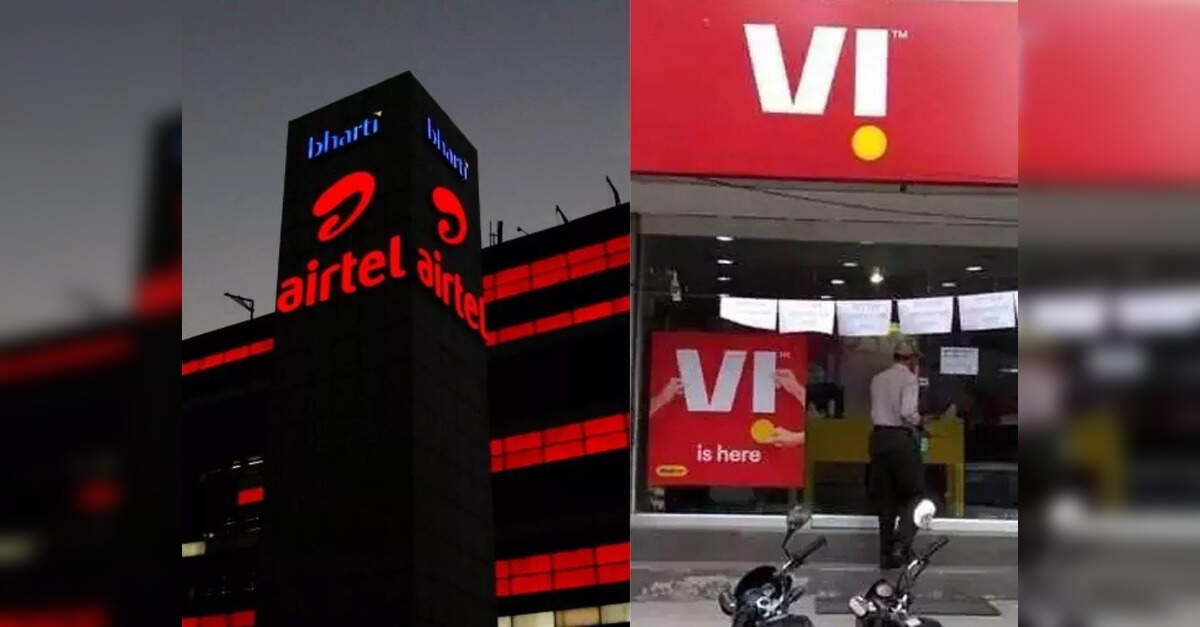
The Bombay High Court has quashed the Union of India’s imposition of a one-time spectrum charge (OTSC) on Bharti Airtel and Vodafone Idea. The petition was filed by cellular mobile service operators against imposition of OTSC in the year 2012 for spectrum held above 6.2 MHz from the year 2008 onwards.
A Division Bench of Justices Manish Pitale and Shreeram V. Shirsat found that Section 4 of the Indian Telegraph Act, 1885, the provision the government relied on, empowers the Centre to grant telecom licences on conditions and payment terms it thinks fit, but that this power operates at the time of grant and does not give the government a free-floating right to retroactively rewrite the financial terms years after the contract has been concluded and acted upon.
A licence issued under Section 4, the bench noted, is a contract between the licensor and the licensee, and its terms bind both parties equally.
The Union Cabinet in November 2012 decided to levy a one-time charge on spectrum held beyond 6.2 MHz from July 2008 onwards, with demand notices issued to Airtel and Vodafone Idea in early 2013.
“The respondent did not propose any modification of the terms of contract and issued the impugned decisions abruptly and unilaterally, imposing a one-time spectrum charge retrospectively from the year 2008 on the petitioners,” said the bench.
The government’s position was that spectrum is a scarce natural resource held in public trust, and that operators had effectively been allocated spectrum beyond 4.4 MHz without paying an upfront acquisition fee, getting it “virtually free of charge,” as the Centre argued.
The Court found that under the revenue-sharing model introduced by National Telecom Policy, 1999 (NTP-99), the petitioners had in fact paid for the spectrum they were allocated. Every time additional spectrum was assigned beyond 4.4 MHz or 6.2 MHz, a higher percentage of AGR was charged as license fee, that incremental revenue share was the agreed consideration for spectrum allocation.
The government’s own orders from 2001 and 2002 confirmed as much, and the TRAI had consistently opined that no one-time spectrum charge was legally feasible for spectrum up to 10 MHz, a threshold neither operator had exceeded.
The Court declined the government’s central justification, that the levy was in “public interest.” It held that equating revenue maximisation with public interest is legally unacceptable.
The objectives and targets of NTP-99, the Court noted, were focused on universal affordable connectivity, rural teledensity and efficient spectrum utilisation, not on maximising government revenue.
The Bombay High Court declined to follow the Madras High Court’s 2016 ruling in Aircel Cellular Limited v. Union of India, which had upheld identical charges levied on the similarly situated operator Aircel.
The Madras HC had held that revenue generation through the one-time spectrum charge was inherently a step in public interest, thereby justifying the government’s action under the modification clause of the 1994 licence agreement.
The Bombay bench disagreed, finding that the Madras court had ignored the specific objectives of NTP-99 and had placed excessive reliance on a literal reading of the word “modify” in the clause.
“The Hon’ble Bombay High Court yesterday i.e. on 8 June 2026 passed an order quashing the Demand Notice issued by DoT imposing OTSC on the ICL and erstwhile Spice Communications Limited (since merged with the Company), aggregating to Rs. 2,113 crores and ordered return of Bank Guarantee(s) given to DoT,” commented Vodafone Idea, on this development, in an exchange filing.
Bharti Airtel Limited was represented by Senior Advocates Harish Salve and Darius J. Khambata, along with DMD Advocates, led by founder and managing partner, Delhi Anuradha Dutt, founder and managing partner, Mumbai Fereshte Sethna, partner Suman Yadav, associate partner Nikhita Suri, associate Gurudas Khurana, and associate Kaustubh Srivastava.


