


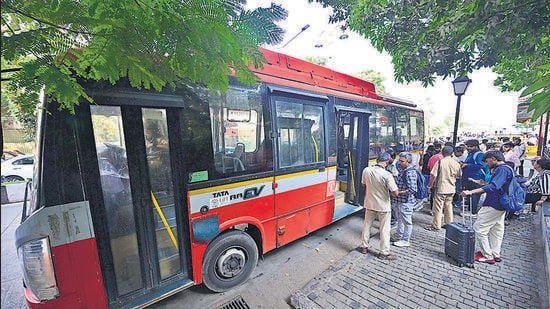
Mumbai: The Brihanmumbai Electricity Supply and Transport (BEST) undertaking has rejected a proposal by BJP leader and Maharashtra Assembly Speaker Rahul Narwekar to curtail key bus routes leading to the Gateway of India. BEST officials said that curtailing those routes would inconvenience commuters and lead to revenue losses at a time when the undertaking is already struggling with losses, dwindling passengers, and a shrinking bus fleet.
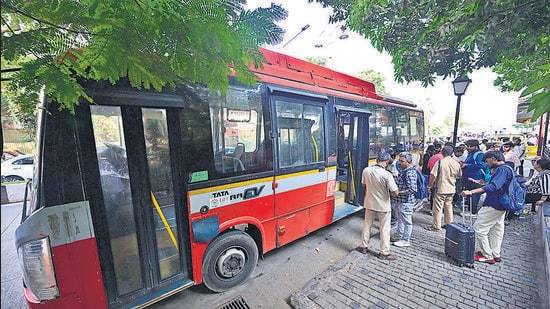
Earlier this month, Narwekar had objected to running only two BEST bus routes connecting Churchgate and Chhatrapati Shivaji Maharaj Terminus (CSMT) to the Gateway of India. BEST currently operates bus route numbers A-116 and A-112 from CSMT and Ahilyabai Holkar Chowk in Churchgate, respectively, both terminating at the Gateway of India. In a letter dated March 11, Narwekar urged authorities to end these routes near the Chhatrapati Shivaji Maharaj Vastu Sangrahalaya instead to ease traffic congestion in South Mumbai.
Narwekar’s letter to the BEST undertaking and the traffic police stated that a large number of tourists visit the Gateway of India in Colaba every day. “The BEST bus route and bus stop in the Gateway of India area cause traffic congestion. Because of this, tourists, citizens and drivers suffer repeatedly. In such a situation, the presence of a bus stop here is creating more stress on the transport system,” Narwekar stated in the letter. He argued that the presence of a bus stop in the area adds pressure on traffic movement and should be shifted to a “suitable” location near the museum, based on requests from local residents and public representatives.
However, BEST officials opposed the move, stating that curtailing the routes would inconvenience thousands of daily commuters. According to data from the BEST, around 24,000 passengers use 436 bus services daily on weekdays between Churchgate, CSMT and the Gateway, generating an average revenue of ₹1.17 lakh. On Sundays and holidays, ridership rises to about 28,000 passengers across 598 services, with revenue touching ₹1.98 lakh.
On March 20, BEST general manager Ashwini Joshi responded to Narwekar, highlighting BEST’s financial state and the importance of these routes. “Considering the dire financial situation of the Undertaking, such a large loss of revenue per day is not in its interest. Apart from buses, some passengers travel by taxis and other private vehicles at the Gateway of India. During a survey, it was observed that approximately 800 to 900 taxis and private cars transport passengers from the Gateway of India during the day. Bus routes A-112 and A-116 serve as ‘last mile connectivity’ for tourists and local residents going to Elephanta, Mandwa, Uran and Alibaug by sea from the Gateway of India,” reads the letter, a copy of which is with the Hindustan Times.
BEST officials warned that if buses are terminated earlier, at Dr. Shyamaprasad Mukherjee Chowk, passengers would need to walk about 500 metres to reach the Gateway. This would be inconvenient and potentially unsafe, especially for elderly commuters and tourists.
The officials added that if BEST bus operations stop and passengers travelling by BEST buses are attracted to taxis or other private vehicles, the number of vehicles in and around the Gateway of India area will increase significantly. “There will be a need for a large number of taxis at the Gateway of India. This will create severe traffic congestion. Similarly, taxi passenger transport will lead to financial exploitation of common passengers,” added the letter written by Dr. Joshi.
Ganpat Kunder, 77, a local resident who has been fighting to keep these two routes alive up to the Gateway of India said these routes are heavily used by people wanting to take the ferry from the Gateway of India to Alibaug, Uran, Mandwa and Elephanta Caves. He added that the route also leads to offices in the area along with the Taj hotel too.
“I have been informed that local hawkers and share taxi drivers are pushing for the discontinuation of the two BEST bus routes. Their businesses are impacted by these air-conditioned BEST buses, which are cheaper than the per-seat charge by shared cabbies,” Kunder said.
