
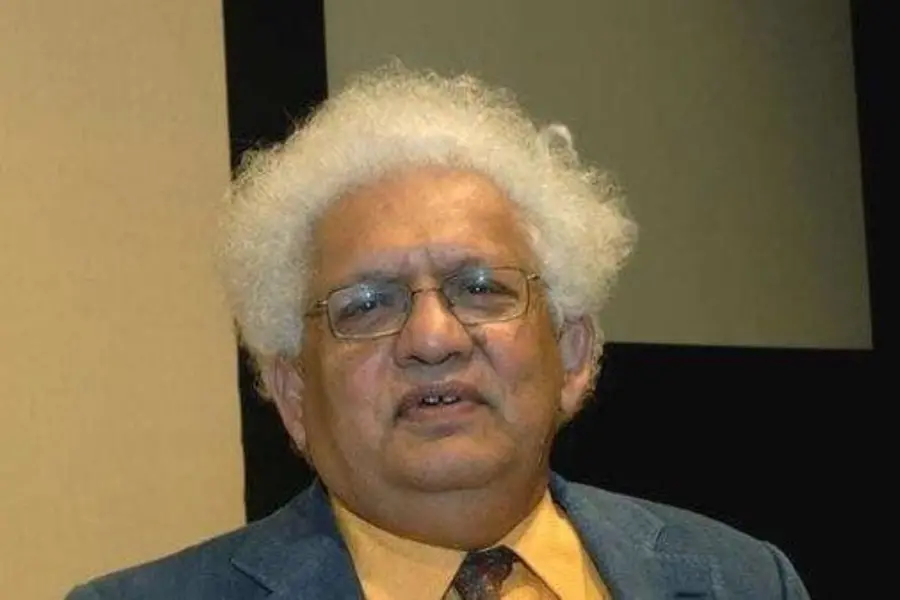
The hallowed chamber of the House of Lords resonated with heartfelt tributes as British Prime Minister Keir Starmer and fellow peers paid homage to Lord Meghnad Desai, celebrating his remarkable contributions to economics, academia, public policy, and India-UK relations. The commemorative session highlighted the extraordinary journey of a man who rose from modest beginnings in India to become one of Britain’s most distinguished scholars and parliamentarians, embodying the very best of the Indian diaspora’s contributions to British society.In his tribute, the Prime Minister acknowledged Lord Desai as an intellectual giant whose work transcended conventional boundaries between economics, politics, and social theory. He praised Desai’s ability to bring rigorous academic analysis to bear on pressing policy questions while maintaining accessibility and relevance to public discourse. The Prime Minister noted that Lord Desai’s presence in the House of Lords enriched parliamentary debates with scholarly depth and global perspective, particularly on economic policy, development issues, and international relations.Lord Meghnad Desai’s contributions as a person of Indian origin have been transformative in shaping Britain’s multicultural identity and strengthening the living bridge between India and the United Kingdom. Born in Baroda, Gujarat, in 1940, Desai arrived in Britain for higher studies and chose to make it his home while never severing his deep connections to India. Throughout his career, he served as a powerful voice for the Indian community in Britain, advocating for inclusive policies while also challenging both British and Indian establishments when necessary. His elevation to the peerage in 1991 as a Labour life peer marked a significant milestone for British Indians, demonstrating that the highest echelons of British public life were accessible to those of South Asian heritage.As Emeritus Professor of Economics at the London School of Economics, Lord Desai’s academic legacy stands monumental. His tenure at LSE spanning several decades saw him shape generations of economists, policymakers, and thinkers from across the world. His scholarly work covered diverse terrain—from Marxian economics and development theory to monetary policy and Indian economic history. His seminal works, including his intellectual biography of Marx and analyses of Indian poverty and development, combined theoretical rigor with historical sensitivity. Colleagues remembered him as a teacher who challenged conventional wisdom, encouraged independent thinking, and made complex economic concepts comprehensible to students and general audiences alike.Lord Desai’s writings on Indian economic policy, particularly his critiques of Nehruvian socialism and advocacy for market-oriented reforms, influenced policy debates in India during critical junctures. His ability to straddle academic economics and public intellectualism made him a sought-after commentator on Indian affairs in British media, helping British audiences understand India’s transformation.Perhaps Lord Desai’s most enduring contribution lies in strengthening India-UK relations at multiple levels. As a member of the House of Lords, he consistently advocated for deeper economic engagement between the two nations, pushing for trade agreements, educational exchanges, and cultural cooperation. He served on numerous bilateral forums and advisory bodies, using his unique position to facilitate dialogue between British and Indian policymakers, business leaders, and academics.His interventions in parliamentary debates often highlighted shared democratic values, historical connections, and mutual economic interests that should underpin the modern India-UK partnership. Following India’s economic liberalization in 1991, Lord Desai became an eloquent advocate for British investment in India and Indian participation in British economic life, foreseeing the growing importance of the bilateral relationship decades before it became fashionable.Beyond formal diplomacy, Lord Desai nurtured people-to-people connections through his involvement with cultural organizations, educational institutions, and diaspora communities. He championed causes ranging from British Museum collaborations with Indian institutions to supporting Indian students at British universities.The tributes in the House of Lords underscored that Lord Meghnad Desai’s life exemplified the possibilities of diaspora contribution—remaining rooted in one’s heritage while fully embracing one’s adopted home, using intellectual gifts for public good, and building bridges between nations and communities. His legacy endures in the ideas he propagated, the students he mentored, the policies he influenced, and the stronger India-UK relationship he helped forge. As Britain and India navigate their evolving partnership in a changing world, Lord Desai’s vision of cooperation based on mutual respect, shared interests, and intellectual exchange remains profoundly relevant.
