


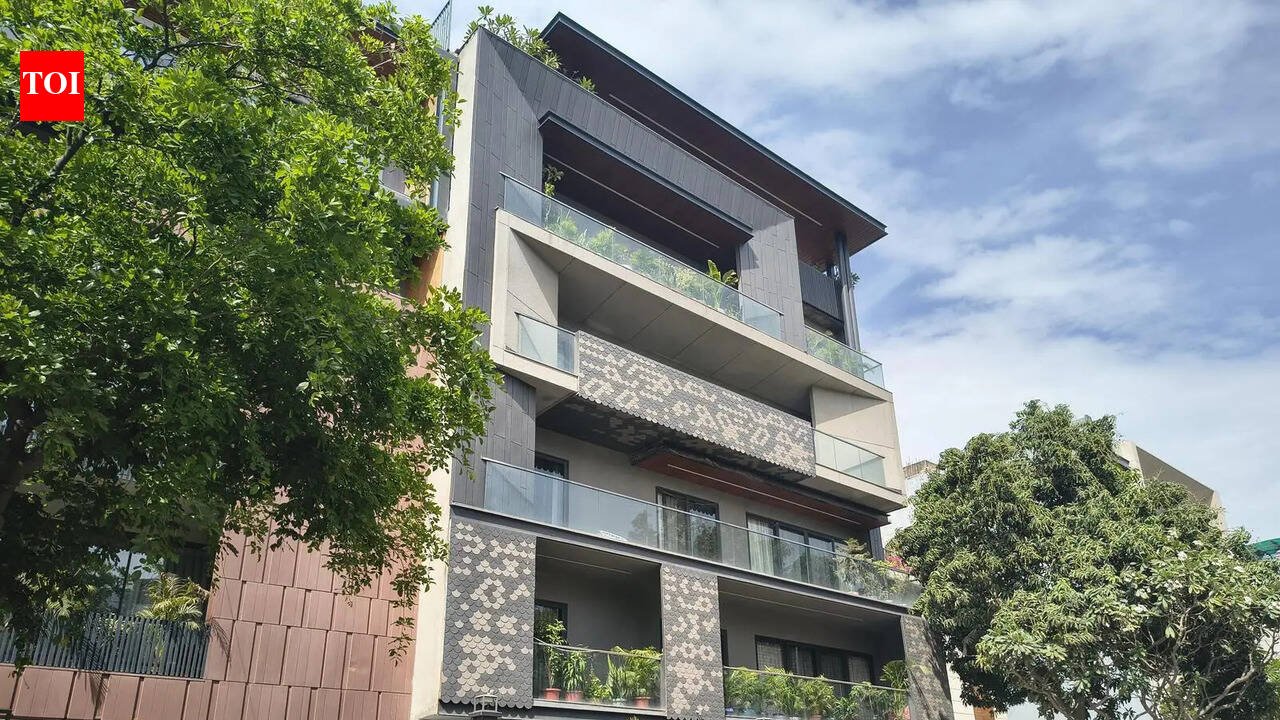
Gurgaon: While Haryana has put all approvals for stilt-plus-four (S+4) residential construction on hold following an interim stay by Punjab and Haryana high court, the department of town and country planning (DTCP) has sought a utilisation report from HSVP on Rs 689 crore it had transferred to the development agency for infrastructure upgrades.The amount, deposited under the account of PDR (proportionate development charges), was intended to fund urban infrastructure upgrades linked to increased density. Pressure on infrastructure is one of the major concerns of the S+4 policy that petitioners have voiced in high court.“We have sought detailed information from HSVP on expenditure of development charges collected for infrastructure augmentation. This will help assess the current status and plan future actions,” a senior DTCP official said.DTCP’s April 3 directive covers residential plotted projects in Haryana, including densely populated areas such as Gurgaon, where the policy had led to a sharp rise in construction activities. The letter was issued by town and country planning director Chander Shekhar Khare to HSVP chief administrator, director general (housing for all), urban local bodies dire; and HSIIDC managing director.HC had restrained Haryana govt from moving ahead with the S+4 floor policy and stayed the operation of its July 24, 2024 notification.“The department has issued clear instructions to all authorities concerned to put approvals related to stilt-plus-four floors on hold with immediate effect. The court has raised important issues on the capacity of existing urban infrastructure to support increased density. These aspects will be examined in detail, and necessary steps will be taken based on further directions,” the official said.The department also stated that no layouts, zoning plans or service plans should be approved if they involve enhanced density linked to S+4 floors. It further ordered that online platforms, including the S+4 portal and HOBPAS (Haryana Online Building Plan Approval System), must stop accepting applications for such permissions with immediate effect.HC observed that any increase in number of floors without matching upgrades in civic services could place an “additional burden” on already strained urban systems, including sewage networks, drainage, traffic movement and other essential services.DTCP’s April 3 communication reflected similar concerns, saying cities such as Gurgaon are already facing infrastructure stress because of rising population density and warned that unchecked vertical expansion could lead to waterlogging in low-lying areas, traffic congestion, and added pressure on sewage treatment facilities.The department also stated HSVP is yet to submit a status report on how the funds were used, despite earlier correspondence. When contacted by TOI, HSVP officials said a detailed response, covering formulation of SOPs and utilisation of funds would be submitted soon.Officials said lack of clarity over the use of these funds has deepened concerns about whether sufficient infrastructure upgrades were carried out to support the S+4 policy. The department had earlier sought standard operating procedures (SOPs) and detailed infrastructure augmentation plans, but these are still pending.Urban planners said the high court’s intervention could have major implications for real estate activity in Gurgaon and other fast-urbanising cities. The S+4 policy had allowed additional independent floors on plotted land, resulting in a surge in builder floors and a rise in housing supply. For now, all such activities remain uncertain. Authorities have been told to strictly follow the court’s directions till further orders, effectively freezing new permissions under the policy and placing ongoing approvals under scrutiny.
