


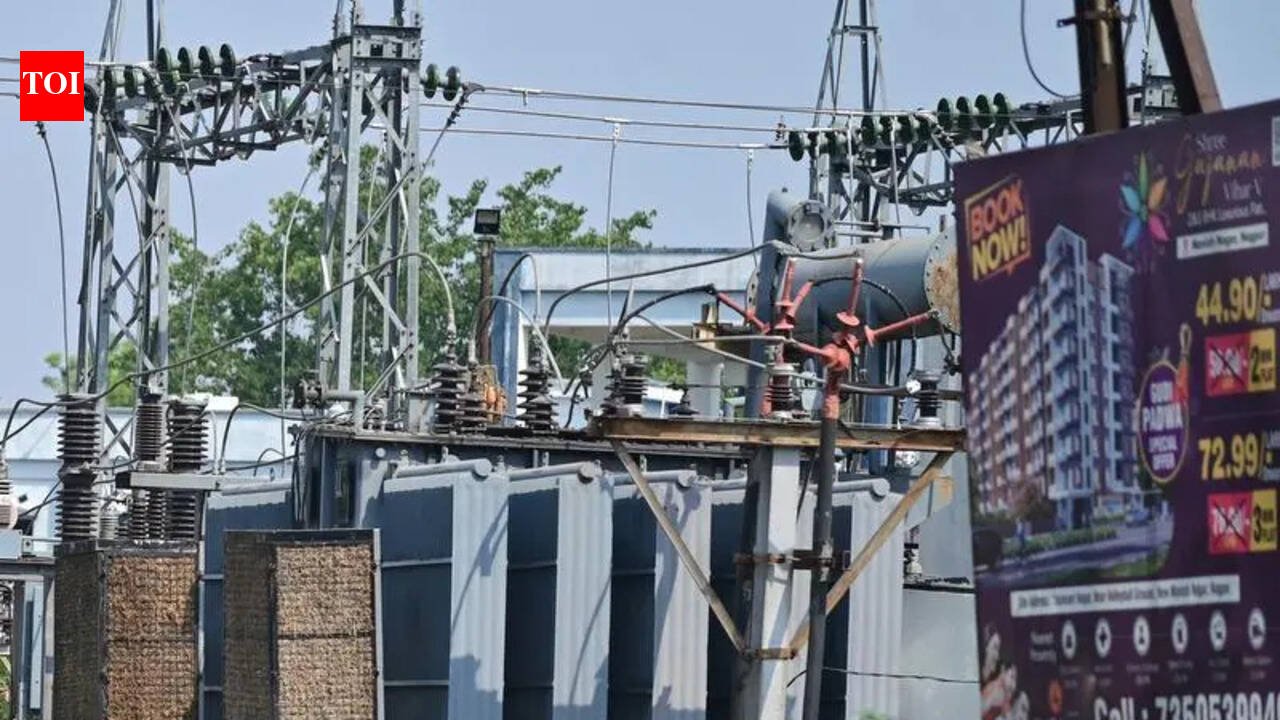
Nagpur: An intense summer has pushed Nagpur’s power demand to 780MW — nearly a month ahead of last year. The surge in power demand has exposed the fragility of the city’s electricity network, with residents left to battle repeated outages in searing 44 degrees Celsius heat.According to officials, the 780MW demand mark was reached in May last year. This year the peak demand has been recorded in April, indicating an early and intense summer.Speaking to TOI, a senior MSEDCL official said, “On average, the city’s consumption stands at around 600MW. The summer demand peak spiked early this year. We think that consumption might further increase. We have already started preventive maintenance to avoid power cuts and blackouts, but many other incidents also lead to power cuts.” The official added that regular area-wise reviews are being conducted to better assess the situation.To manage the rising load, MSEDCL has intensified its maintenance work. While routine maintenance is typically carried out on Wednesdays, the utility has now begun pre-monsoon maintenance on other days as well. The move has led to an increase in scheduled power cuts across the city. However, citizens across several localities continue to report frequent short-duration outages during non-maintenance hours, adding to their discomfort during peak summer.If a power outage lasts less than 30 minutes, the MSEDCL does not consider it an outage but as tripping. MSEDCL sources said that chief engineer Dilip Dodke has issued strict instructions to ensure that all scheduled outages and maintenance activities are completed in the morning hours, with no planned shutdowns during peak afternoon hours when heat conditions are most severe.However, residents say the reality on the ground remains challenging. “Electricity in our area is disrupted at least five to six times for short duration, including at night. These frequent power cuts during peak summer add to our agony,” said Shreyas Teltumde, a resident of Besa.In a bid to prevent overheating and failures, MSEDCL has also started installing air coolers near transformers to keep them functional under heavy load conditions. Sources indicated that increased tripping incidents are largely due to the surge in demand, and in some cases, short-term load management measures may also be contributing to the disruptions.Officials, however, maintain that ongoing preventive maintenance will play a crucial role in stabilising the system and minimising major outages in the coming weeks, even as demand is expected to rise further.
