


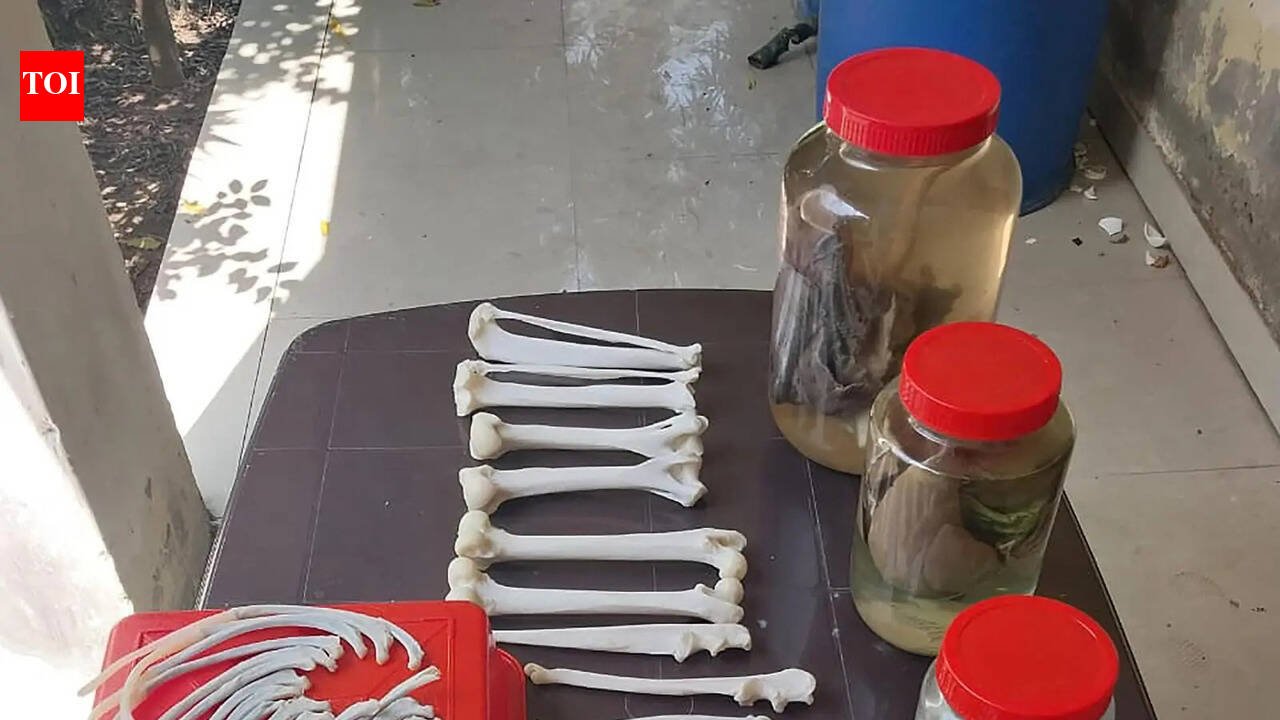
Gurgaon: The forest department is setting up a taxidermy and wildlife preservation centre in Gurgaon, the state’s first dedicated facility for the scientific preservation and display of animal specimens. Basic infrastructure is already in place, and additional facilities are being developed in phases, officials said, adding that the centre will become fully operational by the end of the month.The centre has so far prepared two leopard taxidermy specimens, one from Gurgaon that died last year after being hit by a vehicle on Faridabad-Gurgaon road, and another from Samalkha in Panipat.“The centre marks a shift in how wildlife carcasses are handled in the state. Until now, animal bodies were typically incinerated after post-mortem. With the new facility, selected carcasses will instead be preserved for scientific, educational and awareness purposes,” chief wildlife conservator, south Haryana, Subhash Yadav, told TOI.Officials said the centre is significant at a time when wildlife mortality cases, due to road accidents, territorial conflict and human-animal interaction, are rising across Haryana. They said scientific preservation of selected carcasses will help build a formal reference library for study of anatomy, disease patterns and injury causes, aiding researchers, veterinary students and forest officials. It is also expected to improve documentation of regional fauna and support training and awareness efforts linked to wildlife conservation and conflict management.The facility will house multiple functional spaces, including two large halls, a smaller modified hall, a research office, staff accommodation and a dedicated post-mortem room. It currently has one cold storage unit, around 6-7 feet in length, with a temperature capacity of minus 10 degrees Celsius. Officials said carcasses can be stored at the centre until post-mortem or taxidermy work is carried out, adding that they are in the process of preserving a hyena carcass.At present, the centre has one freezer unit. Officials said that it is large enough to safely preserve bodies, adding that staffing, including trained taxidermists, is still being worked out.The facility will display mounted leopard skin, cleaned skeletal remains including ribs, limb bones and skulls, as well as organs preserved in jars for anatomical study. The official added that the centre is being designed to support academic work, with access limited to researchers and students for scientific and educational purposes.The exact capacity of the centre to store multiple carcasses or specimens is still being assessed as infrastructure is built in stages. “Similar facilities will be expanded to other locations, including Sultanpur National Park, Bhondsi and the upcoming safari project,” Yadav said.
