


Under the proposal, states and union territories with a single Lok Sabha constituency will see no increase in parliamentary seats, even as their assembly strength expands. These include three northeastern states — Sikkim, Nagaland and Mizoram — along with six union territories. Meanwhile, states and UTs with an odd number of seats are expected to benefit, as their seat count would be rounded up after delimitation. In other states and UTs, the number of seats is proposed to increase by 50%. The exercise also includes a marginal increase in Scheduled Caste (SC) representation.
Read more: Amit Shah tables Delimitation Bill in Lok Sabha amidst nationwide protests by Opposition, southern states
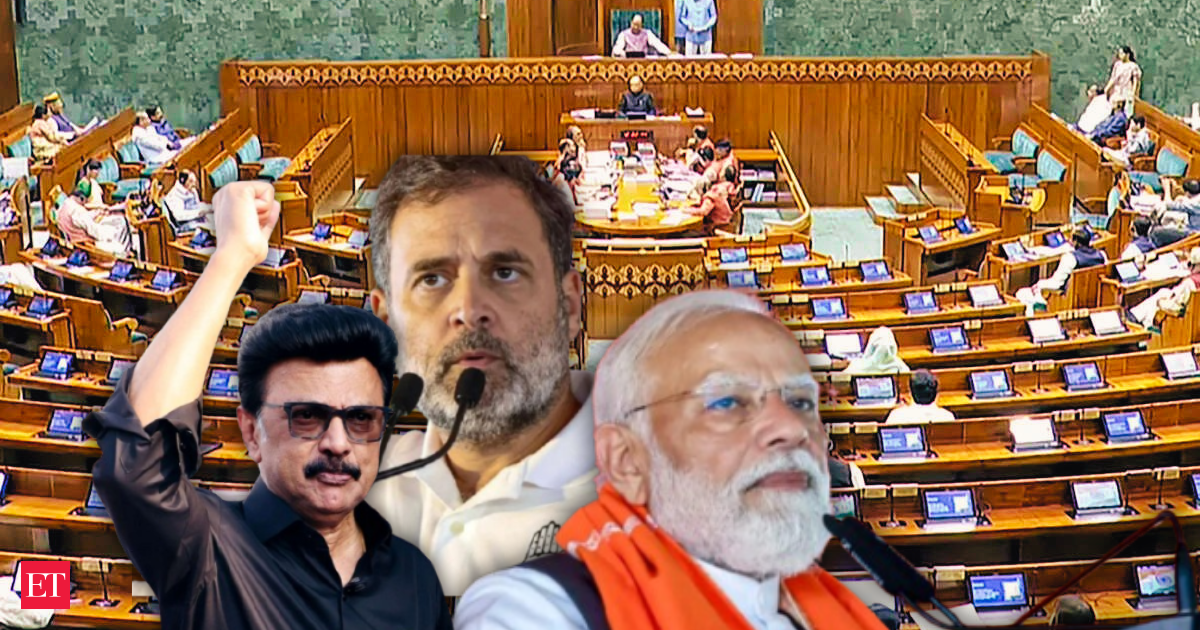
The move has sparked strong reactions from leaders in the South. Politicians from Tamil Nadu, including Chief Minister M. K. Stalin and actor-politician Kamal Haasan, have raised concerns about the implications of the delimitation exercise scheduled for 2026. Critics argue that the process could reduce the region’s political influence in Parliament. Stalin, in a recent remark, even urged newlywed couples to plan families early, linking population trends to representation.
What is delimitation?
Delimitation is the process of redrawing parliamentary and state assembly constituencies based on demographic changes. It ensures that electoral representation reflects population shifts and also determines the number of seats reserved for Scheduled Castes (SC) and Scheduled Tribes (ST).
What does the law say?
Articles 82 and 170 of the Constitution mandate periodic revision of parliamentary and assembly constituencies based on the latest census. A Delimitation Commission, set up by Parliament, oversees the exercise. Since representation is tied to population, states with higher population growth stand to gain more seats, while those with slower growth may see their share decline.
History of delimitation in India
India carried out delimitation exercises in 1951, 1961 and 1971. The process was frozen in 1976 through the 42nd Amendment to encourage population control and prevent states with higher growth rates from gaining disproportionate electoral advantage. The freeze was later extended in 2001 via the 84th Amendment, pushing the next exercise to 2026.Expected impact of the upcoming exercise
The next round of delimitation is likely to be based on the 2031 Census, with discussions already underway ahead of the 2026 deadline. Projections suggest the number of Lok Sabha seats could rise from 543 to 753 if current population trends continue.
Southern states currently hold 129 of 543 Lok Sabha seats, a number projected to rise to 144 out of 753. However, their overall share is expected to decline from 23.7% to 19%. By contrast, northern states — which currently hold 222 seats — could see their tally jump to 357.
State-wise projections indicate:
- Telangana: 17 to 20
- Andhra Pradesh: 25 to 28
- Kerala: 20 to 19
- Tamil Nadu: 39 to 41
- Karnataka: 28 to 36
In the North:
- Uttar Pradesh: 80 to 128
- Bihar: 40 to 70
- Madhya Pradesh: 29 to 47
- Maharashtra: 48 to 68
- Rajasthan: 25 to 44
Why are southern states opposing delimitation?
- Reduced political influence: The South’s share in Lok Sabha representation could drop from around 24% to 19%, while Hindi-speaking states may see an increase of nearly 60%.
- Economic contribution vs representation: States like Tamil Nadu, Karnataka and Maharashtra are among the highest contributors to the national exchequer but receive only about 30% in return. In contrast, states such as Bihar and Uttar Pradesh receive 250–350% more than their contribution, fuelling demands that economic output be factored into representation.
- Impact on reservations: The Women’s Reservation Act, which mandates 33% reservation for women in Parliament and state assemblies, will intersect with the delimitation process. Changes in SC/ST reserved seats will further add complexity to the exercise.
