


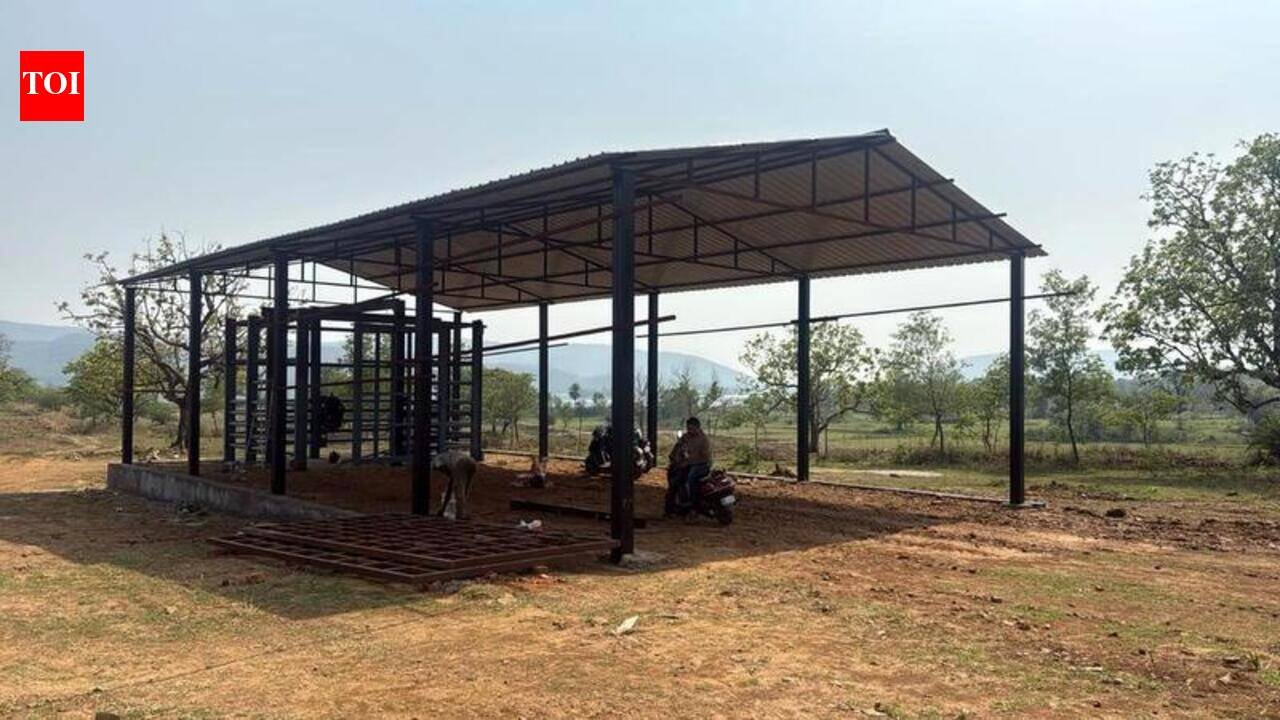
Ranchi: Jharkhand, which is grappling with elephant-human conflicts, is set to soon open its first elephant rescue and cure centre at the Dalma foothills. Spread on seven hectares of land near picturesque Dimna Lake, the facility is built at a cost of Rs 1 crore, and will be formally inaugurated soon, officials said on Wednesday. Talking to TOI, Saba Alam, deputy conservator of forests and field director of Project Elephant (Dalma), said that three more such centres are also expected to be built by the forest department in Chaibasa (West Singhbhum), Hazaribag and Bokaro districts. “The idea behind this facility is to provide advanced and dedicated veterinary care for any injured elephant at one place. So far, the state didn’t have any such facility and in case of any injuries to an elephant, we had to depend on experts from outside the state. Now, we can get vets locally to treat them,” he said, adding that the environment at the centre is such that the animal will feel like it’s in a natural forest surrounding. Notably, reports of elephant casualties due to injuries keep surfacing from time to time due to various reasons such IED blasts in Naxal-infested Saranda region, illegal fencing cause electrocution, or while crossing the railway tracks. According to All India Elephant Population Report, released by the Wildlife Institute of India last year, the state currently has an estimated population of 217 jumbos, a dip of about 68% compared to 2017. Exercise done in 2025 was the first ever based on DNA samples. “Having a dedicate centre for treatment will help us cut down on response time,” he said. The key highlight of the centre is the installation of elephant kraal — a sturdy enclosure to capture and house the wild elephants. “Through the kraal, one can go closer to the elephant to offer treatment without having the need to tranquilise it, which isn’t otherwise possible in the natural environs. Trying to treat an injured wild elephant in the open has its own challenges,” he said. Other provisions in the centre include dormitories for caretakers (mahouts) and visiting teams for treatment, kitchen, storerooms, feeding and holding area. “To prevent straying of elephants, we have also set up trench fencing as well as hanging solar fencing,” he said.
