


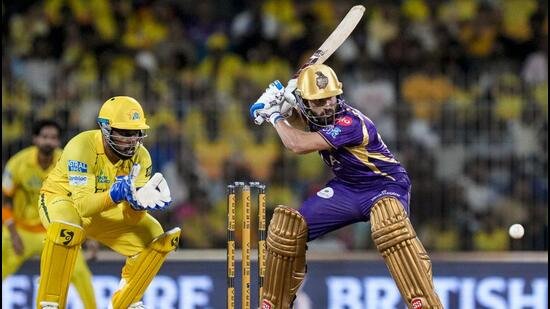
Kolkata: Four losses, no wins, Kolkata Knight Riders’ campaign is already beginning to feel older than it is. What’s worse is that nothing about KKR’s slow decline has been dramatic so far. No particular collapse stands out, neither one defeat so chastening that it has reshaped the narrative overnight. Instead what has slowly emerged across the first five IPL matches is quieter, and in many ways concerning—a slow drift into irrelevance that could soon plunge into the ignominy of being left behind by the rest of the teams. This isn’t only about the yawning gap of points but their selection, strategy and choices that are increasingly looking archaic and knee-jerk.

In a tournament built on momentum and reinvention, KKR have found neither. Their struggles are not rooted in a lack of talent—few teams can claim a roster so evidently constructed with intent—but in the absence of cohesion. Matches have slipped not in bursts, but in increments: a cautious powerplay here, a stalled middle over there, a death bowling spell that arrived half a beat too late. This is a team sport but when the individuals making up the team start slipping together then it starts to tell in a different way. KKR have been finding that out in the worst possible way through Finn Allen’s poor starts, Varun Chakravrthy’s dreadful returns, Cameron Green’s luckless run and the inconsistencies of Ajinkya Rahane, Angkrish Raghuvanshi and Rinku Singh.
The bowling has held up remarkably well despite KKR not landing on their feet when the IPL started. No Harshit Rana, no Akash Deep, Mustafzur Rahman forced out and Matheesha Pathirana yet to return, KKR still has more or less managed with Vaibhav Arora, Kartik Tyagi, Anukul Roy and the ever dependent Sunil Narine. Opening the bowling with Green against CSK however felt like a desperate bid to justify his ₹25.2 crore tag. That cost KKR 30 runs in two overs before Green got a golden duck at No 6, a demotion of two places from the defeat to Lucknow Super Giants in the previous match.
That has been another quagmire for KKR—sorting out who bats best in which position, almost getting caught between two eras of T20 batting as a result. At the center of this chaos is Rahane, a captain whose own game has long been defined by patience and structure. His presence offers calm, but in a format that is increasingly rewarding urgency, calm can harden into inertia. Which is why promise around him has flickered but rarely sustained. Aggressive players have not quite imposed themselves, finishers have arrived with too much left to do. There is a sense, watching KKR bat, of a team perpetually recalibrating—never quite settled on whether to attack or absorb.
Most deafening has been the lack of clarity. Five matches in, it’s still difficult to understand what kind of team KKR intend to be. They are clearly not the most aggressive batting unit, nor are they the most disciplined bowling side. They do not lean heavily into spin, nor do they overwhelm with pace. Their identity, once a hallmark of their most successful seasons, seems to have eroded spectacularly.
It has reflected repeatedly in KKR’s decision making, and probably nowhere as much as the coin toss. Like in the game against Punjab Kings, where predictions of thunderstorms should have prompted KKR to chase, but they didn’t. Against Sunrisers Hyderabad, KKR elected to bat on a flat pitch that started to act up by the time they were set a 228-run target. Equally perplexing was the decision to chase on a slowing down Chennai pitch when KKR clearly had issues against spin.
The result is a side that competes without convincing. Compounding this has been the flip flop over selection and approach—not opening with Narine but suddenly promoting him, keeping Rovman Powell for too late, and persisting with Green and Allen, both clearly in need of a break. The most successful sides have historically adjusted quickly—tinkering with roles, exploiting matchups, and responding to conditions with precision. KKR, by contrast, have appeared hesitant to disrupt their own blueprint, even as they falter. And unless they engineer a decisive shift of approach, personnel and intent soon, KKR are in danger of being left behind.
