


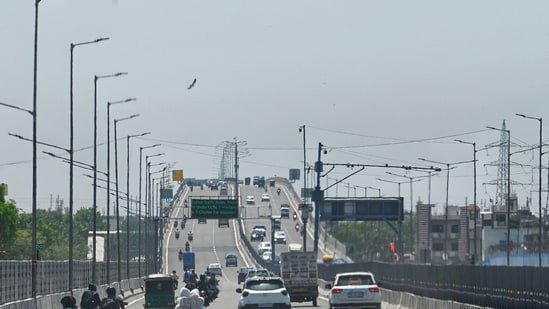
The 213-km Delhi–Dehradun Expressway, inaugurated by Prime Minister Narendra Modi on April 14, will cut travel time from over six hours to about 2.5 hours. Spanning Delhi, Uttar Pradesh and Uttarakhand, the corridor is expected to impact real estate markets along its route, particularly land, plotted, logistics and warehousing segments.

Real estate experts say the improved infrastructure and sharply reduced travel time will boost demand in the influence zone of this particular corridor that includes areas such as Muzaffarnagar, Saharanpur, and the outskirts of Dehradun, along with other junction towns located near key interchanges and bypasses along the expressway. These micro-markets are also likely to see increased traction for logistics hubs, warehouses and commercial real estate.
Meanwhile, Dehradun is expected to witness a surge in demand for luxury second homes, driven by easier access and growing interest from buyers seeking weekend and holiday properties.
“The Delhi-Dehradun Economic Corridor will significantly boost real estate valuations in North India. Upgrades to major connectivity projects result in shortened travel times, which reinvigorates the demand for residential and commercial real estate along the corridor,” said Santhosh Kumar, vice chairman – ANAROCK Group.
The influence zone of this particular corridor encompasses Muzaffarnagar, Saharanpur, and the outskirts of Dehradun. “We are already seeing early-stage land acquisition and plot-based investment interest in these relatively small markets, which so far were at best modest blips on the real estate radar. Over the next three to five years, this corridor could change the geography of North India’s real estate in a big way,” he said.
Will prices increase?
The Delhi-Dehradun Expressway is set to boost property values by 15% to 25% across key Delhi-NCR areas, with demand rising for plots, villas, builder floors, and holiday homes. Industrial parks in Baghpat and a logistics hub in Ghaziabad are also expected to generate large-scale employment, further boosting demand for both residential and commercial real estate, said real estate experts.
The Delhi–Dehradun Expressway is poised to drive a sharp uptick in property values along its corridor. On the Delhi–NCR side, areas such as Loni, Mandoli, Narela, Bawana, Ghaziabad’s Sahibabad belt, and parts of East Delhi, including Shahdara, Seemapuri, Karawal Nagar, Sonia Vihar and Yamuna Vihar, as well as Tronica City, are expected to see a 15–25% price appreciation over the next 18–24 months, said Vishal Raheja, founder and managing director, InvestoXpert Advisors.
Further along the corridor in Uttar Pradesh and Uttarakhand, locations such as Baghpat, Baraut, Shamli, the outskirts of Muzaffarnagar, Saharanpur, Chhutmalpur, Mohand and Doiwala, along with the Rishikesh bypass, Rajpur Road and the Mussoorie foothills, are also projected to witness similar growth, with early investors likely to benefit from strong long-term returns, he said.
He said the corridor is expected to drive demand across multiple property types. Plots and builder floors in particular. Farmlands for investors and builders trade at ₹12–20K per sq yd, builder floors for mid-income buyers range ₹35–60 lakh, villas at ₹80 lakh– ₹1.5 crore, holiday homes ₹30–70 lakh.
Dehradun’s luxury real estate market is also likely to benefit from this infrastructure boost. Improved connectivity will accelerate demand for high-quality second homes, as the region becomes far more accessible to Delhi’s discerning buyers.
“At Terra Grande by Eldeco, we view this as an opportunity to redefine second-home living, where accessibility meets aspiration. As travel time reduces, the idea of owning a home in the Himalayas shifts from indulgence to intent. It reinforces our belief that the future of luxury lies in spaces that offer both proximity and peace,” said Amar Kapoor, CEO, Terra Grande by Eldeco.
Impact on the warehousing segment
According to Vimal Nadar, National Director, Research at Colliers India, the Delhi-Saharanpur-Dehradun Expressway is likely to transform regional connectivity and stimulate real estate activity along the corridor particularly industrial and warehousing demand in key micro markets of Delhi NCR. The expressway connects prominent industrial & warehousing markets of Delhi NCR such as Ghaziabad, Noida, Greater Noida and Meerut to other key industrial hubs and cities such as Muzaffarnagar, Saharanpur and Dehradun.
“With improvements in connectivity driven by the expressway, we anticipate 1-2 million sq.ft. of Grade A supply infusion in these Delhi NCR micro markets over the course of next few years. On a similar note, the expressway will lead to demand traction and annual leasing can potentially touch 1-1.5 million sq ft. Additionally, connectivity enhancement is likely to support hospitality and second homes market in and around Haridwar, Rishikesh & Dehradun,” he said.
About the Delhi-Dehradun Expressway project
The 213-kilometre six-lane access-controlled corridor has been built at a cost of over ₹12,000 crore.
The corridor traverses through the states of Delhi, Uttar Pradesh, and Uttarakhand, and will reduce travel time between Delhi and Dehradun from over six hours at present to around two and a half hours, according to an official statement.
Also Read: Is Noida’s real estate market challenging Gurugram? What buyers and investors should know
The project was launched in February 2021, with Union road transport and highways minister Nitin Gadkari laying the foundation stone. Prime Minister Narendra Modi laid another foundation stone in December the same year. The expressway has been built at a total cost of ₹11,868.6 crore and was originally slated for completion by December 2024.
Also Read | Delhi to Dehradun in 2.5 hours: PM Narendra Modi to inaugurate expressway
A 32-km stretch, from Delhi (Akshardham, Geeta Colony, Shastri Park) through Mandola Vihar in Ghaziabad to Khekra in Baghpat, was completed by mid-2025 and opened to the public in December 2025.
The expressway features more than 100 underpasses and five railway overbridges. It will connect with key corridors such as the Delhi–Mumbai Expressway, the Eastern Peripheral Expressway, and routes leading to Haridwar and Roorkee.
The expressway has been developed in four phases. Phase 1 covers a 32-km, 12-lane stretch from Akshardham Temple in Delhi to the Eastern Peripheral Expressway near Baghpat. Phase 2 extends 118 km from the EPE to the Saharanpur Bypass, featuring six lanes, seven interchanges, and 60 underpasses. Phase 3 spans 40 km from the Saharanpur Bypass to Ganeshpur with six lanes. Phase 4 connects Ganeshpur to Dehradun over 20 km, comprising 4–6 lanes and including twin tunnels as well as elevated sections designed for wildlife movement.
