


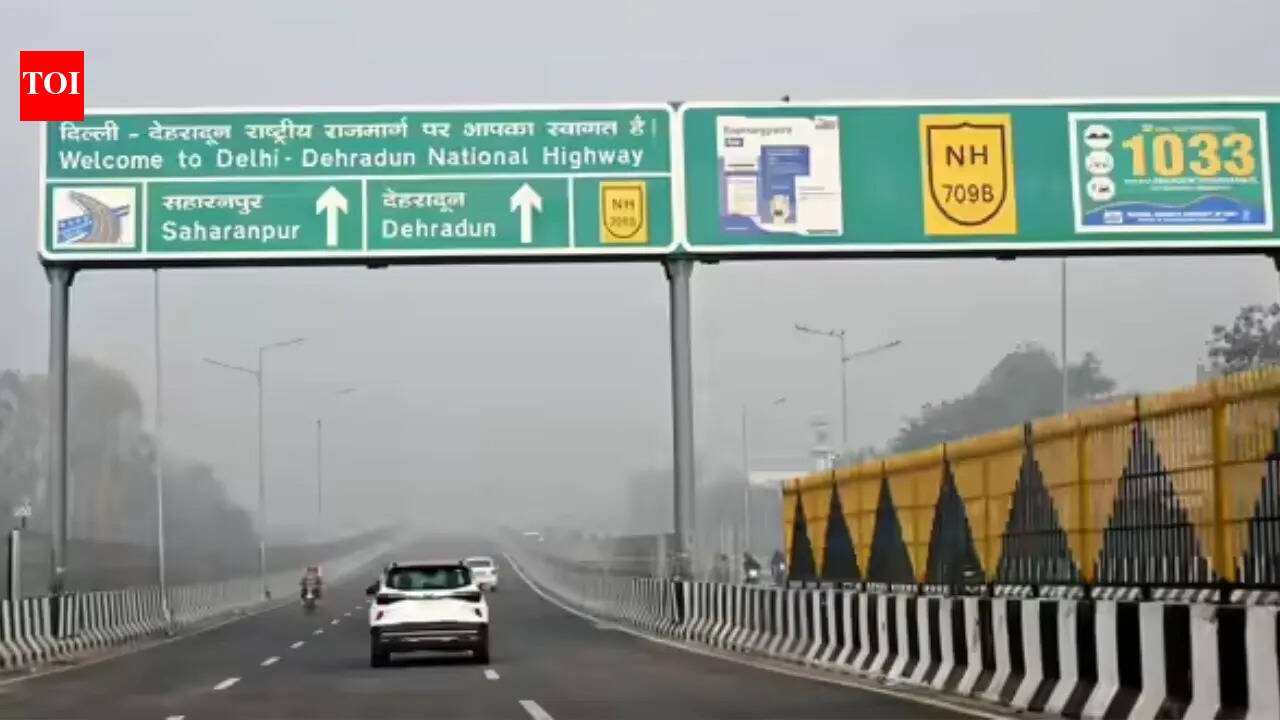
NEW DELHI: Prime Minister Narendra Modi is set to inaugurate the Delhi–Dehradun Economic Corridor today, a major infrastructure project aimed at significantly improving regional connectivity. Built at a cost of Rs 12,000 crore, the 213-km-long, 6-lane access-controlled high-speed corridor will reduce travel time between Dehradun and Delhi from around six hours to just 2.5 hours.
The corridor will connect Delhi, Uttar Pradesh, and Uttarakhand, boosting mobility, trade, and tourism across the region. Designed to facilitate faster and smoother travel, the project is expected to enhance economic activity and ease congestion on existing routes.Benefits Of Delhi–Dehradun Economic CorridorFast multi-lane corridor linking Delhi, UP and UttarakhandThe high-speed, access-controlled corridor will provide seamless connectivity between Delhi, Uttar Pradesh, and Uttarakhand, reducing travel time and ensuring smoother, safer movement of vehicles with minimal congestion and interruptions.Easy access to Char Dham, Rishikesh, Haridwar and Mussoorie, giving tourism new energyImproved connectivity will make travel to major religious and tourist destinations like Char Dham, Rishikesh, Haridwar, and Mussoorie faster and more convenient, boosting pilgrimage tourism, weekend travel, and overall footfall in these regions.Industrial growth in Baghpat, Shamli and Saharanpur, creating more jobsBetter road infrastructure is expected to attract industries and investments in districts like Baghpat, Shamli, and Saharanpur, leading to the development of industrial clusters and generating employment opportunities for local populations.Boost to Saharanpur’s wood carving and Muzaffarnagar’s paper industryThe corridor will facilitate easier transportation of raw materials and finished goods, benefiting traditional industries such as Saharanpur’s wood carving and Muzaffarnagar’s paper sector by improving supply chains and market access.Quicker movement of agricultural produce, increasing farmers’ incomeFarmers will be able to transport perishable goods faster to markets, reducing spoilage and logistics costs, which can help them get better prices and improve overall income levels.North-East Delhi will get relief from traffic congestionThe corridor is expected to decongest busy areas in North-East Delhi by diverting long-distance and heavy traffic away from local roads, improving daily commute conditions for residents.Traffic to ease on ISBT–Ring Road and Delhi–Meerut–Dehradun routeWith traffic shifting to the new corridor, pressure on key routes like ISBT–Ring Road and the existing Delhi–Meerut–Dehradun highway will reduce, resulting in smoother and faster travel.Faster access to health and education centers, improving quality of lifeImproved connectivity will allow people in remote and semi-urban areas to reach hospitals, schools, and colleges more quickly, enhancing access to essential services and overall quality of life.Accelerated socio-economic development across the regionThe corridor will act as a catalyst for regional growth by improving connectivity, encouraging investment, boosting trade, and enhancing livelihoods across multiple sectors.
Poll
Do you believe the new corridor will significantly improve regional tourism?
One of Asia’s largest wildlife corridor, ensuring growth with conservationThe project includes a dedicated wildlife corridor to ensure safe animal movement, particularly in forest areas, balancing infrastructure development with environmental conservation and reducing human-wildlife conflict.Also See: Delhi Dehradun expressway inauguration
