


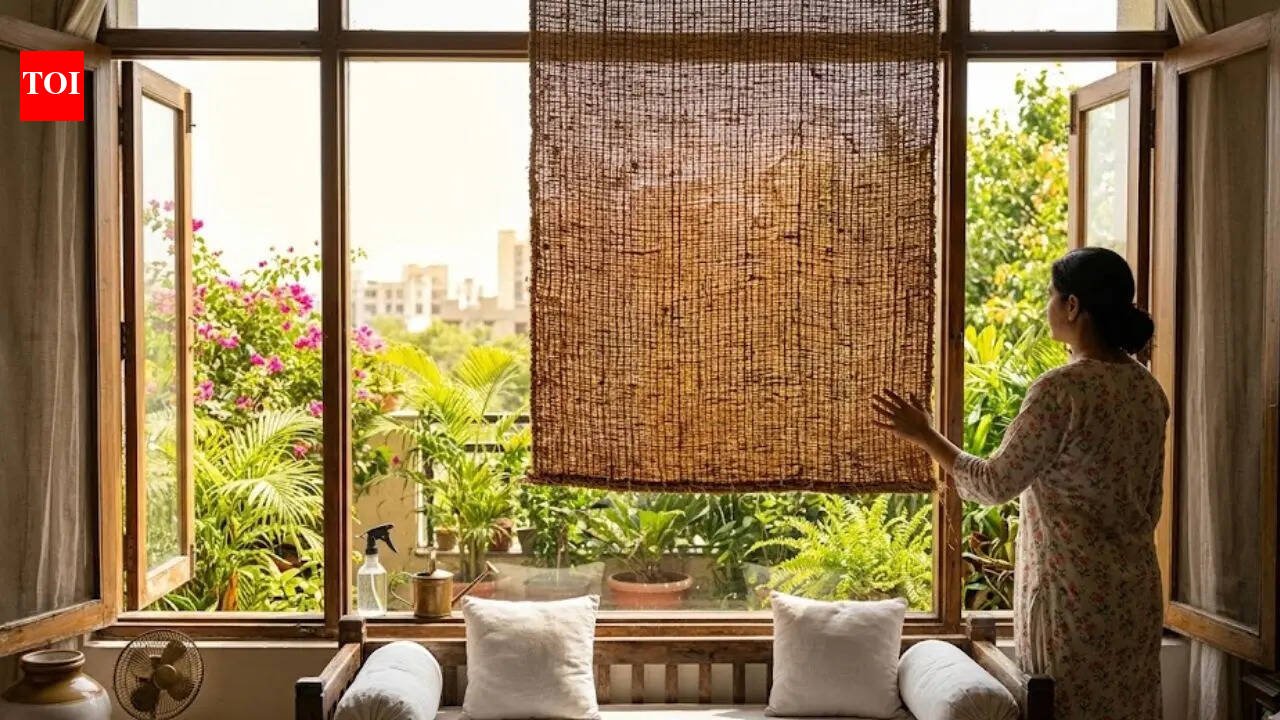
The increasing heat in the Indian subcontinent is causing our homes to become very hot due to the intensity of the sun’s rays. Air conditioning provides us with immediate cooling; however, there is the additional cost of the high electricity bill and the stale, dehumidified air of AC’s, which is often dry. Historically, Indians did not rely on modern air conditioning technology; rather, they provided themselves with a natural source of cooling that they have long used: Vetiver (Khus), which is a grass-like plant. Many conscientious homeowners are rediscovering how to use this natural source of cooling as a way to create a ‘natural AC’ that reflects their heritage, provides them with comfort from the summer heat and is also an environmentally-friendly product that enables them to save money on their utility bills. By incorporating eco-friendly products into contemporary homes and businesses, they can create sustainable homes while supporting local communities.
Khus (vetiver): The deep-rooted plant that powers natural cooling
Vetiver, scientifically known as Chrysopogon zizanioides, is a perennial bunchgrass from India. It is an incredibly diverse plant with a lush green appearance. However, it is the intricate fibrous root system that really provides this unique plant with its magical qualities. Unlike typical grasses that develop a horizontal root network, Vetiver roots grow down into the earth vertically, as deep as 10 feet! The roots are harvested, cleaned and dried before being woven into thick, durable mats and curtains. Historically, matting or curtains made of Vetiver were found in both royal palaces as well as common homes and were revered for their ability to withstand the intense sun found in tropical regions without deteriorating.
Why is Khus (Vetiver) making a massive comeback
Increasing energy costs and the increasing occurrence of ‘green living’ have caused Vetiver (or Khus) to move from being viewed as an old product to one that is now highly desirable by modern homeowners for several reasons:Eco-friendly cooling- People are becoming increasingly aware of how their actions can impact the planet; as northern India grapples with record-breaking heatwaves and ‘Loo’ winds, urban residents are seeking traditional, sustainable ways to lower their carbon footprint. Khus is 100 per cent biodegradable and does not require any electrical power.Aesthetic- The organic, earthy palette of Khus in a soft golden brown, and the rustic texture that is characteristic of Khus, is perfectly aligned with many current trends in home decorating, including those that feature Earthcore or ‘Minimalist Indian’ design styles.Wellness and mindfulness- For many people, the fast pace of life can be overwhelming, and Khus’ earthy aroma creates an environment conducive to grounding and healing, which synthetic air purifiers cannot replicate.
How it cools your home
Khus possesses cooling abilities due to evaporative cooling. When you mist your curtains with water, it treats the porous roots as if they are holding a reservoir of water by absorbing the moisture found in them. When the warm, dry summer wind blows on the curtains, it utilises the heat from the air to evaporate the moisture on the curtains, thereby creating a significant amount of cooling and lowering the air temperature before entering your home. The evaporation of water from the curtains to form vapour is a ‘phase change’ of the water from liquid to vapour, where a large amount of heat is absorbed during that process. When the moist air passes through your room, it is cooler than if the air passed through your room without having been evaporated from the curtains. In effect, Khus represents a very low-tech yet high-efficiency method of producing fresh, humidified air into your home as opposed to producing dry, stale air from your air conditioning unit.
The benefits of khus curtains
- Wet Vetiver roots give off a strong, woody fragrance (the first form of rain) and help cool the body down when used for aromatherapy. For many people, this scent creates a calm and soothing environment and helps reduce irritability caused by summer heat (mental and physical) due to its Pitta pacifying property.
- The dense, multi-layered weave of the Vetiver roots provides a physical barrier to trap dust, pollen, and outdoor pollution in the air. This allows dirt-free air to pass through
Vetiver curtains into your home, allowing for cleaner and safer air to breathe. - Vetiver has natural insect-repelling properties from its oils, so having Vetiver curtains at your door will provide you with natural protection against common household bugs like mosquitoes and flies without using chemicals.
- Khus curtains are made from extremely long-lasting materials and can last 3-4 summers with minimal care. So you will only have to buy curtains once, and they will pay for themselves by reducing your electric bill.
How to install and maintain khus curtains
Window positioning: Determine where there are windows or patio doors facing the wind (most often West or South for much of India) and hang the curtains so that airflow is as high as possible through the material.Pre-cooling: Soak the curtains with water from a spray bottle or hose prior to the sun hitting them at its peak. For those looking for a set-it-and-forget-it solution, some have added a thin perforated pipe (that runs the width of the curtain) to the top of the curtain to create an even distribution of water.Cross-ventilation: Cross-ventilation is a simple way to keep humidity in check. Just open a window or door on the far side of the room. This sets up a natural airflow, with cooler air coming in and pushing the warmer air out.Storage after the season: When the monsoon season arrives, it’s a good idea to clean your curtains. A quick rinse with plain water will remove any dust that has built up. Afterwards, let them dry thoroughly in the sun for a full day. Once they’re dry, roll them loosely and store them in a dry, airy place to avoid any mould growth.
