


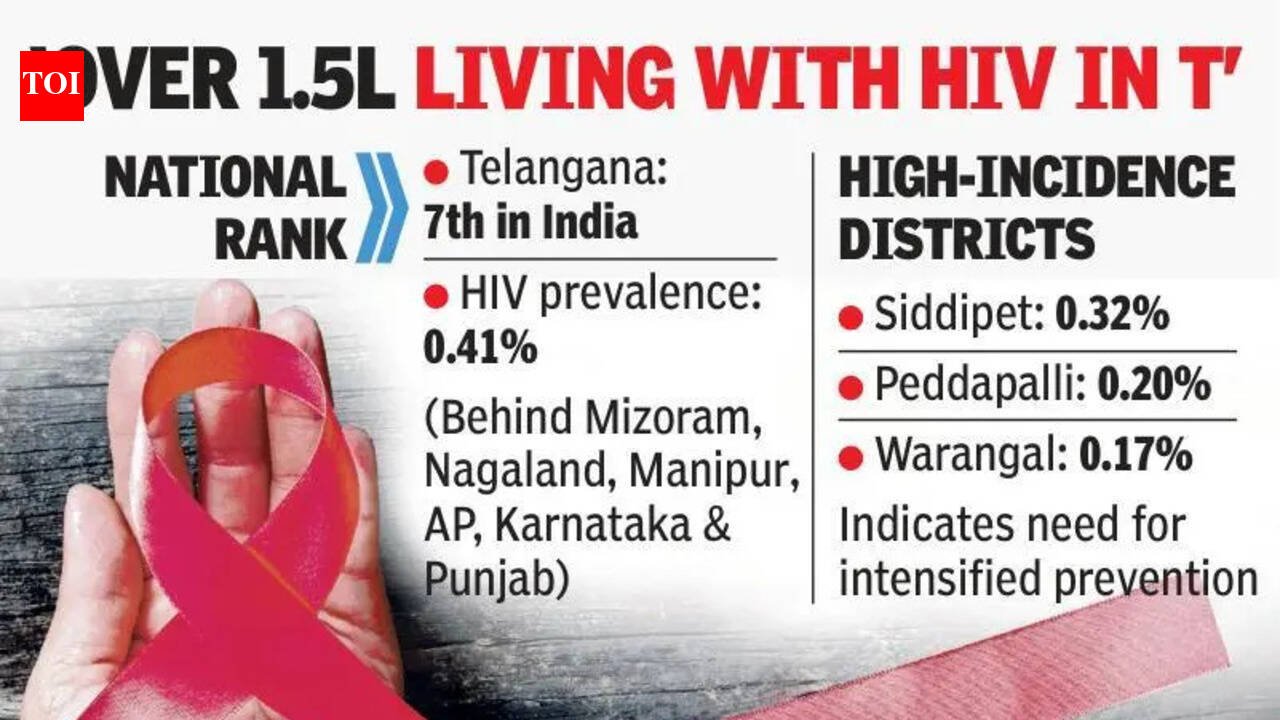
Hyderabad: Telangana, in line with the National AIDS Control Organisation (NACO) norms, has stepped up efforts to achieve global HIV targets through a focused strategy called Mission AIDS Suraksha (MAS).As part of this, 19 districts, including Hyderabad, Rangareddy, Siddipet, Sangareddy, Peddapalli, Warangal, Medak, Adilabad and Khammam, have been identified as high-priority areas for targeted interventions. The initiative aligns with the UNAIDS HIV control goals under the 95-95-95 strategy, which aims for 95% of people with HIV to know their status, 95% of those diagnosed to receive treatment, and 95% of those on treatment to achieve viral suppression. Currently, Telangana stands at 85-93-98.“What we are lagging behind in is identifying all HIV-positive individuals, possibly due to low OPD-based HIV testing and underperforming facilities, limited community-based screening in uncovered areas, and inadequate coverage of tribal, prison and migrant populations. Weak TB-HIV coordination and limited follow-up of partners of those testing positive are also concerns. Moreover, delays between HIV diagnosis (ICTC) and therapy registration persist, as many hesitate due to stigma, fear and lack of counselling. All this will now be the primary focus of this initiative,” said a senior official from the health department.‘10k new cases yearly’According to the govt’s Telangana State AIDS Control Society (TGSACS), there are over 1.56 lakh persons living with HIV (PLHIV) in the state, with nearly 10,000 new cases registered every year. However, over the past two years, officials claim that Telangana has moved from 33rd position to 10th place nationally in NACO’s HIV control indicators. The state is also meeting its annual screening target set by NACO of around 17 lakh tests, with increasing emphasis on community-based screening.“The HIV prevalence rate in the state has declined from about 0.44% in 2023 to 0.41% in 2025. However, the 19 priority districts identified have an overall incidence of 0.12% and a prevalence of 0.47%, indicating a moderate but concentrated epidemic. These districts account for 96% of people living with HIV and all high-risk groups in Telangana,” the official added.The health department now aims to achieve zero new HIV infections by Dec 2026, with efforts continuing until Dec 2027, as experts emphasise that viral suppression is key to stopping transmission.S Sangeetha Satyanarayana, commissioner, Health and Family Welfare Department, said the strategy focuses on identifying every undiagnosed case, ensuring treatment to curb transmission. “To achieve this, focused screening camps in tribal areas, prisons and migrant clusters, along with mapping of high-risk locations such as tourism areas and massage parlours, will be conducted,” she added.
