


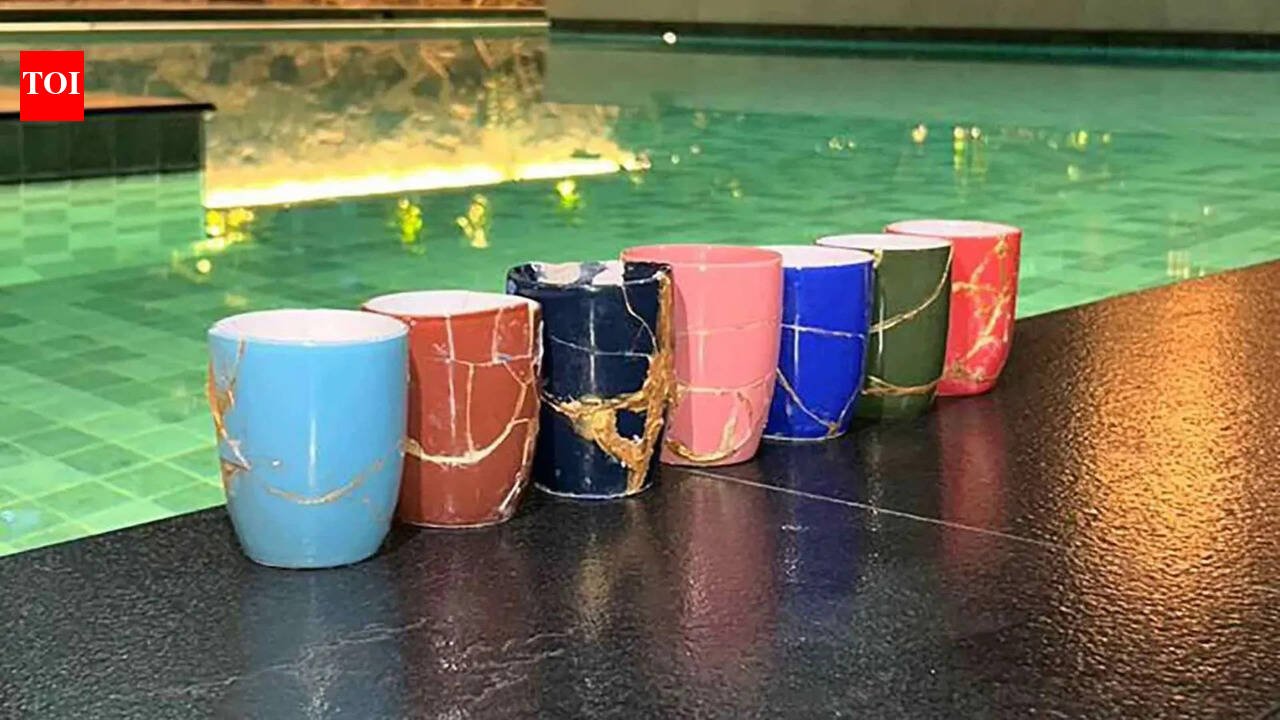
Break it, then make it whole again — but this time, with a golden scar. This is the essence of Kintsugi, a Japanese philosophy that teaches that perfection is overrated. By joining ceramic shards with gold-toned resins, hobbyists in Hyderabad are discovering that a repaired piece is often more resilient and beautiful than the original.
‘They come in hesitant, leave satisfied’“When we first discovered it, we experimented ourselves using a ceramic cup. We learned the process through online research and videos, and then figured out how to teach it effectively. After several trials, we began hosting workshops early last year,” says Chaitanya Chavva, member of a city-based event company. He shares that the response from participants has been encouraging, with many drawn to both the process and its calming nature. “Participants generally find the experience very beautiful and peaceful. Many initially feel unsure about whether they can break and repair the object properly, but with guidance, they are able to complete it,” he says.‘Kintsugi encourages people to pause and engage in something real’The practice is becoming a popular weekend activity for those looking to disconnect from digital screens. “Kintsugi, both as a philosophy and an art form, encourages people to pause and engage in something real. It acts as a refreshing break from their weekday routine,” says Saurav Arya, founder of an events company operating in Hyderabad. “Using materials like ceramic mugs or bowls, adhesive, gold powder, and moulded clay, participants focus on the process as much as the outcome. The experience teaches patience and acceptance, highlighting how repair can add meaning to something broken.”
Shravani Sanku & Jhansi Lakshmi Yella
The process of breaking and repairing the object was new and enjoyable, especially for beginners like us. We had a basic sense of the concept, but actually doing it ourselves made the experience much more engaging
Shravani Sanku, a software professional
‘It feels great to create something beautiful out of broken pieces’For Jhansi Lakshmi Yella, a software engineer who attends Kintsugi workshops in the city, the experience began with hesitation but soon turned into something more meaningful. “Initially, I was scared because we had to break the mug ourselves. But once we turned it into an art piece, it felt really good. It was satisfying to create something beautiful out of broken pieces, especially since we worked together and met new people,” she says.
Credits: @milaap.events
‘It turns broken things into something more beautiful’Manpreeth Singh Nishter, who runs a pottery studio in the city, views Kintsugi as a way to rethink how people treat broken objects. “I often advise people not to discard items immediately. Instead of creating waste, it offers a way to repair and transform them, sometimes making them even more beautiful than before,” he says, adding, “Many people bring sentimental objects they want to preserve, which makes the process more personal. The workshops usually see around 20 participants per session, and they really enjoy the experience.”
Ankitha Pilli
While watching it in Japanese films, I imagined Kintsugi as a calm, meditative process. Experiencing it felt similar — engaging and soothing. One unique aspect was breaking the object ourselves in a way that still allowed us to repair it thoughtfully
Ankitha Pilli, a software professional
“The process requires patience. You join the pieces, let them set, and apply gold. There are many techniques, and in Japan and China, it can take days or even months, with careful bonding, sanding, and detailed application. What we do in workshops is a simpler version that takes a few hours,” explains Sowmya Thurimirla, who runs an architecture studio in Jubilee Hills and learnt the technique in Japan.
