


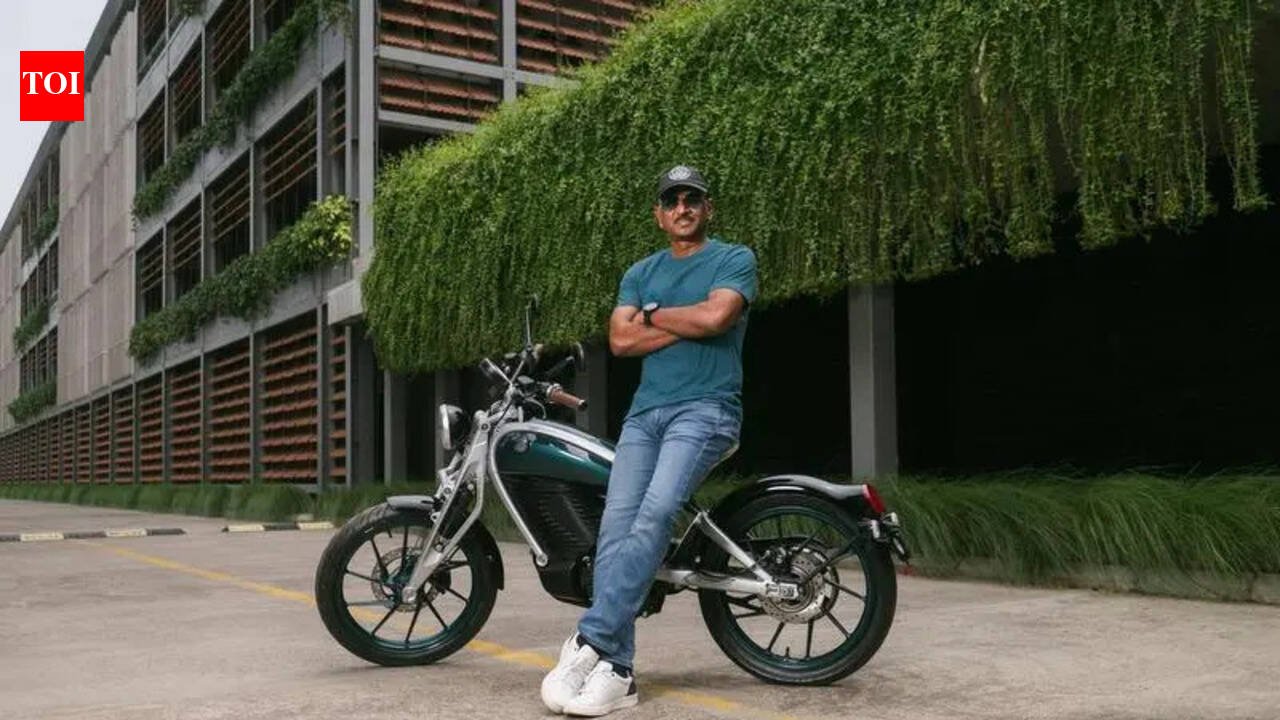
Chennai: Royal Enfield, part of Eicher Motors, is charting an unconventional course in India’s nascent electric two-wheeler market, moving away from the price-led, commuter-focused segment that has driven early adoption. Instead, it is entering the space with a new sub-brand, Flying Flea, aimed at creating a distinct premium category rather than competing directly with mass-market electric two-wheelers.The initial line-up under the Flying Flea platform will include the C6, followed by a scrambler-style S6. Bookings and test rides for the C6 open in Bengaluru on April 10, with deliveries scheduled for late May 2026. C6 offers an IDC-certified range of 154km, a top speed of 115km/h, and over 400Nm of wheel torque. Weighing 124kg, Royal Enfield’s first electric motorcycle is priced at Rs 2.79 lakh (ex-showroom), or Rs 1.99 lakh under a battery-as-a-service model. Rollout will be phased.The company is steering clear of the mass commuter segment, instead targeting premium buyers drawn to design, performance and brand heritage. “In contrast to competitors prioritising cost efficiency and urban commuting, Royal Enfield is positioning its electric portfolio around what it calls ‘city-plus’ usage—a blend of everyday riding and short-range leisure exploration,” B Govindarajan, MD of Eicher Motors and CEO of Royal Enfield, told TOI.RE has invested about Rs 400 crore in its EV programme, including Rs 120 crore in a dedicated R&D facility. EVs currently account for 10% to 12% of overall capex, a share expected to rise. Production is being readied at its Vallam Vadagal plant near Chennai, with a capacity of up to 1.5 lakh electric motorcycles annually.While electric scooters have gained traction in the country, electric motorcycles remain underdeveloped, with only a handful of players. Govindarajan sees this as an opportunity to replicate Royal Enfield’s success in building the mid-weight ICE segment by cultivating demand for differentiated electric offerings.The Flying Flea EV brand draws inspiration from a lightweight (around 60 kg) motorcycle used during the Second World War, originally designed to be air-dropped by parachute—a legacy that, Govindarajan said, reflects its focus on agility and minimalism. “We intend to scale gradually through a ‘community-first’ approach that prioritises rider engagement and feedback,” he added.The models will be powered by a 3.91kWh lithium-ion battery, capable of charging from 20% to 80% in just over an hour, with a claimed efficiency of roughly 1km of range per minute of charging.For after-sales, the company will leverage its network of around 2,000 outlets through a hub-and-spoke model. Routine servicing will be handled at local toughpoints, while complex repairs — especially battery-related — will be routed to specialised centres. Over-the-air updates and app-based diagnostics are expected to reduce service dependency further.
