


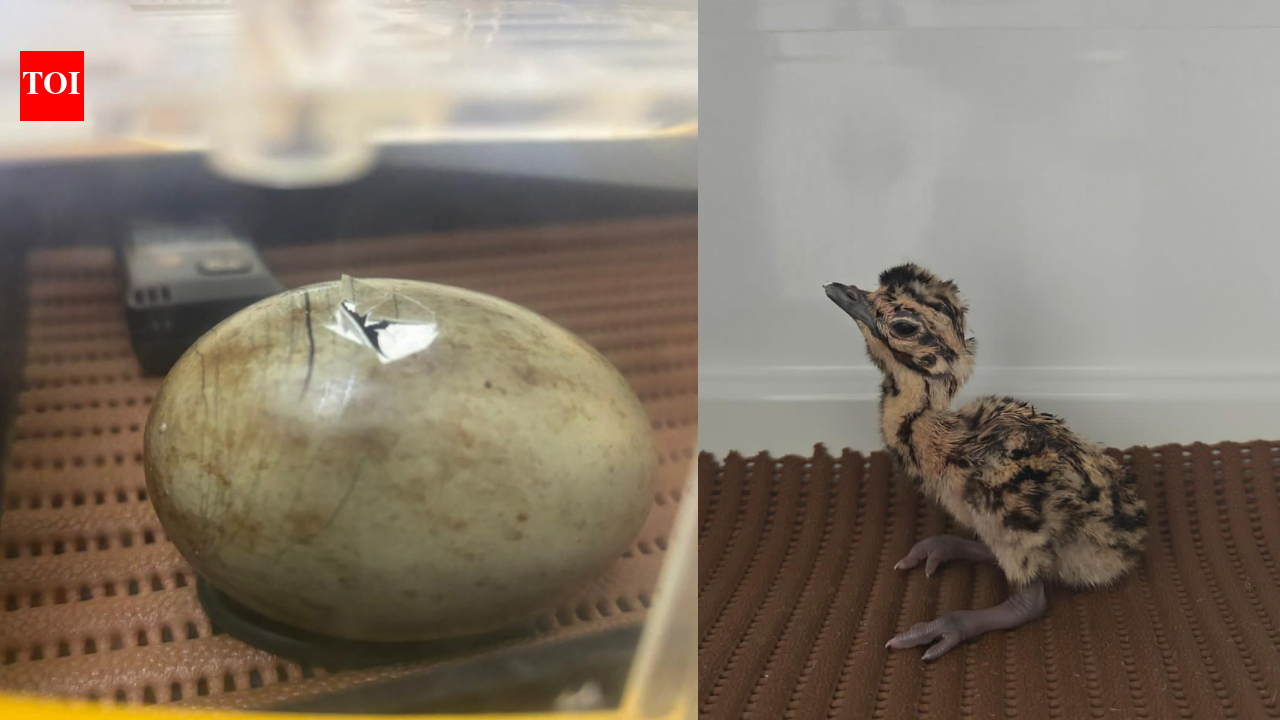
JAISALMER: A major breakthrough in wildlife conservation has emerged from Rajasthan, with breeding centres for the critically endangered Great Indian Bustard (GIB) reporting encouraging progress. In the first month of the fourth breeding season in 2026, the conservation programme has added eleven captive-bred chicks, signalling a positive outlook for the species’ survival.With three new additions, the total number of GIBs at the two conservation centres—Sudasari and Ramdevra—has reached 79.The Wildlife Institute of India shared the update on Friday. The latest development includes the birth of three new chicks at breeding centres in Jaisalmer, run in collaboration with the Rajasthan Forest Department under “Project Bustard”. These chicks were born through a combination of artificial insemination (AI) and natural breeding, reflecting the effective use of modern scientific methods in conservation.The total population now includes 33 founder birds hatched from eggs collected in the wild and 46 chicks bred in captivity since the programme began in 2019. Of the captive-bred birds, 21 were produced using AI, while 25 were born through natural breeding.Officials described the achievement as a significant milestone, especially given the fragile status of the species, which is listed under Schedule I of the Wildlife Protection Act and is on the brink of extinction.Dr Suthirtho Dutta, GIB specialist and breeding centre coordinator, said the bird, locally known as “Godawan”, is the state bird of Rajasthan and faces threats such as habitat loss, power line collisions, and human disturbance.He said the recent hatchings took place at two breeding centres in Jaisalmer. According to officials, the parent pairs of the latest chicks include female Jerry with male Oran (April 4), female Toni with male Parv (April 9), and female Sharky with male Suda, indicating growing stability in managed breeding pairs.Desert National Park DCF Brij Mohan Gupta said the programme is steadily progressing towards its goal of releasing captive-bred birds into the wild. With continued scientific support, monitoring, and coordination between agencies, officials are hopeful that reintroduction timelines may be achieved earlier than expected.Experts believe that the steady rise in numbers strengthens the recovery prospects of the species and reflects India’s commitment to biodiversity conservation. Conservationists remain hopeful that the Great Indian Bustard population will recover enough to ensure its long-term survival in the wild.
