


Gulf nations will seek to add security partners as they rebuild battered economies after the US and Israel’s war on Iran and deal with an emboldened Tehran.
The Gulf will have to live with a continuing threat from the regime in Iran and its remaining missile arsenal. American bases on their soil turned them into targets for Iran, as it retaliated against a joint attack by the US and Israel.
But, the countries say they can’t tolerate Iran keeping control of the strait of Hormuz, through which most of their trade flows. In agreeing to a ceasefire this week, Iran insisted it would retain the hold it took during the war over the waterway, which would allow Tehran to throttle the Gulf at will. The future of the strait will be one of the main disputes to be negotiated between the United States and Iran, in talks in Islamabad due to start as soon as Friday.
Gulf nations trumpeted success in largely intercepting the Iranian barrage of missiles and drones over the five weeks of the conflict, showing they can defend themselves.
The countries are, however, split over future relations with Iran, with a hawkish grouping led by the United Arab Emirates and Bahrain taking a harder line, and other nations hoping for peace through renewed ties with Tehran, experts say.
Iranian state media said on Wednesday that the UAE was probably behind an attack on its oil facilities on Lavan Island, hours after the announcement of a ceasefire, and Iran hit back. It would be the only known offensive action by a Gulf nation in the conflict. The UAE has not commented.
Saudi Arabia and Iran on Thursday held their first official contact since the conflict began, in a call between the two foreign ministers that “discussed ways to reduce tensions to restore security and stability in the region”.
Bader Mousa Al-Saif, a professor at Kuwait University, said the Gulf should reconsider its security, forming partnerships with countries such as Turkey and other middle powers, as opposed to relying solely on the US. He said that the region must get away from the danger of conflict repeatedly erupting now, so that economic foundations can be reset.
“It behoves all the countries in the region to rethink the model,” said Al-Saif. “The question is how to insulate the region as a whole from going into a forever war.”
The likes of Turkey and Pakistan, which have large and capable militaries, look set to play a bigger role in the Gulf. There were moves in this direction even before the war.
In recent months, Saudi Arabia forged a defence pact with Pakistan and the UAE announced a defence partnership with India. During this conflict, Saudi Arabia, the UAE and Qatar hurriedly signed defence agreements with Ukraine, to tackle the threat from Iranian drones.
There have been calls for a “Muslim Nato”, but that idea is considered highly unlikely. A new alignment emerged in March of Saudi Arabia, Turkey, Egypt and Pakistan, “Step”. However the rivalries between those countries, and the lack of clarity on whether they are protecting against Iran or Israel complicates the relationship. Turkey and Pakistan border Iran and do not want to see confrontation with Tehran.
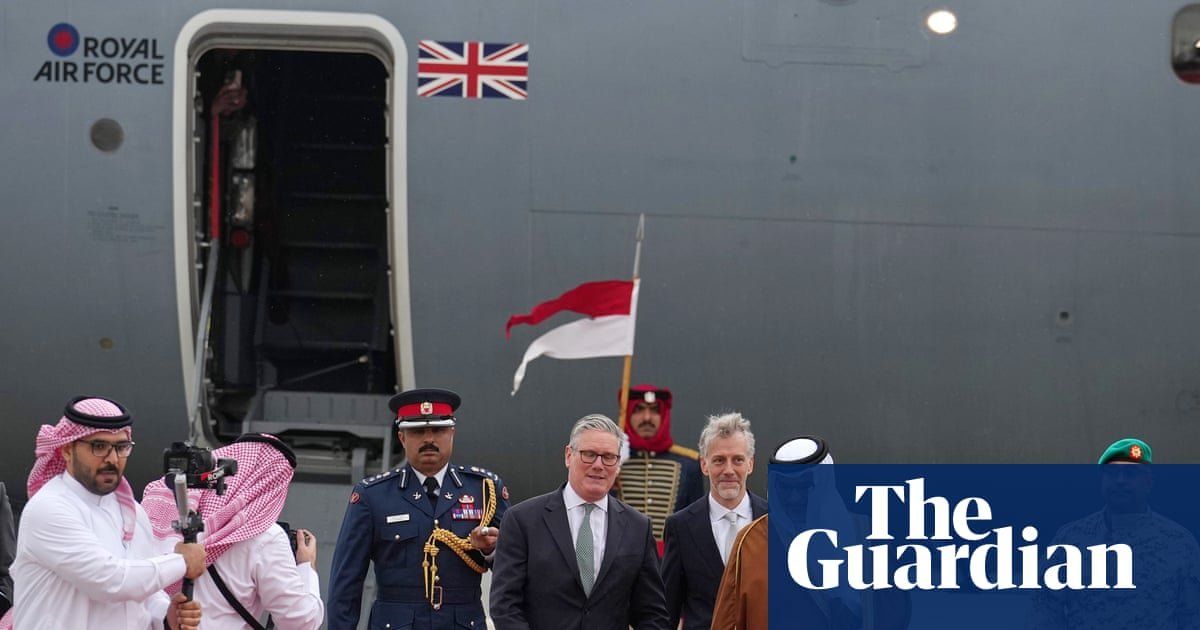
The UK, which helped defend Gulf skies during the war, could also be involved. Arriving in Jeddah on Wednesday, Keir Starmer discussed with the Saudi crown prince “how the UK and Saudi Arabia could further deepen their defence industrial cooperation to boost capability and mutual security”.
Abdulkhaleq Abdulla, a political science professor in the UAE, said that he expected security ties with the US to deepen and others to join the UAE in having relations with Israel – a partnership that includes military and intelligence ties.
The UAE was hit hardest by Iran, targeted by 2,256 drones and over 563 missiles, with more than 90% intercepted, according to the authorities. That compared with about 850 projectiles fired by Iran at Israel.
“Iran has evolved over the past 40 days as public enemy number one, to the UAE and to the other Arab countries,” said Abdulla. “With that kind of public enemy number one, you really need to be on guard for 24 hours, seven days a week.”
Yasmine Farouk, Gulf project director at the International Crisis Group thinktank, said that Saudi Arabia was better positioned to recover, with its oil pipeline and ports on the Red Sea, the size of its territory, and energy infrastructure not hit as hard as some other Gulf nations. However, reconstruction costs may impact Riyadh’s signature drive to diversify its economy by 2030.
“Saudi Arabia has strategic depth, and the resources to recover. Its geography helped it a lot,” said Farouk.
Andreas Krieg, an associate professor at King’s College London, said the Gulf would not seek to replace American protection, but layer on security partnerships with others, especially Europe. He expected Gulf countries to invest more in air and missile defence, hardening of ports and desalination plants, maritime surveillance, and alternative export routes.
“The United States is still the only outside power with a real military architecture in the Gulf, but it now looks to many Gulf leaders like an unreliable and very expensive security provider in a relationship where the Gulf often pays heavily and still bears the retaliation risk,” said Krieg. “The bases will stay, but they now look less like shields and more like tripwires.”
