


The “saree stakeout” tradition recently went viral again thanks to a reel by Shourya (@off.script). She captured a massive crowd lining up in the middle of the night at a KSIC (Karnataka Silk Industries Corporation) store, where people waited over seven hours just for the doors to open.
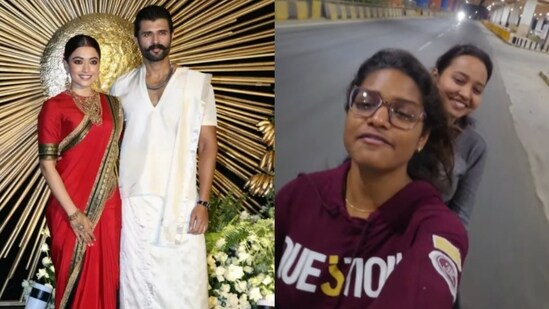
“It’s 3:45 am and we’re heading to a place no one talks about,” she says in the reel, adding that despite arriving early, a long queue had already formed. “I stepped out briefly for coffee, and when I came back, 53 names had been added ahead of me.” While waiting, she spoke to others in the queue—one woman had arrived at 3:00 am, while another man claimed he came the previous night at 9:00 pm to be first.
Despite the dedication, the store opens only between 10:00 and 10:30 am. Entry is strictly controlled: getting a token alone took her nearly six hours, only 10 people are allowed inside at a time, and each group gets just 10 minutes to shop. “You get only one saree per token,” she said, adding that their popularity comes from premium mulberry silk and pure gold zari, with prices fluctuating based on gold rates.
Why is there so much hype around these sarees?
According to design consultant and fashion designer Deepika Govind, the shift has been dramatic. “At one point, KSIC was struggling, with limited designs and competition from cheaper alternatives. But the vision was always to offer something truly premium and authentic, while paying homage to our home state—Bangalore, the City of Silk.”
Today, demand far outpaces production. “Earlier, they had to push sales; now it’s about managing demand. These sarees are seen as long-term investments. They also used to hold vintage saree competitions where grandmas used to walk the ramp in 70 to 80-year-old pieces that still look as lustrous as they used to,” she adds.
Much of this comes down to craftsmanship. KSIC is among the few organisations in India that controls the entire production process—from cocoon reeling to weaving—under one roof. Each Mysore silk saree comes with a unique code and hologram certifying its pure gold zari, which is guaranteed not to tarnish. The fabric itself is equally prized. Mulberry silk, produced by the Bombyx mori silkworm, is known for its fine, uniform fibres, thanks to a controlled diet of mulberry leaves.
From wardrobe staple to investment
For collectors like Pooja R, a network engineer and long-time saree collector, the appeal is both aesthetic and emotional. “My mom has always had a beautiful collection of sarees, and that’s where it started for me,” she says. “I’m especially drawn to Mysore mulberry silk with pure gold and silver zari—it’s as lightweight as a cotton saree, easy to wear, and has this quiet richness.”
However, the quiet richness now comes with a loud price tag. Due to rising gold prices across the country, demand has surged in recent years. Waiting in queues is a novel, if exhausting, experience for Bangalore citizens. “Earlier, you could walk in anytime, there were no queues,” Pooja notes. “But in the last one to one-and-a-half years, prices have gone up with gold, and now people wait for four to six hours just to get in.”
The price jump has been significant. “A saree that cost ₹20,000 two years ago is now ₹50,000 or more. Some even go up to ₹70,000, ₹80,000, or ₹1 lakh. But the craze has only increased because people see it as an investment—it’s comfortable, timeless, and holds value.” For Pooja, the connection is deeply personal. “I have nine sarees now, many passed down from my mother. The love for these sarees hasn’t changed in decades—you’ll see people in their 50s and 60s still standing in line for them. That’s the legacy.”
A showbiz favourite
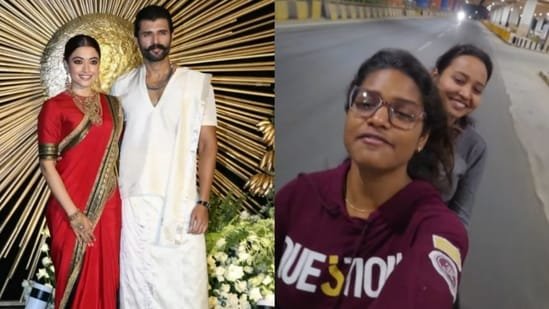
The allure of Mysore silk isn’t just restricted to the 3:00 AM queues in Bangalore; it has found a permanent home in high-fashion couture. Most recently, the fabric took centre stage at the wedding reception of actors Rashmika Mandanna and Vijay Deverakonda in Hyderabad. In a viral moment for South Indian traditional style, Rashmika chose a resplendent red Mysore silk saree featuring a striking black-and-gold border.
The ensemble, curated by the label Jade and featuring handwoven silk from Madhurya Creations, was a masterclass in symbolic luxury. The highlight was the pallu, which featured the Gandabherunda motif — a mythical two-headed bird from Karnataka’s royal history symbolising strength and vigilance.
