


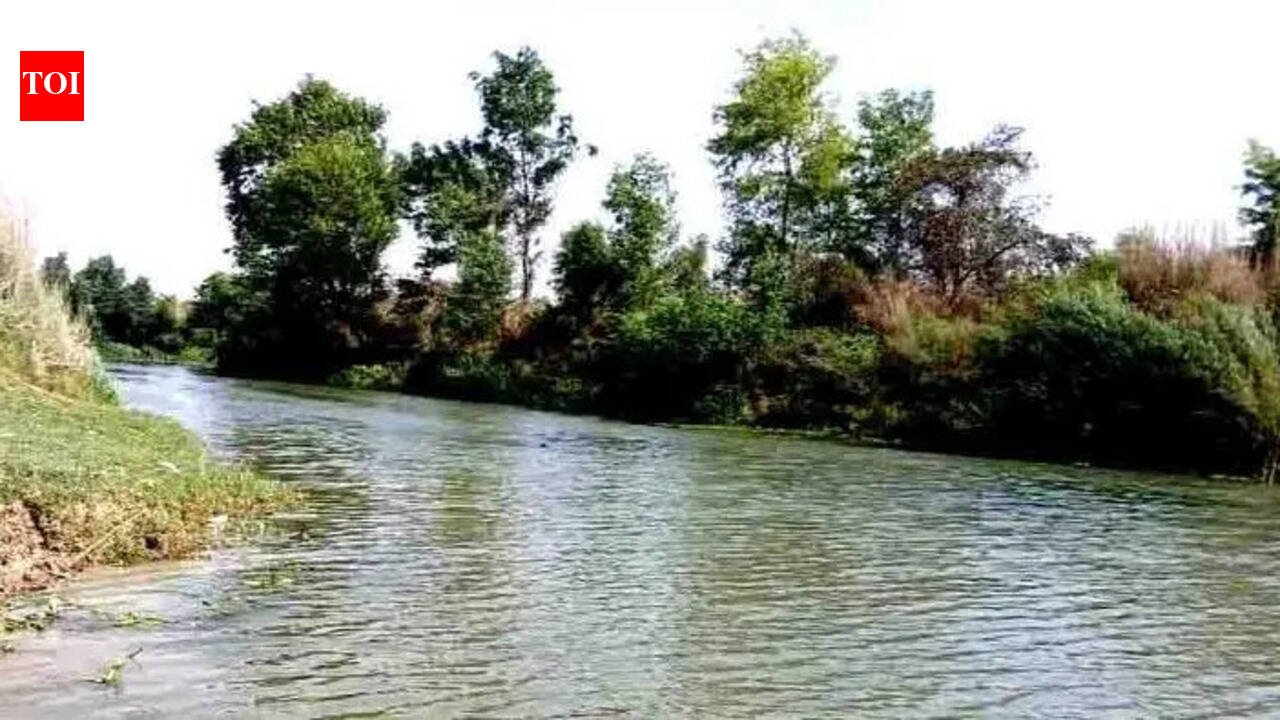
Prayagraj: The state govt’s effort to breathe a new life into the dwindling small rivers of UP is moving forward with a campaign to restore the Chamraura river, which flows through 10 gram panchayats (village councils) in Pratapgarh district.District magistrate (Pratapgarh) Shiv Sahay Awasthi said that in accordance with the govt’s intent, endangered rivers within the district are being identified and subsequently restored. The Chamraura — an ancient river of the district — has been selected for this purpose. The river spans a total length of 24km within Pratapgarh district; consequently, a detailed project report (DPR) for its rejuvenation has been prepared to ensure the unimpeded flow of its waters.The Chamraura stands as one of the most prominent among the district’s ancient rivers. The river originates in the village of Para Hamidpur — located within the Sandwa Chandrika development block — and eventually merges with the Sai river in the Ranjitpur gram panchayat area of Chilbila. The river traverses through several villages across the district, including Para Hamidpur, Lohangpatti, Gobari, Sangrampur, Purabpatti, Raghunathpur, Kamas, Pithpur, Gode and Ranjipur (Chilbila).Deputy commissioner of MGNREGA (Pratapgarh), Santosh Singh said that the work to revitalise the river is commencing from Para Hamidpur, for which a budget of Rs3 crore has been proposed. Various govt departments — including MGNREGA, rural development, irrigation, forestry, horticulture, land conservation, geology and minor irrigation — will collaborate to support this campaign. Revitalising rivers requires an inclusive approach. Consequently, the administration has appealed to voluntary organisations, groups of village heads, public representatives and women’s self-help groups to come forward and extend their cooperation. To this end, excavation work, tree plantation and the construction of check dams and embankments will be undertaken.River expert Samaj Shekhar asserted that it is essential to execute these activities on a gram sabha (village assembly) basis. For effective water management, in addition to interconnecting ponds linked to the river, active participation from the local community must be ensured.
