


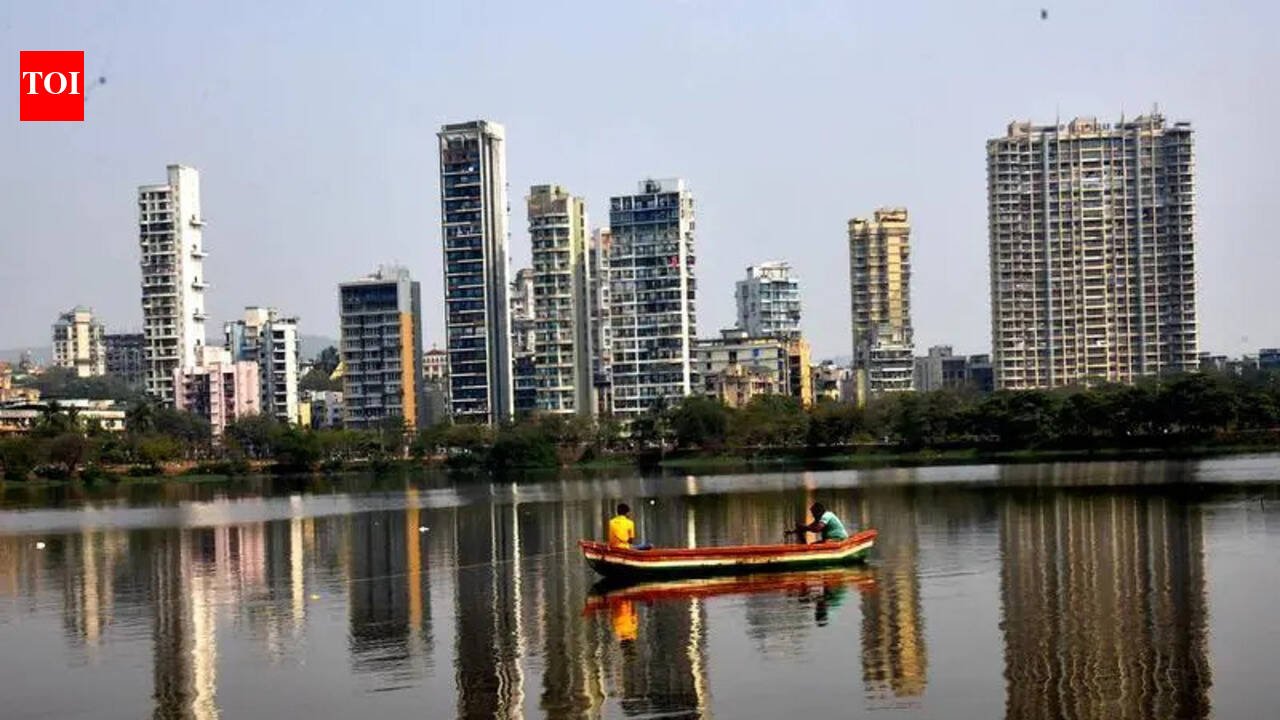
Navi Mumbai: In a landmark move to deliver cleaner air and healthier living, the Navi Mumbai Municipal Corporation (NMMC) general body has approved a comprehensive air pollution eradication and air quality improvement programme. The civic body has allocated Rs 30 crore to implement the plan. The plan sets an 18-month time to achieve the science-led roadmap to cut particulate pollution, stabilise the air quality index, and build a data-driven enforcement system across the city in view of rising air pollution.Former mayor and NMMC House leader Sagar Naik, who conceptualised the plan, said the programme marks a transformative step toward making Navi Mumbai a model for environmental management, aligned with the BJP’s commitment to a zero-dust, pollution-free city under the leadership of forest minister Ganesh Naik.At the heart of the initiative is a citywide monitoring and detection network designed to measure pollution in real time and pinpoint sources with precision. The system will include continuous ambient air quality monitoring stations, ward-level particulate sensors, and tracking of key pollutants such as PM2.5, PM10, sulphur dioxide, nitrogen oxides, carbon monoxide, ozone and volatile organic compounds. Meteorological inputs like humidity, temperature and wind patterns will be integrated to improve accuracy and response. To strengthen source identification, the programme also proposes vertical atmospheric profiling using tethered balloon systems and periodic near-space balloon observations. This will help determine whether pollution is locally generated or transported from outside, and detect inversion layers that trap pollutants near the ground.“A major pillar is the zero exposed soil policy, mandating the elimination of exposed soil on public and private land through paving, gravel, vegetation or soil-binding methods. Road-edge sealing, shoulder stabilisation, and improved drainage will prevent dust migration and reaccumulation. A mechanised cleaning drive will remove legacy dust using vacuum sweepers, road scraping, and high-pressure water jet systems, with priority on highways, transport corridors, and identified hotspots,” said Naik.According to the plan, construction and demolition sites will face stricter compliance, including mandatory barricading, dust suppression through spraying and fogging, wheel-washing facilities, covered transport of materials, and real-time monitoring with penalties for violations. The plan also targets emissions from vehicles and generators. AI-enabled cameras will detect smoke-emitting vehicles and uncovered material transport, linked to number plate recognition for enforcement.Diesel generator sets will require registration, emission compliance, and periodic inspections. Open waste burning will be fully banned with stronger collection systems and surveillance, said an official. “Governance will be anchored by an environmental command and control centre, ward-level monitoring, inspections, penalties, and a public dashboard for transparent air quality updates,” said mayor Sujata Patil.
