


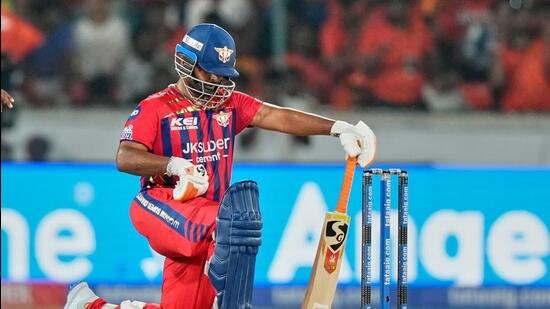
Kolkata: One of the prominent clips used in TV promos for the Indian Premier League shows Rishabh Pant making a somersault to celebrate reaching his hundred last season. Then there is the awkwardness surrounding a conversation with the Lucknow Super Giants owner Sanjiv Goenka after the opening game defeat in IPL 2026 at home to Delhi Capitals last week.
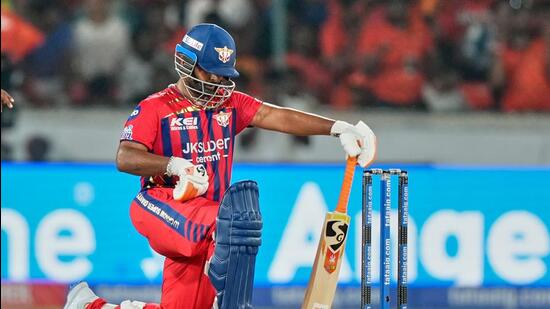
This Pant footage prompted comparisons with the clip of a similar conversation with then skipper KL Rahul as LSG’s 2024 season fizzled out. The franchise’s social media team then tried to douse the negativity with an ‘unedited’ video of the Pant chat. Oscillating between the two extremes is the latest reminder from Pant that his T20I career is not a fading chapter but an unfinished argument.
For a while now, Pant’s place in the India T20 team has been framed less by his audacious shot-making and more by his inconsistencies. The format, ruthless in its demand for immediacy, has not always been kind to players who put instinct over structure. Pant, with a high back lift and a higher risk-imagination, has often found himself caught between expectation and execution. The cameos as a result have become shorter, and his place in T20 conversations increasingly conditional.
And yet, against Sunrisers Hyderabad on Sunday, he chose his moment with a clarity that shone a different light on Pant. For one, he went from the experiment as opener to No.3 after one failure—run out for seven at the bowler’s end while backing up too far. It was not the chaotic Pant of old in Hyderabad, swinging at possibility alone. Nor was it a subdued version trying to conform to modern T20 orthodoxy. It was something rarer—reconciling both while playing shots in front of the wicket. No unnecessary risk-taking was needed and none taken.
The innings began quietly enough—Pant took 12 balls to score his first boundary—and quite cautiously by his standard. The early exchanges suggested a batter willing to read the game on a sluggish pitch rather than try to rewrite it instantly. There was no reckless charging down the pitch or premeditated reverses in the first over. Instead, there was placement, timing, and the patience which tends to be rewarded with wins.
The thing is patience is an underrated quality in T20 cricket. The format celebrates explosive shots, but it is often anchored on restraint. Pant seemed to understand this during the chase against Sunrisers. He absorbed pressure when needed, rotated strike when boundaries were scarce, and trusted that the acceleration would come. When it did, it arrived not in a frenzied way but as a controlled release.
Of course, Pant had to play like Pant at some point of the chase. Which is why the sweep shots felt deliberate, the pulls authoritative, and the lofted drives calculated rather than desperate. But most convincing was the way Pant took the reins of the chase in the last three overs.
Jaydev Unadkat wasn’t the most disciplined bowler but he still had to be put away for three boundaries to seal that win. And Pant did it by getting two of those off his chest in the first two balls. Pant hadn’t abandoned risk completely, but chose it more wisely with victory in sight. That was nothing short of a T20 reclamation on his part.
It was timely because the narrative around Pant is that he is stupendous in Test cricket because of the same instinct that renders him a T20 misfit. There have been innings that have dazzled while many have dissolved too quickly. In a format increasingly dominated by specialists, and players engineered for specific phases and match-ups, Pant’s improvisations have sometimes appeared out of place.
But the innings on Sunday suggested that perhaps the format still has room for his type of batting. That unpredictability, more harnessed rather than suppressed, can still be a virtue.
Perhaps the target of 157 wasn’t big enough to test Pant. Sunrisers’ bowling, though valiant in the middle overs, probably didn’t have the sting either when it mattered. Then there is the argument that in a tournament as long and volatile as IPL, one innings does not rewrite a season, nor does it erase the questions that have shadowed Pant.
But it perhaps does something more valuable—reopens the conversation about Pant’s T20 future.
