


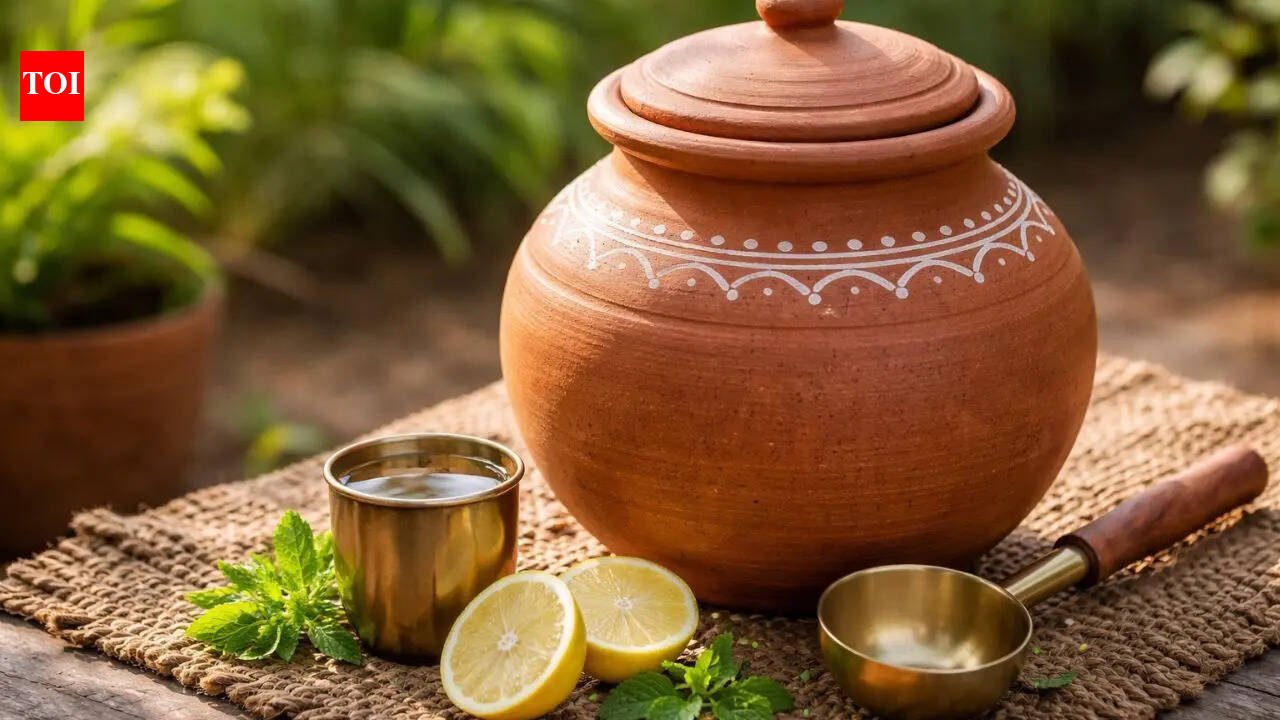
Among the people of India, particularly during the hot summer days, the most comforting drink is always a glass of water in a matka. This is not only natural but also healthier than drinking cold or refrigerated water. Traditionally, the use of water in matkas has been associated with many benefits.However, this long-practised custom has some drawbacks which are often not realised. Even though the water is purified and free from germs and bacteria, the container storing it can cause it to get contaminated without even realising it. This does not have anything to do with the quality of the matka, but rather its use.
Why is matka water considered healthy
Matkas are constructed using natural clay, which is known to have porosity. The slow process of evaporation helps to cool the water naturally, without the need for power.The water kept in matkas is soothing to the throat, besides remaining at an optimal temperature, unlike refrigerator-cooled water. It is believed by many people that clay containers impart essential minerals to the water, improving its taste as well.Thus, matkas may be considered healthier and eco-friendly.
The hidden hygiene concern
However, despite all their advantages, matkas do demand proper maintenance. The porousness of the pot that allows for good cooling properties can also lead to the accumulation of moisture, creating an environment favourable to bacterial growth.If the matka is not cleaned thoroughly enough, there will be an accumulation of deposits on its inner side, thus affecting the water inside negatively. Especially when considering warm weather, bacteria reproduce more actively.According to the World Health Organisation (WHO), drinking water can become contaminated during storage due to improper handling, hygiene, and unclean containers.This makes it clear that even traditionally stored water, like in matkas, can become unsafe if proper care is not taken.The problem here is that the process cannot always be seen since water remains apparently fresh and drinkable in spite of being contaminated by bacteria.
Common mistakes that are often overlooked
In many cases, people are unaware of habits that actually make their matka water less clean. By refilling the matka without cleaning it, people allow residues to build up. When they use their dirty hands or cups that have been used before to drink water from the matka, other substances get mixed with the water.By leaving the lid off or covering it loosely, people expose the water to dust, bugs, and other airborne material. On the other hand, not replacing the water for long periods of time increases its chances of becoming stagnant and developing bacteria in warmer conditions.
How to keep matka water safe
There are no complex methods of taking care of a matka, but there must be regularity. Cleanliness is very important. Sometimes a simple way of cleaning will do the trick: use salt, baking soda, or other ingredients.The right covering of a matka is important too because it keeps all possible contaminants at bay. One should also be careful when dealing with the water; for instance, using a ladle is necessary to prevent contamination.Another rule to follow when using a matka is to change the water often.
Tradition needs attention, not assumption
Indeed, even today, there is no match for the quality of the matka water owing to its natural cooling effects and culture-based significance. But the safety of the matka water is usually ignored.A popular notion suggests that all traditional practices are necessarily superior; however, this is true only when due diligence is exercised. The water served in a matka is likely to be clean and refreshing, but there must always be considerations made about its safety.Disregarding such maintenance procedures might lead to adverse consequences. In essence, despite all the possible threats and associated complications, the matka water continues to remain one of the safest and most sustainable hydration techniques.One must understand that any mode of hydration would necessitate some level of diligence. It is necessary to consider several factors to ensure the safety of the water contained within the pot.It is essential to note that maintaining matka water demands the least amount of effort; nevertheless, all natural sources of hydration require vigilance and caution.
