


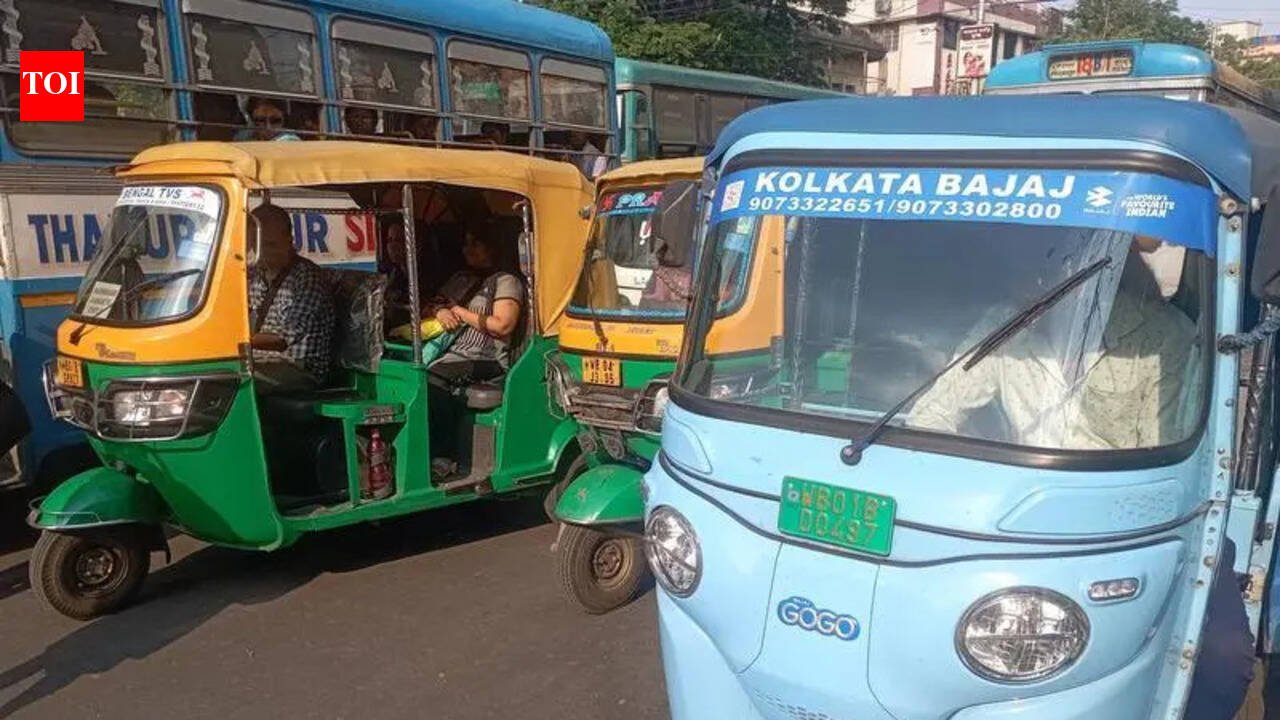
Kolkata: Mounting pressure from unions and commuters in the run-up to the state elections has forced auto drivers across several routes in Kolkata to roll back recent fare hikes, despite a sharp increase in fuel costs. Over the past week, fares that were increased by Rs 2-Rs 7 were either partially reduced or restored entirely to previous levels. The rollback comes despite auto LPG prices surging by Rs 25 per litre in a month, significantly raising operating costs for autos.On the Behala-Rasbehari route, where fares were raised to Rs 32, drivers reverted to the earlier Rs 25 fare on Sunday. A similar rollback was seen on the Tollygunge Phari-Behala route, where fares dropped back from Rs 25 to Rs 20. Several other routes witnessed identical reversals. Commuters travelling between Chingrighata and Sector V saw fares return to Rs 15 after an earlier Rs 3 hike, while routes like Garia-Baruipur and Sonarpur-Garia also reverted to previous rates. The Ultadanga-Sector V route, where the fare jumped by Rs 5, is now back at Rs 35.Auto operators say the initial hikes were unavoidable given the steep rise in fuel prices. But political and union pressure has left them with little choice. “We have families to run, and with the increase in LPG prices, it was becoming impossible to absorb the costs. We were forced to increase fares, but there is immense pressure from the union to revert to the old rates. Party leaders have told us the issue will be discussed after the elections,” said an auto driver on the Behala-Gariahat route.A driver operating on the Tollygunge Phari-Taratala route pointed to temporary adjustments being made to offset losses. “Union leaders met cops last week and, since then, we have been allowed to carry five passengers instead of four. This is only till fares are officially revised,” he said.For commuters, the rollback has brought immediate relief, though concerns remain about the sustainability of such arrangements. “Of course it helps us right now, especially for daily office travel. But if fuel prices stay this high, drivers will suffer,” said Anindita Dhar, who uses the Chingrighata-Sector V route. Transport experts said Kolkata’s auto fares operate in a largely informal framework, often negotiated route-wise and influenced by unions rather than governed by a transparent, citywide pricing mechanism. This creates periodic friction between drivers and commuters, particularly during periods of fuel price volatility.With elections approaching, the issue has taken on added political significance. Any fare increase risks public backlash, while continued suppression of fares puts financial strain on drivers, leaving authorities walking a tightrope between affordability and livelihood concerns.
