


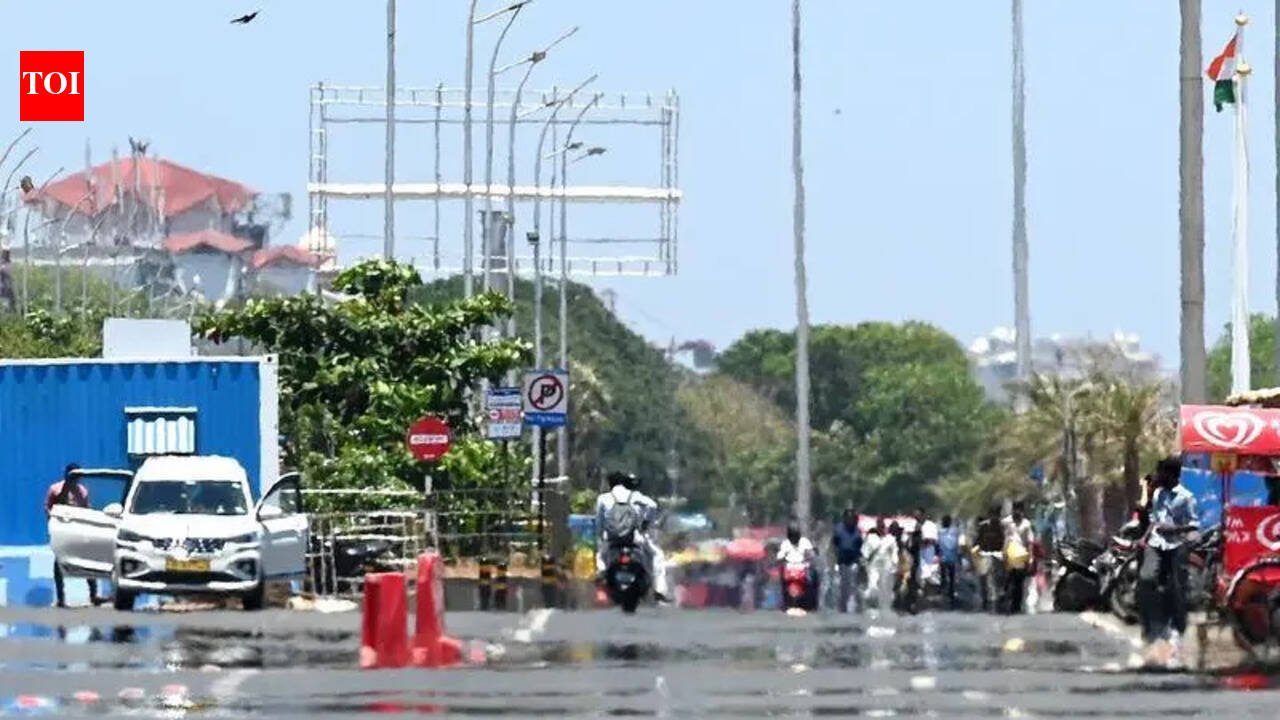
Chennai: The city’s summers are getting hotter, and unevenly so. A study found that densely built neighbourhoods such as Anna Nagar, Koyambedu, Ambattur, Airport and Madhavaram are emerging as persistent heat hotspots, while green and coastal zones including Guindy National Park, the Adyar River and the Bay of Bengal coastline remain rare cooling buffers. The difference is stark even at night.During peak summer nights, land surface temperatures (LST) across the city range between 25C and nearly 30C, with built-up pockets consistently recording the highest values. In contrast, vegetated areas and water bodies stay cooler at around 23.5C.The reason lies in land use. These hotspots are dominated by dense concrete, asphalt and impervious surfaces that absorb heat through the day and release it slowly after sunset. With little vegetation and high built-up density, they retain more heat, intensifying the city’s surface urban heat island (SUHI) effect.Summer SUHI values remain significant at 0.45C-1.4 C, showing that city stays warmer than its rural surroundings even after dark. The study, by researchers from NIT Trichy, analysed satellite data from 2001 to 2022.“Built-up areas frequently exceed 29C, especially during the pre-monsoon and summer periods. In contrast, vegetated regions and water bodies exhibit lower LST due to evaporative cooling and heat absorption by water,” said Aneesh Mathew, corresponding author. “The findings highlight the growing thermal stress in Chennai and underline the urgent need for climate-responsive urban planning.”Winter offers no respite. The heat island effect is stronger at night in winter, often exceeding 2C, indicating even greater heat retention despite lower seasonal temperatures. Night-time LST during winter remains between 22C and 25C, with dense urban areas consistently warmer.Across Tamil Nadu, night-time LST have risen by 1.61C over two decades, pointing to a broader warming trend layered over rapid urban expansion.At its core, the problem is structural: shrinking green cover, expanding built surfaces, and rising anthropogenic heat from vehicles and buildings reduce the city’s ability to cool, especially after sunset. To reduce heat stress, the researchers call for more urban green cover, protection of water bodies, and planning that allows heat to dissipate instead of accumulating and keeping the city hot long after the sun goes down.
