


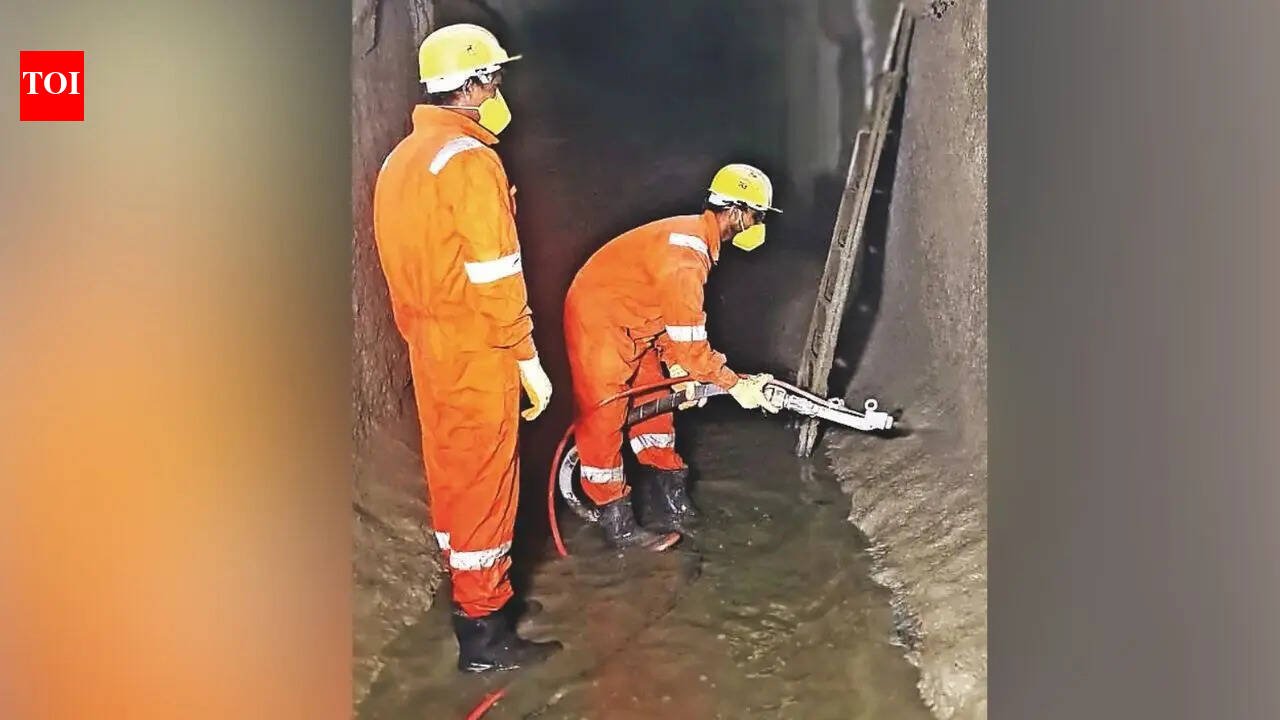
MUMBAI: The city’s century-old underground stormwater arch drains are undergoing an upgrade, with the BMC’s ongoing project using geopolymer lining trenchless technology — a first-of-its-kind initiative in the country. The work will cover 27 critical stretches of drains spanning 14.3 km in the island city, along with five years of maintenance. Civic officials said the intervention is expected to extend the lifespan of these British-era drains by at least 50 years while improving their discharge capacity during heavy rainfall.Mumbai currently has a 495-km-long network of underground stormwater arch drains in the island city. While routine desilting is carried out by the operations and maintenance wing of the storm water drains (SWD) department, recent CCTV surveys have flagged structural concerns in several sections. Officials found multiple defects, such as cracks, brick displacement, loss of mortar, and even partial collapses in parts of the ageing network.
Happening 1st time in country
A total of 56 drain components, measuring 23.5 km, were identified as being in a damaged condition. Of these, 27 components — covering 14.3km — were categorised as critical and in need of immediate rehabilitation to prevent potential collapse.To address the issue, the SWD department consulted experts from IIT Bombay and VJTI. Based on their recommendations, a technical advisory committee concluded that geopolymer lining using trenchless technology was the most suitable solution among the available options.“The technology allows internal strengthening of the drains without extensive excavation, making it less disruptive and faster to implement,” a civic official said. “Once completed, it will not only reinforce structural stability but also improve flow velocity, ensuring quicker disposal of rainwater during intense downpours.”The move comes against the backdrop of increasingly erratic and intense monsoon patterns in Mumbai, where instances of nearly 1,000mm of rainfall over a few days have been recorded in recent years, often leading to waterlogging in low-lying areas.Officials said the geopolymer lining method is environmentally friendly and widely used in countries such as the US, though this marks its first large-scale deployment in India. The project is currently underway in the city area, with civic engineers monitoring progress at key outfalls and stretches. Once completed, BMC plans to assess further phases to cover additional vulnerable sections of the drainage network.
