


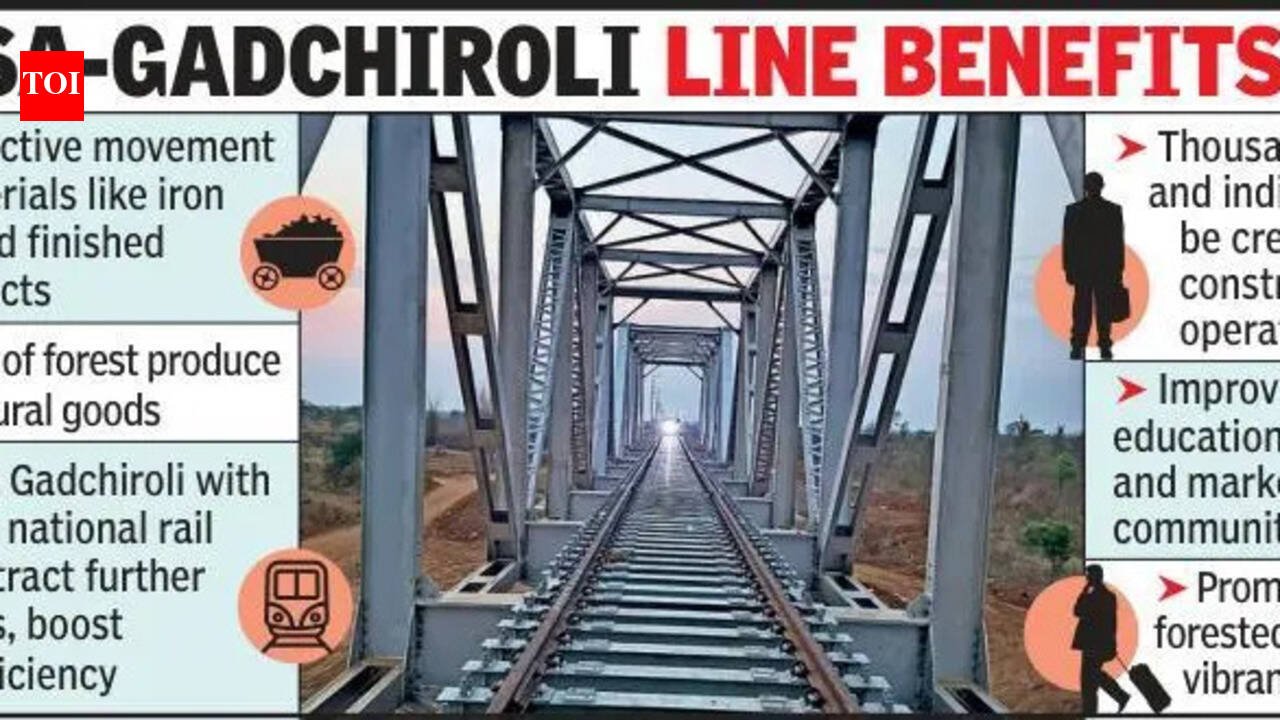
Nagpur: Gadchiroli, once the epicentre of Maoism in Maharashtra, is now on the cusp of transformation with several infrastructure and developments works taking place. In the latest, South East Central Railway (SECR) is poised to commission the initial 20km stretch between Wadsa (Desaiganj) and Armori of the Wadsa-Gadchiroli broad gauge line by the end of April or mid-May this year. The Wadsa-Armori section will drastically cut travel time from nearly an hour by road to about 30 minutes by rail, providing safer and more reliable connectivity. “Work has been completed on section, but railways first need clearance from our safety commission and complete other formalities before commissioning the line,” said divisional railway manager, Nagpur division, SECR, Deepak Kumar Gupta.Sustained security operations, record surrenders, including by senior leaders like Bhupathi in Oct 2025 and 123 hardened Maoists since early 2025, have virtually ended the decades-old Maoist influence. With steel industry making massive investments in the district, the long-awaited Wadsa (Desaiganj)-Gadchiroli broad gauge line approximately 52-56 km long has become more critical than ever, said a railway official.SECR officials confirmed that work on the remaining stretch (Armori to Gadchiroli) is progressing, with full commissioning targeted early next year to align with the steel projects’ timelines.The project, implemented on a 50:50 cost-sharing basis between the Centre and state govt, has seen its cost escalate due to forest clearances, wildlife mitigation measures, and terrain challenges. Land acquisition of around 220 hectares was completed, and work has since picked momentum.The railway line will enable cost-effective movement of raw materials like iron ore, coal, and finished steel products, while also supporting the transport of forest produce and agricultural goods. It will integrate Gadchiroli with the broader national rail network, attract further investments, boost logistics efficiency, and create thousands of direct and indirect jobs during construction and operations, said officials.The railway line will also significantly improve access to education, healthcare, and markets for tribal communities, promote tourism in the district’s forested and culturally vibrant areas, and reinforce the peace-building process by bringing the region in to the mainstream.
