


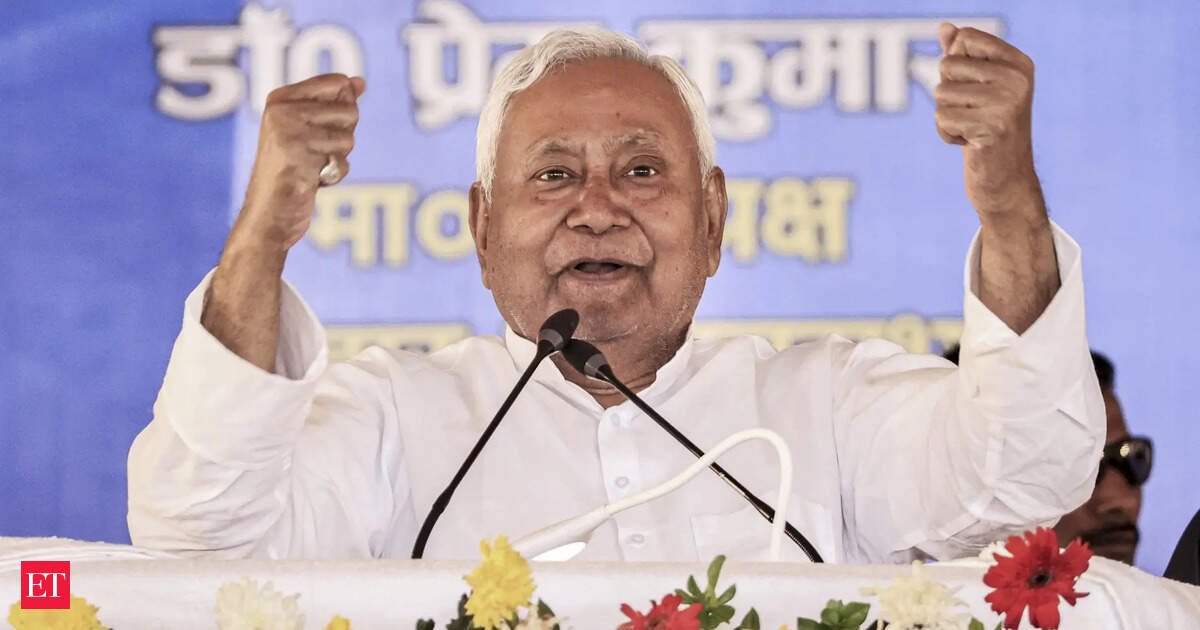
On March 16, Janata Dal (United) supremo Nitish Kumar was elected to the Rajya Sabha with the backing of 44 MLAs. As per constitutional rules, no person can remain a member of two Houses after 14 days of election.
Also read: ‘Main dariya hoon, waqt aane par sailaab banunga’: Raghav Chadha says he is silenced, not defeated in a message to ‘aam aadmi’
MLC Sanjay Gandhi submitted Kumar’s Member of the Legislative Council (MLC) resignation letter before Bihar Legislative Council Chairman Awadhesh Narain Singh.
NDA sources told ET earlier that the process for the new government formation will start once Kumar steps down as CM. The NDA leaders will hold a meeting to discuss the Cabinet formula among themselves. ET had reported earlier that the next CM will be from BJP.
The biennial polls were held for five Rajya Sabha seats in the state, the tenures of which will end on April 9.
Nitish Kumar’s move to the Rajya Sabha signals a pivotal moment in a political career spanning several decades—from his beginnings as an MLA in the 1980s to becoming Bihar’s longest-serving chief minister, with ten terms since 2005. He has also held office as a Union minister in the government led by Atal Bihari Vajpayee.
Even as he transitions to a parliamentary role, Nitish Kumar is expected to retain considerable influence over the state’s political landscape. Leaders within the National Democratic Alliance have already suggested that any future government would continue to rely on his guidance.
For now, the final decision is likely to rest with the central leadership of the Bharatiya Janata Party. As Bihar closely watches developments, the choice of the next chief minister will not only shape the government’s immediate trajectory but could also redefine the state’s political dynamics ahead of key elections.
