


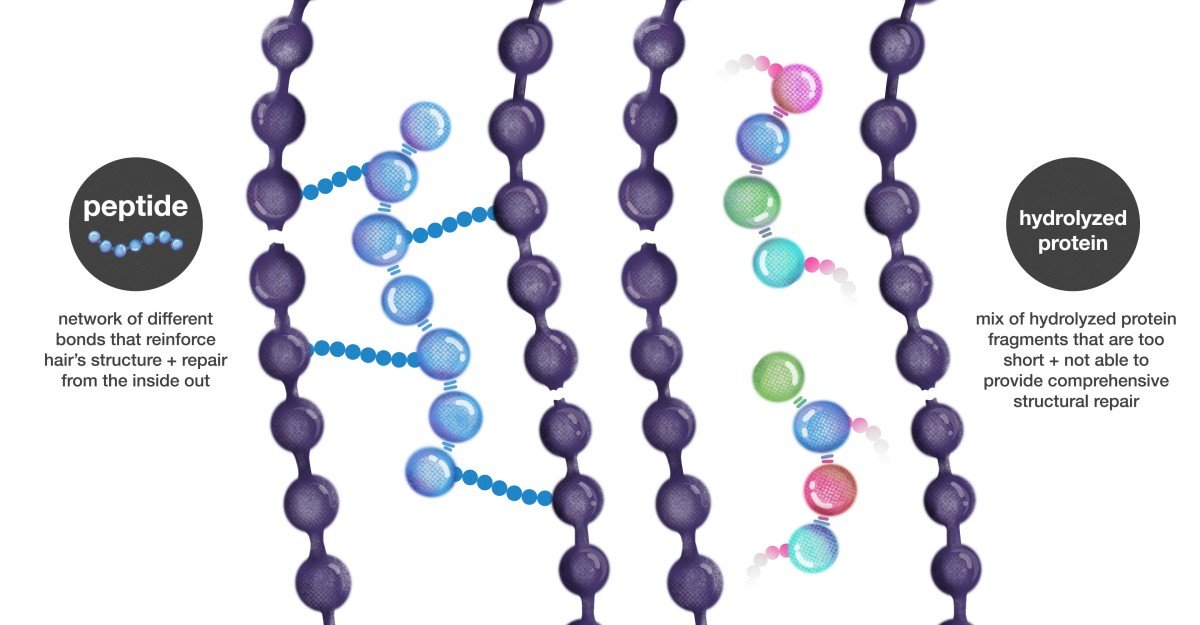
For hair-care brand K18, everything starts and ends with the K18Peptide. “The peptide isn’t a marketing story; it’s the product architecture,” Rita El-Khouri, PhD, senior vice president of research and innovations at K18, explains. Per the brand, the ingredient — born from decades of research and testing — repairs the hair’s structure from within at a “molecular level,” unlike traditional conditioning agents that simply coat the hair to smooth its surface. “Every formula is designed to support or extend the benefits of molecular repair. That creates a fundamentally different approach compared to brands that rely on cosmetic ingredients or surface-level conditioning,” explains El-Khouri.
But what stops other companies from simply copy-and-pasting that very successful technology for their own gain? Proprietary status.
A proprietary ingredient is simply an ingredient that is exclusive to a brand, cosmetic chemist Kelly Dobos tells Fashionista. It can be a specific, new-to-market molecule, a unique blend of existing ingredients or a novel way of processing an existing ingredient that can enhance its performance (perhaps through innovative delivery systems or stabilization). In K18’s case, it’s that all-powerful peptide.
Photo: Courtesy of K18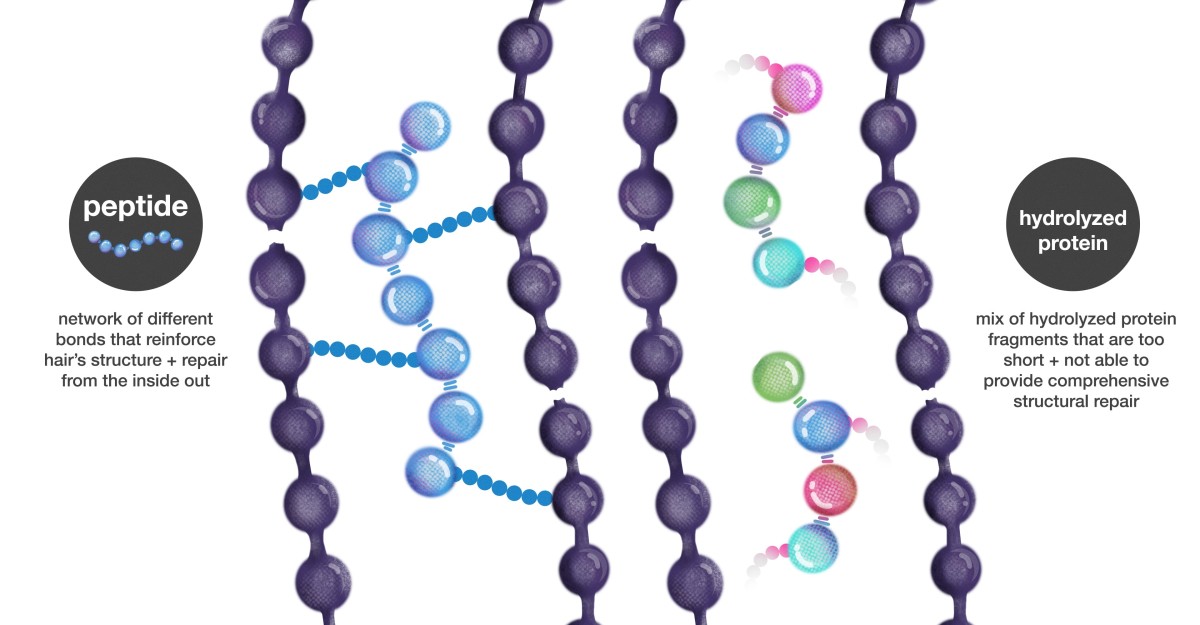
The term “proprietary” suggests something inherently different from other available ingredients; the company considers its composition or process a trade secret. In the ultra-competitive beauty market where differentiation can make or break a sales goal, that’s a big deal with a lot of potential to move the needle. It’s also yet another marketing tool in a brand’s arsenal that can be stamped on packaging, discussed on social media and in advertisements, used to lure in retailers and so on. But a brand can’t simply choose to call something proprietary.
Ahead, a closer look at the beauty industry’s much-hyped proprietary ingredient.
What makes an ingredient proprietary?
While beauty products are required to have an ingredient list by the Fair Packaging and Label Act, the list cannot be used to force a company to disclose any “trade secrets.” Capitalism! Companies can request “trade secret” status for a cosmetic ingredient from the U.S. Food and Drug Administration based primarily on two key elements: 1) the extent to which the ingredient is known, both within and outside the company, and 2) what has been done to protect that information.
Other relevant criteria may include how easily that ingredient can be identified or duplicated, the value of the ingredient to the company or its competitors and the effort and expenses involved in developing it. In other terms, a proprietary ingredient needs to be a true differentiating factor in its use; one that is not widely known, and one that is accompanied by a substantial amount of research and testing.
Beyond that, the FDA doesn’t define or regulate what a proprietary ingredient is, but “it does enforce rules about safety, proper ingredient labeling and truthful claims,” Dobos explains. “Even if a supplier keeps the composition of a blend confidential, every individual component still has to be listed on the ingredient label in descending order of predominance unless it’s part of a true fragrance or flavor mixture, which has specific labeling exemptions under U.S. regulations.” Indeed, fragrances rarely provide an ingredient list, for each particular blend is considered a trade secret.
Photo: Courtesy of Augustinus Bader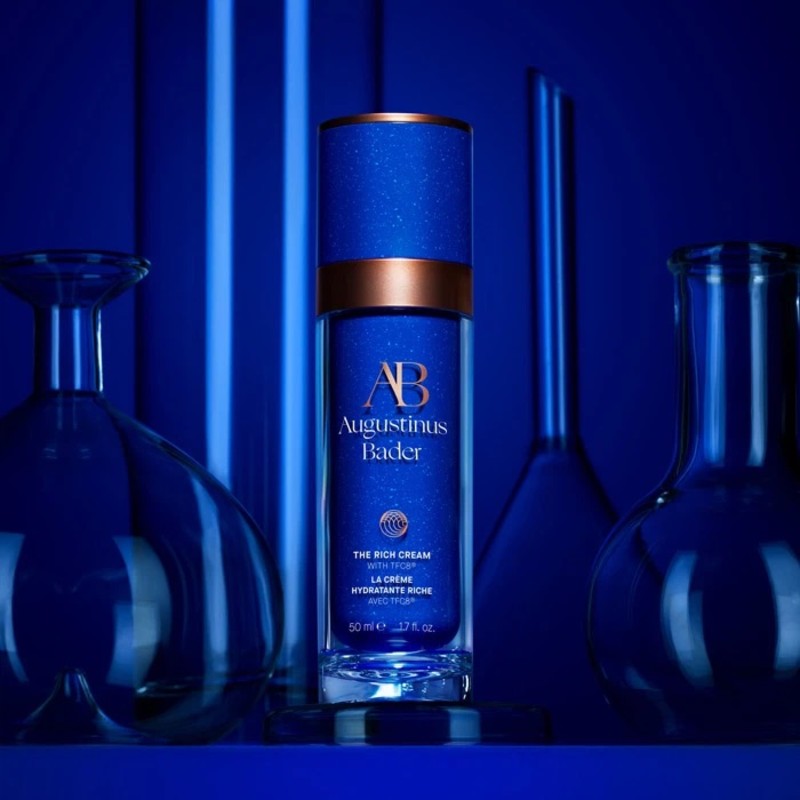
Many proprietary ingredients can also be patented. When an ingredient, molecule or delivery system is patented, its composition, testing and efficacy are considered public information; however, competitors are barred from using that ingredient (or molecule or delivery system) for a set amount of time, usually between 15 and 20 years, according to Dobos. This gives brands legal protection over their ingredient — to an extent: Say a company stumbles upon the right mixture of another company’s proprietary ingredient by chance; in those cases, it’s more difficult to prove intentions and legality. Per Dobos, a patented ingredient is often also a proprietary ingredient, but a proprietary ingredient is not necessarily a patented one.
Take Augustinus Bader’s TFC8®, Trigger Factor Complex TFC™, which is both patented and proprietary. The brand built its entire product range – and much of its marketing — on it. “What sets the brand apart is that its proprietary technology is not simply an ingredient,” explains Aimee Nottingham, director of foundation and R&D innovation for Augustinus Bader. “It is the result of decades of Professor Augustinus Bader’s research in regenerative medicine and stem cell biology. TFC8® emerged from Professor Bader’s clinical work studying how the body naturally repairs and renews itself. That scientific breakthrough became the foundation of the company, not an add-on to it.”
What is the benefit of a proprietary ingredient?
There’s more than trade secrets and exclusivity on the line. “Proprietary ingredients are attractive to brands because they help create differentiation and storytelling,” explains Victoria Fu, one half of the cosmetic-chemist duo behind Chemist Confessions. “They can also be used to justify premium pricing and build brand identity.” And there are many brands that do just that, using a proprietary ingredient as the through-line across offerings, an anchor tenant that customers come to recognize as synonymous with the brand.
According to Tyler Williams, the U.S. managing director at PR agency 1Milk2Sugars who specializes in beauty, a proprietary ingredient can act as a “shortcut” to the brand story. “Executed properly, it gives your brand something clear, ownable and repeatable that differentiates it in an oversaturated market,” he says. “It doesn’t actually need to be groundbreaking to work. What matters is that it’s easy to understand, easy to communicate and clearly tied to the brand’s promise and results.”
From a practical point of view, proprietary ingredients can also streamline formulation — per Dobos, many of these blends are designed to be easy to use, stable and multifunctional, so a cosmetic chemist can achieve a certain level of performance with less trial and error. All this helps a brand’s bottom line.
“Consumers also love the idea of a signature complex or a technology that feels exclusive,” Dobos says. “I’ve sat in on numerous focus groups and reviewed data that supports this.”
Photo: Dario Pignatelli/Bloomberg via Getty Images
Can shoppers distinguish between a truly novel proprietary ingredient and an unremarkable one?
“The average consumer cannot tell the difference between true innovation and a blend of already used ingredients rebranded as a complex,” says William. That is, unless they’re educated by someone with more expertise. “Where a brand with a weak ‘proprietary’ stance may falter is with third-party credibility; we’ve seen media question the validity of well-known brands and the claims behind their proprietary ingredients, and TikTok dermatologists and cosmetic chemists are becoming more vocal about misleading marketing.”
While customers might not be able to understand the chemistry behind a formula and a proprietary ingredient, they can tell the difference in performance. “Ultimately, consumers may come in for the story, but they stay for the results,” U Beauty Co-Founder and CMO Katie Borghese says. “And sustained results are what distinguish real innovation from repackaged familiarity.”
