


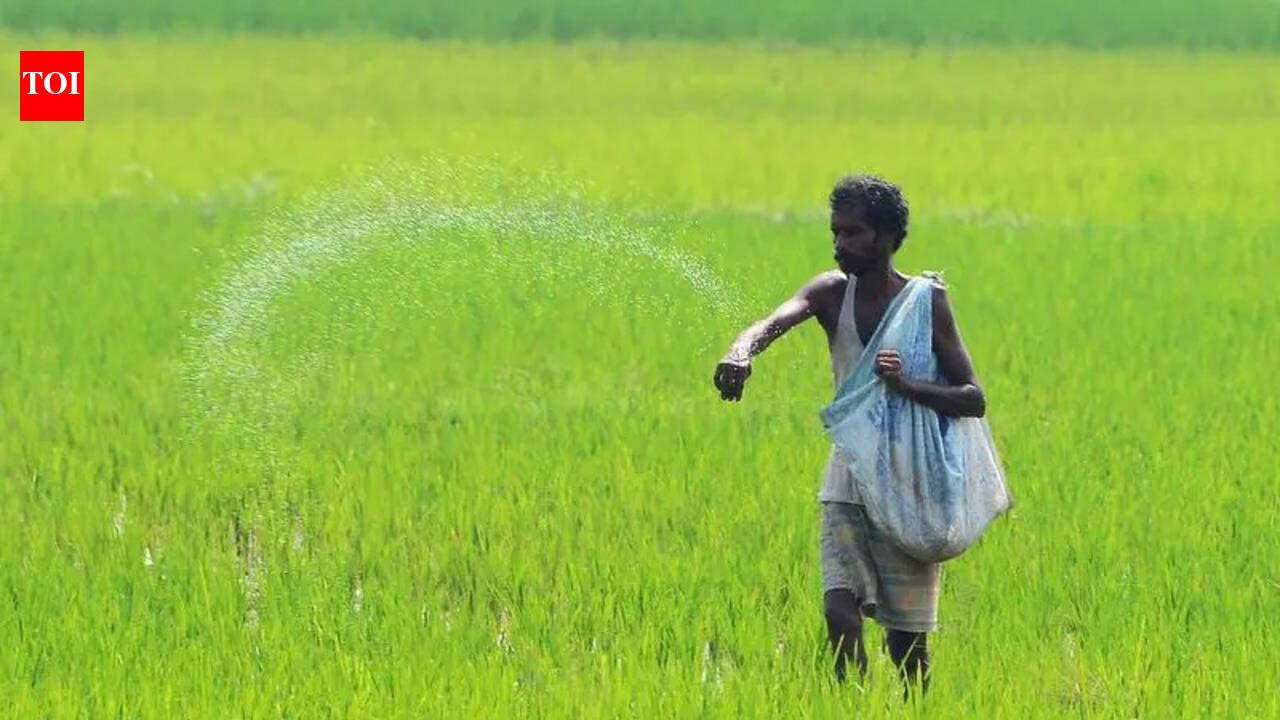
Amit Mohan PrasadThe ongoing Iran war and the subsequent difficulty of transportation through the Strait of Hormuz has created a difficult situation for India. It has affected LPG supply and in the near future it is going to have an adverse impact on the supply of urea too. India imports 20-30% of its requirement of urea and a large of it travels through the Strait of Hormuz. The urea domestically produced depends heavily on natural gas for production as a critical raw material, which is largely imported and has got impacted because of the Gulf war. The exporting countries are also feeling constrained and hence the supply is reducing and consequently the price is going up. It is expected that India will require about 390 lakh MT urea for the kharif season of 2026. Though India has maintained a good buffer stock, we are likely to feel the pinch in the kharif season.Urea is the most important fertilizer for farmers, especially in the rice-wheat belt. Reason: our soil which is deficient in nitrogen to a large extent whereas the availability of phosphorus and potassium in the soil is better. Rice-wheat system of farming is heavily dependent on nitrogen for growth and productivity; hence urea is extensively used by the farmers of UP, Punjab, Haryana, Bihar. Urea is heavily subsidized by Indian government and sells at Rs 267 per bag of 45kg whereas the cost of a bag would be in the range of Rs 2,200-2,300. This causes a severe strain on the exchequer but government bears it for the sake of welfare of farmers and the food security of the country.Because of heavy subsidy on urea, it gets overused by the farmers. During the cultivation of paddy, farmers apply urea three times. As it is difficult to store the remaining urea after opening of bag, farmer uses one full bag every time for an acre of paddy field whereas the recommended dose is only 2.5 bags distributed over three applications. The use of DAP and MoP has reduced considerably due to higher price of these fertilizers. Some of the excess urea used by farmers gets converted to Nitrous Oxide and contributes to climate change and some leaches into earth and pollutes water. Unnecessary higher usage also results in higher cost of cultivation for the farmers. In this worrying scenario what are the options for the country in general and Uttar Pradesh in particular in view of the impending crisis?First, farmers must be told to use urea only as per the scientific recommendation. Second, the use of nano urea must be encouraged aggressively as it is domestically manufactured and is not much dependent on imported raw material. Government must incentivize the private sector to start the production of nano urea. Currently, there is no subsidy on nano urea; the government must introduce it immediately for the farmers to start using it extensively. Third, the agriculture department must convey the correct method of usage of a combination of urea and nano urea through its extension efforts. Fourth, farm yard manure must be used extensively at the rate of 7 quintals per acre per crop. It should be possible to get this much FYM every season with just one cow or buffalo. Finally, we must utilize the current window for sowing legumes like moong, urd during the summer (Zaid) season. Legumes fix nitrogen from atmosphere into the soil and reduce the requirement of urea for the kharif paddy. This has to be done on urgent basis and government must act on these measures immediately.(Writer is a former IAS officer and currently principal consultant with PPG Advisory LLP. He leads the Climate Smart Agriculture project FARMER in UP)
