


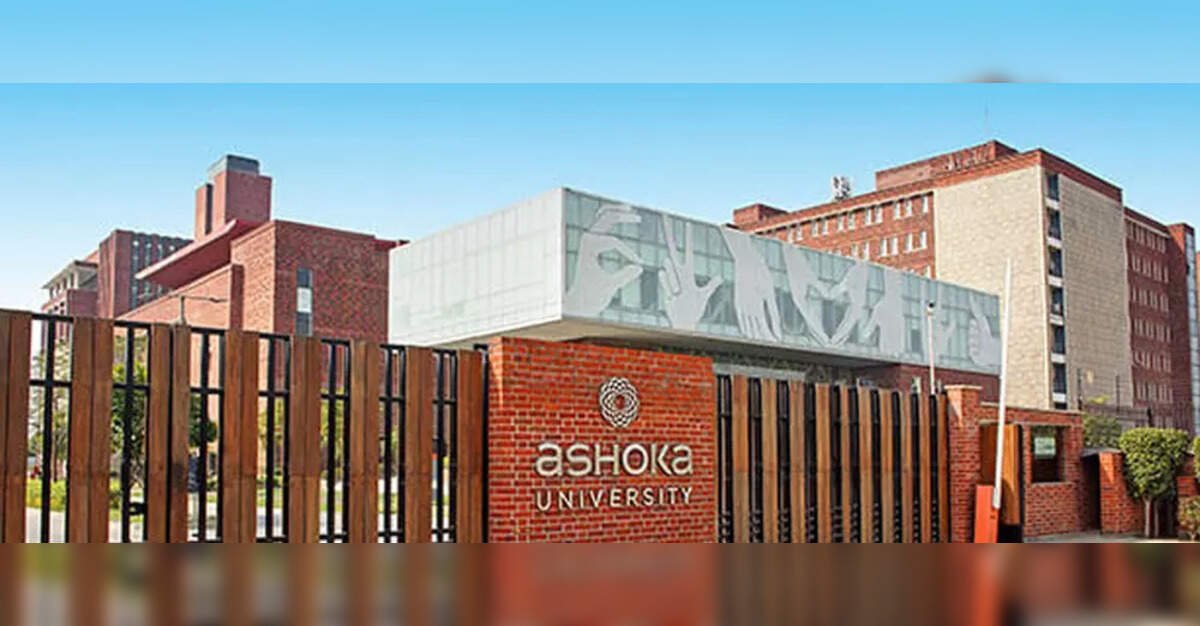
Tightening visa norms in key study-abroad destinations such as Canada and the UK are beginning to influence student mobility trends, with institutions like Ashoka University and FLAME University reporting an uptick in applications from students who were earlier planning to pursue higher education overseas.
For years, studying abroad was the default aspiration for many Indian students—an equation that is now beginning to shift.
India has seen a sharp rise in outbound students in recent years, with government data showing over 7.5 lakh students going abroad in 2022, rising further to over 8.5–9 lakh in 2023. However, early estimates from industry stakeholders suggest this growth has shown signs of moderation in 2024–25, particularly for destinations such as Canada and the UK, amid tightening visa regimes and rising costs. Canada alone accounted for over 2 lakh Indian students annually in recent years, making it one of the most sensitive markets to recent policy changes.
The shift, while still emerging, points to a gradual recalibration among students and parents, who are increasingly weighing cost, certainty, and long-term outcomes alongside global exposure.
At Ashoka University, the trend is visible not just in application volumes but also in the profile and intent of applicants.
“Ashoka University is witnessing a discernible uptick in applications from students who were previously considering undergraduate and postgraduate opportunities abroad, including an increasing number from international schools,” said Prof Somak Raychaudhury, Vice Chancellor of Ashoka University.
He added that a “small but significant cohort” of students holding offers from well-regarded global institutions are now choosing Ashoka, signalling a gradual yet meaningful shift in perception around the quality and rigour of higher education in India.
The university also noted a strengthening in the overall applicant pool, with students demonstrating strong academic credentials along with well-rounded extracurricular and global exposure profiles.
From aspiration to evaluation
While global education continues to hold strong aspirational value, institutions say the decision-making framework is evolving.
Recent policy changes in key destinations have introduced new layers of uncertainty. Canada has tightened study permit norms and introduced caps, while the UK has restricted dependent visas for most student categories. According to overseas education consultants, these changes have led to greater hesitation among applicants and delays in decision-making.
Advisors also point to a behavioural shift, with more students now applying simultaneously to Indian universities—something that was far less common earlier.
At FLAME University, the shift is visible across both metro and non-metro segments—but in different ways. “Among metro students, the change is more strategic than reactive. They are seeking globally benchmarked education closer to home,” said Pro-Vice Chancellor, Prof M A Venkataramanan.
In contrast, students from tier-2 and tier-3 cities are responding more directly to tightening visa regimes and rising costs, increasingly gravitating toward Indian institutions offering predictability and strong career pathways.
Cost, certainty driving decisions
Institutions say recent developments—including visa tightening, shifting immigration policies, and economic uncertainties—have pushed families to reassess the return on investment (ROI) of studying abroad.
“The conversation has shifted from ‘Where is the most prestigious place to study?’ to ‘Where will I receive the best overall value and a reliable pathway to future opportunities?’” Prof Venkataramanan said.
This has led to growing interest in Indian private universities that offer:
- Globally relevant curricula
- International exposure through exchanges and collaborations
- Strong industry integration
A short-term blip or structural shift?
While visa-related disruptions may have triggered the immediate shift, institutions believe the trend could have longer-term implications.
“While short-term external factors such as visa uncertainties may have influenced immediate decision-making, the broader trend indicates a more sustained shift in how students and families are evaluating higher education options within India,” Prof Raychaudhury said.
Experts, however, caution that it may be too early to call this a full structural reversal, noting that global mobility trends remain fluid and could stabilise over time.
An inflection point for private universities
For India’s private universities, the moment presents both an opportunity and a challenge. An expanded pool of globally-oriented students could raise academic standards and diversify classrooms, but it also brings heightened expectations around pedagogy, outcomes, and global relevance.
“This moment represents a significant inflection point… students are choosing Indian universities with heightened expectations,” Prof Venkataramanan said.
“The future will be shaped by institutions that can deliver globally relevant education while remaining locally grounded,” he added.
The road ahead
As India continues to strengthen its higher education ecosystem under policy reforms such as the National Education Policy (NEP) 2020, this emerging shift could play a role in retaining talent within the country.
While early signals from institutions point to a changing trend, the extent of this shift will become clearer over the next admission cycle, depending on how global visa regimes and international education markets evolve.
