


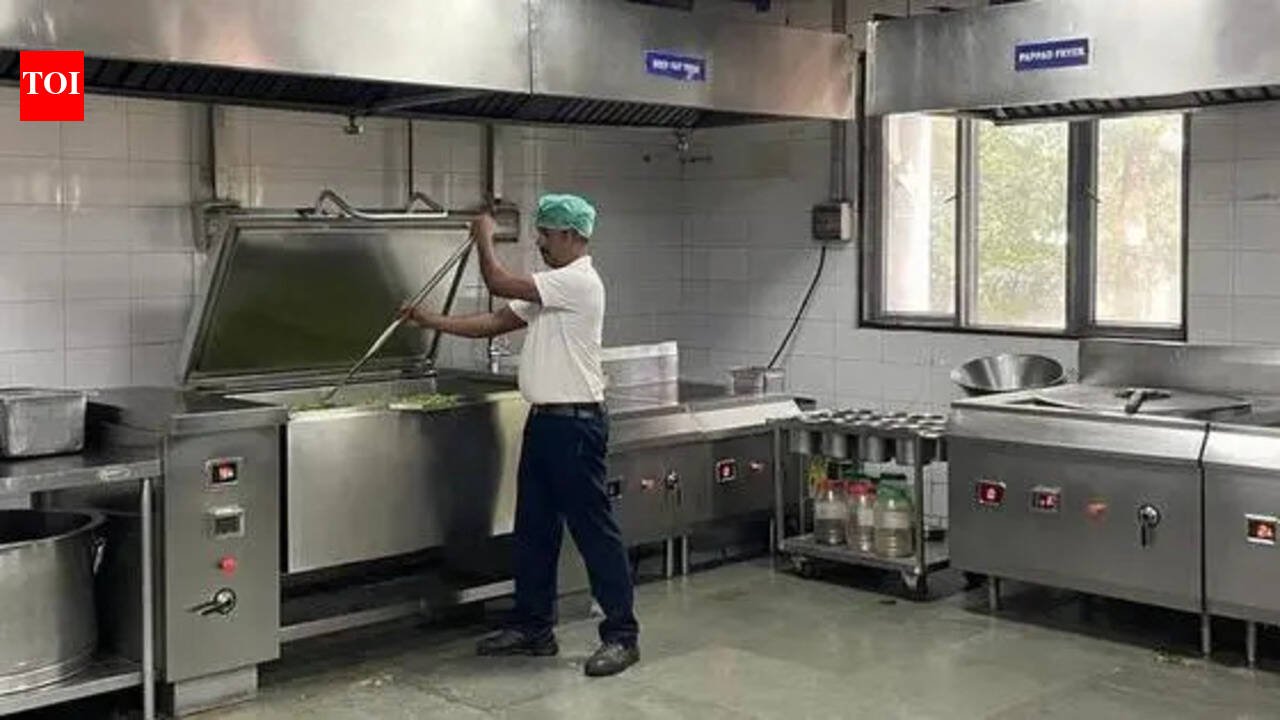
Chennai: In the bustling industrial corridors of Chennai, an unexpected shift has quietly delivered notable outcomes. What began as a scramble to cope with disrupted LPG supplies—an aftershock of the war in West Asia—has nudged manufacturers towards an unlikely frontier of decarbonisation: factory canteens. Several manufacturers that have turned to electric kitchens have not only ensured business continuity but also reduced their carbon footprint while aligning with renewable energy.From Oragadam to Sriperumbudur, several large factories have adopted electric kitchens in place of gas-fired systems, as canteen operations are a vital link. With LPG supplies erratic and prices volatile, electricity—especially when backed by captive solar or green power contracts—has provided a steadier alternative, ensuring uninterrupted operations while unlocking decarbonisation gains.Consider Danfoss India, which has fully electrified its campus kitchen. The facility now produces over 50,000 meals a month while eliminating 27 tonnes of LPG use and about 87 tonnes of annual carbon emissions. Cooking times have fallen by 40%, saving over 12,000 work hours a year. What might appear as a marginal tweak is turning into a productivity upgrade. Ravichandran Purushothaman, President, Danfoss India, said the shift would save about ₹2.5 million annually, alongside avoided infrastructure costs of ₹19.4 million.Such moves are not entirely reactive. Some firms were early adopters, embedding kitchen electrification into broader climate goals. ZF, a global auto-components maker targeting carbon neutrality by 2040, commissioned its Oragadam plant in 2021 with a fully electric kitchen now running on induction systems. The model has since spread to Ambattur, Mahindra World City and Jamshedpur, delivering about a 20% cut in operating costs alongside gains in safety and reliability. “By electrifying our canteens and powering them with green energy, we have improved reliability for our employees while significantly reducing our carbon footprint,” said Paramjit Singh Chadha, Managing Director, ZF Commercial Vehicle Control Systems India Ltd.Daimler India Commercial Vehicles (DICV), a leading manufacturer of trucks and buses, switched its Oragadam kitchen to renewable-powered induction systems in early 2025. “The shift has reduced our kitchen’s carbon footprint while strengthening operational resilience—we continue to serve 10,000 meals daily without interruption,” said Muthu C, President & Chief of Operations & Logistics at DICV.Purushothaman said electric kitchens are spatially efficient, dispensing with bulky cylinder storage, pipelines and ventilation systems. “In high-density industrial campuses where every square foot comes at a cost, that spatial efficiency becomes a strategic advantage,” he added.Companies say the timing of this transition has proved crucial. With LPG supplies tightening and prices turning volatile amid geopolitical uncertainties, electric kitchens have emerged as a reliable alternative. “This is not a pilot. This is a blueprint—ready to be replicated at scale,” Purushothaman said.
