


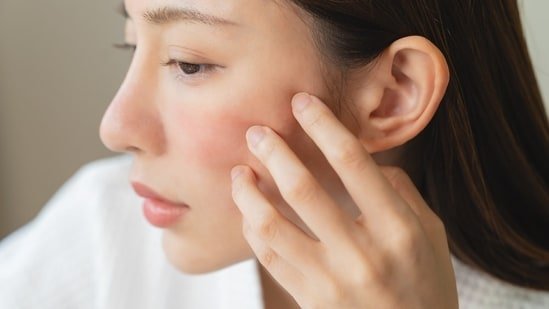
Dehydration is one of the common worries during the summer season. Under the blazing sun, excessive sweating can quickly and easily leave you feeling dizzy and parched. However, its impact is not limited to your internal system, as externally it is visible. Your skin barrier takes a major hit. It puts hydration into a more nuanced perspective, helping to protect you inside out.
And to further zoom in on the concept of dehydration, it is a much broader condition than you realise. The loss of fluid in your body has multiple manifestations, and since dehydration is common in summer, it is important to recognise it early.
Skin is one of the many concern areas, but some signs may also overlap with everyday skin-related problems, making it critical to pause and take a closer look.
You may be adding new skincare products or tweaking the sequence or swapping with more UV-based products, unless you are well hydrated, all your skin protective barriers this summer will fall flat.
HT Lifestyle connected with Dr Nirupama Parwanda, dermatologist and founder of Zolie Skin, who shared how there’s a type of water loss called ‘transepidermal water loss’ because of dehydration in summer.
What does this mean? She explained, “During the summer season, extreme temperatures, sweat and prolonged exposure to sunlight may increase transepidermal water loss (TEWL), resulting in dehydrated skin.” When asked about the immediate effects of this water loss, she said that it directly impacts the skin barrier.
What about different skin types? Does dehydration affect people with oily skin type the same way it affects those with dry skin? After all, some skin types appear naturally greasy, while others are more prone to dryness.But in reality, no skin type is protected from dehydration based on its oil content.
“Contrary to skin type, where skin type is used in reference, dehydration is a transitional condition that may occur in all skin types, including oily and combination skin,” she elaborated.
What does this mean? It suggests that even if your skin feels oily, it may still lack water. Dr Parwanda emphasised it is important to recognise the distinction.
Signs of dehydrated skin
Now that you are aware of how dehydration works against your skin, let’s figure out how to identify dehydrated skin.
Here are some of the signs the dermatologist listed:
- Tightness after cleaning.
- Tired-looking skin.
- Fine lines prominent especially around the eyes and mouth (because of lack of hydration in the stratum corneum.)
- Increased sensitivity because of barrier impairment.
- Skin becomes more itchy and reactive.
- Redness and stinging sensation when using skincare products.
- Irregular, uneven skin texture.
The dermatologist mentioned that under-eye shadow can be another indicator, though not a definite one. She again circled back to oiliness, as mentioned earlier, asserting that dehydration can occur irrespective of skin type.
Just because the skin does not feel dry, but instead feels greasy, due to oily skin, does not mean it is not dehydrated.
In fact, the dermatologist revealed an interesting association: “Dehydration may also manifest itself in the form of oiliness.” Those with dry skin may also experience clogged pores, congestion and breakouts. It shows the oil content of skin does not play an important role in matters of dehydration.
Summer can pull your skin’s health in all directions, stretching it thin, because, according to the dermatologist, apart from dehydration, the skin is also vulnerable to UV damage, pollution, and inflammation.
How to manage dehydrated skin?
Dr Parwanda listed these easy measures to manage dull, dehydrated skin, suggesting both internal and topical support are needed to keep skin hydrated:
- Ensure you get adequate fluid intake, water and rich foods.
- Can apply humectants like hyaluronic acid and glycerin.
- To fix the barrier, go for ingredients like ceramides, panthenol and niacinamide.
- To avoid further barrier damage, choose gentle cleansers.
- Apply broad-spectrum sunscreen to prevent UV-induced water loss.
6. Avoid over-exfoliation as it spikes more water loss from skin.
Note to readers: This article is for informational purposes only and not a substitute for professional medical advice. Always seek the advice of your doctor with any questions about a medical condition.
