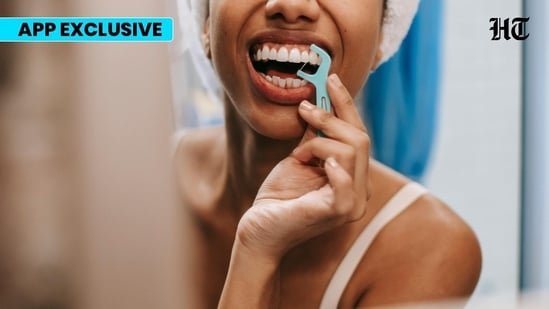
Most of us stick to brushing twice a day and assume that’s enough to keep our teeth healthy – but oral hygiene doesn’t stop there. Flossing is often overlooked, yet it plays a crucial role in removing plaque and food particles from between the teeth – areas your toothbrush simply can’t reach. Skipping this step can allow bacteria to build up over time, leading to cavities, gum issues, and costly dental treatments. Adding flossing to your daily routine is a small habit that can go a long way in protecting your oral health – and your wallet.
Read more to find out the correct way to floss. (Pexel)
Dr Tanya Rachan, a dentist specialising in oral health and wellness, is highlighting why flossing every single day is essential – and how to do it correctly. In an Instagram video shared on March 25, she walks viewers through the proper flossing technique, the type of floss to use, and key oral hygiene tips for maintaining healthy teeth and gums.
Is it necessary to floss every day?
According to Dr Rachan, one of the most frequently asked questions in her dental practice is whether daily flossing is truly necessary – and if it can be replaced by water flossing. She explains that while water flossers can be a useful addition to your oral care routine, they are not a substitute for traditional string flossing. Making flossing a non-negotiable daily habit is essential, as it plays a crucial role in preventing a range of dental issues.
She highlights, “Water flossing is a wonderful adjunct and addition to flossing, but it does not replace string flossing. Yes, you need to floss every single day. Just once a day. Really not that hard. Just add it to your routine. I am just very passionate about this and you could avoid so many dental issues if you just floss every single night.”
How to floss correctly?
Dr Rachan recommends starting with a long piece of floss – ideally an expandable variety, like the one she uses, which is also coated with xylitol to help fight cavities. Using a longer strand is important, as it allows you to switch to a fresh, clean section of floss between each tooth, ensuring better hygiene and more effective plaque removal.
The dentist explains the instructions as follows: “What I like to do is, I like to grab it between my middle finger and thumb at the end of my finger, and I wind it all the way till I get to the other side. Now, once I get to the other side, I just do it once or twice so that I can hold this taut. This is now my working section. So, when you’re flossing on top, you have to flick your wrist upside down, and you’re going to use your fingers to help guide it in between your back molars.”
Oral hygiene tips
Dr Rachan emphasises that flossing should be a non-negotiable part of your oral care routine, as brushing alone simply isn’t enough to remove plaque from between the teeth. She recommends flossing once a day – at night, after your last meal – to effectively clear out trapped food and bacteria before bed.
The dentist explains, “Floss every night before bed. I’m not telling you to floss three times a day; I’m just telling you to floss after you’re done eating for the day, and then you’re not going to eat after you have flossed.”
Dr Rachan also recommends waiting at least 30 minutes after eating before you brush or floss. This is particularly important for brushing, as the mouth becomes more acidic right after a meal – part of the initial digestive process. Brushing too soon can wear down enamel in this softened state, so it’s best to wait until your saliva has had time to neutralise the acids before beginning your oral care routine.
She explains, “Wait 30 minutes after eating to brush and floss, especially brushing, because your mouth is already starting the digestion process and your acidity levels are higher after eating. You don’t want to brush and move the acids and scrub it into your enamel. You want your saliva to do its thing and then brush 30 minutes after eating.”
Note to readers: This article is for informational purposes only and not a substitute for professional medical advice. It is based on user-generated content from social media. HT.com has not independently verified the claims and does not endorse them.