


The Australian government will take on the financial risk of additional imports of essential products affected by the war in the Middle East, to get extra supplies of petrol, diesel and fertiliser into the country.
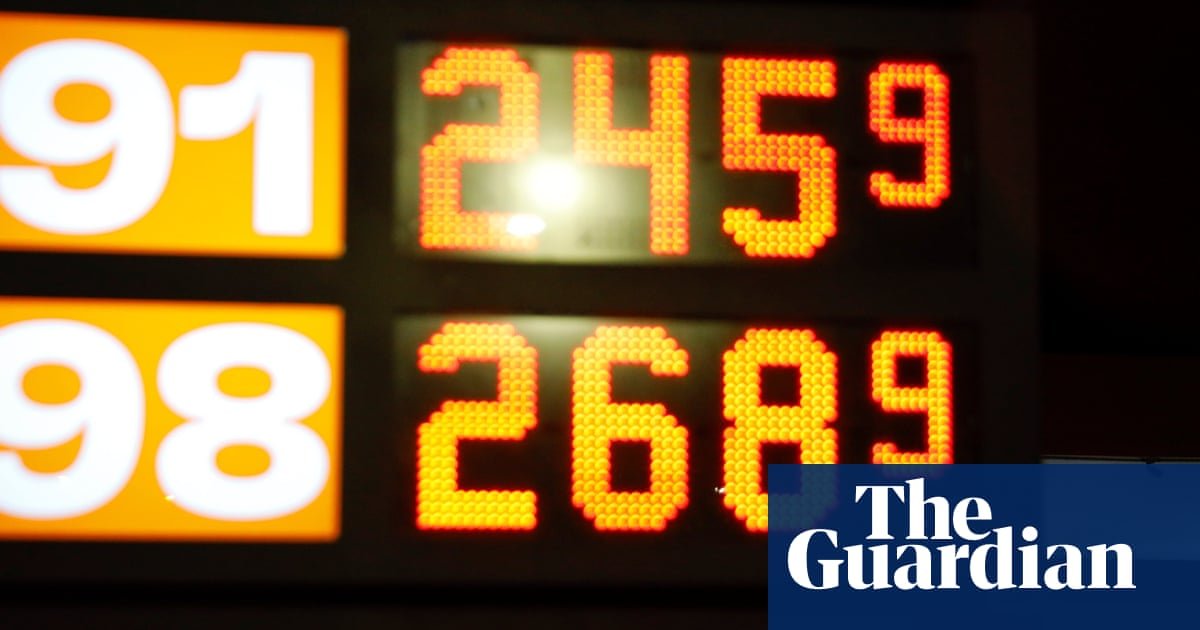
The prime minister, Anthony Albanese, announced the new fuel security powers on Saturday after a month of soaring diesel and petrol prices and widespread shortages at service stations, particularly in regional Australia.
Labor will introduce amendments to Australia’s export finance laws on Monday that will allow the government to use public funds to underwrite the purchase of additional shiploads of fuel, fertiliser and “other essentials”.
“This support from the government will not be business as usual,” Albanese told a press conference in Sydney. “It has to be additional supplies that are available on the international market.”
The new measures aim to give private importers the confidence to secure extra supply by mitigating the financial risk.
The powers will only be used “to help acquire additional supply that is valuable for Australia’s fuel security and where it would be cost prohibitive for private suppliers to source on commercial terms without government support,” the government said in a statement on Saturday.
Albanese said the nation’s fuel supply outlook remained secure in the near-term but the government wanted to be “over-prepared” in case the conflict was protracted.
He did not rule out enforcing working from home and fuel rationing if supply issues worsened but said his strong preference was for “voluntary arrangements” instead of “mandating from the top”.
The prime minister did however urge Australians not to engage in panic buying, saying photos he had seen published in the media of “multiple jerry cans being filled up” at a service station did not reflect “the Australian way” and that people should only take what they need.
“I’ve said we need to learn the lessons of [the pandemic] now. I don’t want things to be mandated,” he said.
“This isn’t toilet paper that’s been piled up in some garages. It’s actually fuel, and that’s not sensible on a range of levels.”
The energy minister, Chris Bowen, said that as of Saturday, Australia had slightly increased its petrol supply to 39 days’ worth or 1.6bn litres. Diesel levels remained “pretty flat” at 30 days or 2.7bn litres, and there was 30 days or 8m litres of jet fuel.
Of 81 fuel-carrying ships scheduled to arrive in April, six had been had cancelled, but “more than replaced by new orders”, Bowen said.
Bowen said the government’s decision to underwrite private companies purchasing additional fuel was intended to “help companies make the decision to buy” it.
Export Finance Australia, the government credit agency usually responsible for supporting the country’s export activities, would be able to provide fuel importers insurance, loans and other financial arrangements.
“The fact of the matter is, cargo internationally is available, but [it] is getting increasingly expensive and increasingly risky in a volatile environment,” Bowen said.
Earlier this month, Bowen cut fuel companies’ minimum stock holding obligations to about 700m litres of petrol and 2.2bn litres of diesel respectively, allowing them to release about 20% of their reserved supply into the domestic retail market.
Bowen, who promised the extra fuel would go to regional Australia, said on Saturday that there were already examples of that happening.
“We know that demand is particularly high in rural Australia, because agriculture is at a very busy time, and this supply is still not enough,” he said.
“But we are increasing supply and working in a very complicated supply chain to get the fuel to where it needs to go.”
The prime minister said the additional fuel secured with government assistance under the new powers could service “uncontracted demand” to assist independent distributors, who supply much of regional Australia.
Independent distributors – who do not have formal contracts with the major companies that import most of the country’s fuel – buy petrol and diesel on the wholesale market.
Since the Iran war broke out, independents have reported struggling to get enough fuel from the major companies, resulting in some service stations running low or even completely dry.
Just four companies – Viva Energy, which operates Shell in Australia, Mobil, BP, and Ampol – supply about 85% of Australia’s liquid fuels, according to the peak body that represents them, the Australian Institute of Petroleum.
