


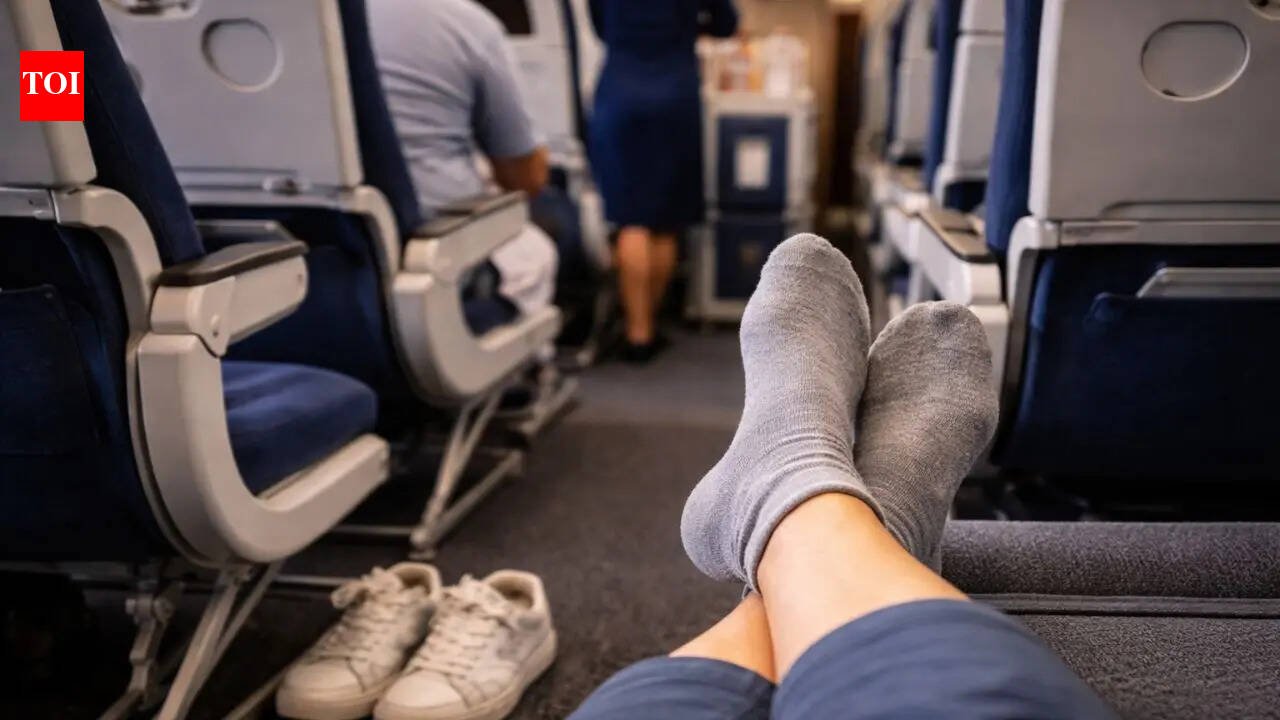
Air travel is a daily routine for many of us, but what we wear while flying could have a greater impact than we ever thought possible. Whether it is comfort or hygiene and safety, small decisions such as whether or not to wear socks while flying could have a larger impact than we ever thought possible. Many flight attendants have many such experiences and often advise passengers on what to wear while flying. One such piece of advice is that it is a bad idea to go barefoot while flying. Removing your shoes while flying may seem comfortable, but it could have many hidden dangers that we are unaware of. When we are flying in a plane, we are essentially in a shared space that is rarely cleaned between flights. Moreover, walking around while flying could have a larger impact than we ever thought possible when it comes to hygiene and safety.
Why wearing socks on a flight matters
It is also recommended by flight attendants for passengers to wear socks while on board a plane since it is not as clean as it may look. This is supported by studies such as The Airplane Cabin Microbiome research, which indicates that bacteria from human skin and the environment are present in aircraft cabins and may land anywhere on the plane.This implies that the floor of the plane, especially around the seating and walking areas, may contain bacteria from different people who have come into contact with it while walking barefoot. Wearing socks helps in preventing such contact with unclean areas of the plane while on board the aircraft.
Hygiene risks you may not realise
Hygiene is one of the major issues raised by the cabin crew. It is believed that the carpets and floors of aeroplanes are not cleaned as frequently as people think. Spills and dust can be present on these areas for long periods of time.If you walk barefoot, your feet can pick up these germs easily. It becomes dangerous if you end up touching your feet or putting them on the seats later on. Wearing socks can protect your feet at all times.
Comfort and circulation during long flights
Another significant reason for wearing socks is the aspect of comfort, especially during long-haul flights. This is due to the fact that you might be required to sit in one place for a long time, and this might have an impact on the flow of blood in your legs and feet.Wearing specialised socks for travel or compression socks might be beneficial in such a case. Research has proven that the wearing of compression socks during long flights can reduce the risk of developing circulatory-related conditions such as deep vein thrombosis (DVT), especially for flights whose duration is more than a few hours.Regular socks can also be of great importance in the sense that the flight environment is usually cold.
Safety concerns passengers often ignore
Wearing socks is also linked to safety. In conditions of low light, especially on flights at night, the darkness of the feet makes them hard to see. This makes the chances of hitting the service cart or a passenger in the aisle high.Also, in case of an emergency, wearing socks ensures some form of protection in case of rushing through the aisle. Bare feet might prove to be risky in such a case.
Why airlines include socks in travel kits
In many aeroplanes, socks are given as part of the kits, especially for long-haul flights. It is not simply a luxurious add-on; it is used for a purpose.The socks are designed to ensure the comfort of passengers and maintain hygiene while on board the aeroplane. This small piece of clothing is essential for a comfortable journey.
Should you wear special flight socks
While basic socks are useful, travellers also have the option of using special compression socks designed especially for flying. These socks apply gentle pressure to the legs, which helps blood circulation more efficiently and reduces swelling.These are especially useful for long flights or people with circulation problems. However, basic socks are sufficient to ensure hygiene and comfort.Flight attendants recommend it for a reason; it is a small step that can help you avoid unnecessary risks and travel more comfortably.
