


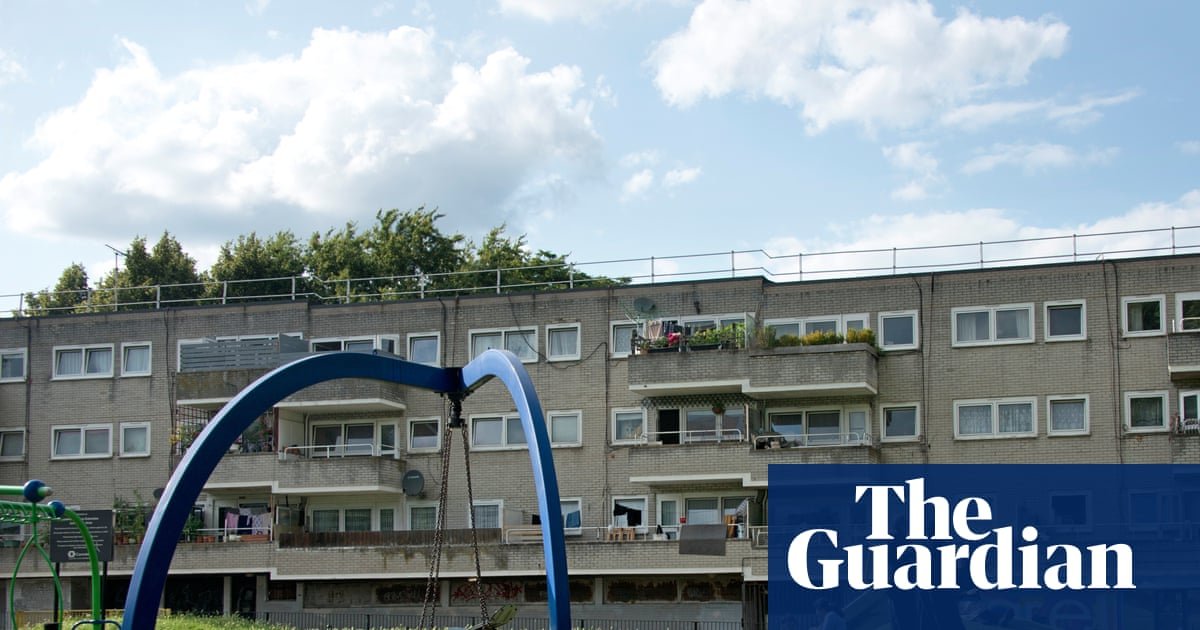
London has England’s highest levels of child poverty and most extreme concentrations of hardship, data has revealed. In two boroughs more than half of children live below the breadline.
In Britain, child poverty rates flatlined in 2024-25 compared with the previous year. About 4 million youngsters (27%) live in households earning less than 60% of the national median income after housing costs are taken into account.
The figures in effect set a benchmark for the government’s child poverty reduction strategy, which starts in earnest next month with the abolition of the two-child benefit limit. It aims to take 550,000 children out of poverty by 2029.
Pat McFadden, the work and pensions secretary, said rising household incomes and slight falls in food insecurity rates showed the government was “beginning to make a difference”, but he said there was more to do to turn the poverty tide.
An estimated 38% of children in London were in relative poverty, compared with 32% in north-west England and the West Midlands, and 30% in the north-east. The south-east had the lowest child poverty rate in England at 20.8%.
Experts said poverty levels in London were driven by its housing crisis. High rents resulted in the UK’s highest levels of material poverty – a measure of a family’s inability to afford basic essentials such as a warm home or fresh fruit.
At council level the highest child poverty rates in England were found in three inner-city boroughs in east London: Tower Hamlets, where the rate is 50.3%, Hackney (50.1%) and Newham (44.9%).
Measured by parliamentary constituency, child poverty rates were highest in Hackney North and Stoke Newington (60.2%), the inner London seat where Diane Abbott is the MP.
Outside the capital, the highest rates are in Birmingham, where 115,000 children (44.9%) live in poverty, Pendle in Lancashire (42.5%) and Manchester (42.3%).
Within the overall UK child poverty rate of 27%, Wales recorded 32% of 0-19 year olds in poverty, followed by England with 29%, Scotland (21%) and Northern Ireland (19%).
The latest poverty statistics, contained in the Households Below Average Income report, used a new method designed to record a more accurate picture of household incomes in the years since 2021-22.
Nearly three-quarters of children in poverty live in households where at least one adult works, 40% of all people living below the breadline are disabled and 2.8 million children are classed as living in “deep poverty”, in households with incomes of less than 40% of the poverty threshold.
Campaigners said the data showed millions of people on low incomes still struggled to afford basic items such as food and energy. The use of food banks was at near record levels and too many people continued to experience the trauma of poverty.
Peter Matejic, the chief analyst at the Joseph Rowntree Foundation, said: “The latest statistics show overall poverty rose slightly and there was little change in child poverty in the first year of the Labour government … The bottom line is that far too many families are still in poverty.”
As well as scrapping the two-child benefit limit, the government hopes its expansion of free school meals to all children in households in receipt of universal credit, coupled with increases in the national living wage, will help drive down poverty.
Sophie Livingstone, the chair of the End Child Poverty coalition, said: “Scrapping the two-child limit to benefits was a good start, but there is still work for the UK government to do … to give children the best start in life.”
