


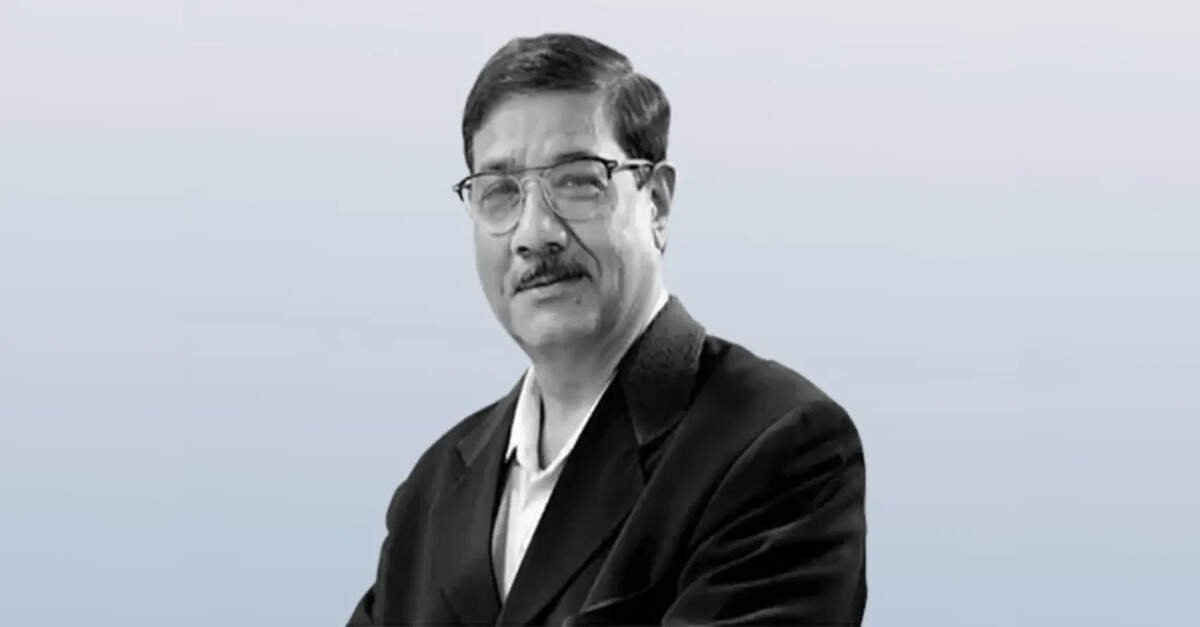
By Dr Sunil Rai
There is a question that deserves urgent attention: Is India serious about Viksit Bharat 2047?
If we are being completely honest with ourselves, most of our universities continue are producing graduates for a world that is disintegrating quickly. The occupations of 2026 and 2036 will not be the same. The majority of curricula are currently unable to keep up with the rapid evolution of the abilities that constitute employability.
Artificial intelligence is at the center of all this transformation, not as a subject that students must learn but rather as a framework that they must live in.
The difference is huge. On an AI-enabled campus, students can take one or two data science electives. An AI-first campus assumes that all students, regardless of discipline, must be prepared for a world in which AI is not simply an option, but a requirement. The stakes are much higher than the curriculum.
AI related data that matters
Of course, let me just give you some facts and figures on this issue. A startling 44% of worker’s primary skills are expected to be disrupted in the next five years, according to a 2023 World Economic Forum research. AI and big data capabilities are among the fastest growing across the globe. From the Indian perspective, according to a NASSCOM report, we will probably need more than a million AI specialists by 2026, but we are only creating a small portion of that number at the moment.
According to an EY (Ernst & Young) report, AI could boost India’s GDP by $1.2 trillion to $1.5 trillion by 2035. However, “AI dividend” depends on one thing: a talent pool capable of developing, monitoring, and overseeing these systems. We are not suffering from a skills gap, we are suffering from a structural mismatch between the students we are producing and the workers that the economy needs. This is the institutional capability gap, and it is growing. According to a 2023 study by Nasscom and BCG, less than 20% of tech graduates are employable in AI positions. Instead, we must produce “AI architects” who can quickly meet India’s anticipated need for one million experts by 2026.Outcomes for institutions from the India AI Impact Summit
However, partnership announcements may generate opportunity. Last month, policymakers, academics, and technology professionals engaged in conversations at the India AI Impact Summit. One notable outcome of the meeting was the introduction of Open AI agreements with Indian educational institutions for the ChatGPT Edu platform, which will expand AI access, research, and training. This highlights how leaders in AI innovation are making a bet on where the next AI creators and problem-solvers will emerge from. The question then is whether our institutions are set up to win that bet. It’s what institutions have in terms of capability that allows us to turn opportunity into outcome. And capability here means institutions that treat AI as core, rather than elective.
Sovereign capacity is built in universities
As we step further, our vision for India’s AI future should be one where Indian universities are creating original research, building domain-specific models in agriculture or health or legal systems or regional languages, and graduating students who are not simply users of AI but architects of it. This will demand a substantial investment in university-level research systems. Not just any research systems, but systems that actually support research and compute access; collaborations throughout the industry and Ph.D. programs with real purpose and a culture that values exploration and curiosity rather than merely filling out forms and ticking boxes.
While the National Education Policy 2020 outlines an ambitious vision for India’s education sector, intent is one thing and implementation is another. Research grants, faculty exchange programs, and public-private partnerships in AI research are not niceties. They are the foundation upon which a nation’s sovereignty in AI is built.
Practical roadmap for the transition
There needs to be an actual roadmap for the transition from AI-enabled to AI-first look like in terms of implementation? In my opinion, the transition requires simultaneous action in three areas.
First, we must prioritise faculty, the most neglected aspect of the transition. Without an AI-literate instructor, you cannot produce graduates who prioritise AI. To guarantee that instructors can effectively spearhead this shift, we require extensive professional development and hiring procedures centered on multidisciplinary AI-fluency in addition to fundamental training.
The second is research investment. A credible commitment to investing in research capabilities in AI needs to be made by the university, not just in computer science departments, but across the disciplines. The most fascinating AI problems in India are not theoretical; they have to do with health diagnostics, climate modeling, multilingual interfaces, and agricultural yield optimisation. To solve these problems, we need scholars who can work at the intersection of topic knowledge and processing capacity.
The third is policy alignment. The university leaders have to engage with the policy environment, with the IndiaAI Mission, with the state-level initiatives on digital infrastructure, and with the policies that are now beginning to emerge on AI. Higher education must drive policy rather than wait for it.
2047 is closer than it looks
We may have more than two decades before we reach 2047 but it may not be enough. The students who will run India’s institutions, industries, and government then are in our classrooms today—or will be in the next decade. What we teach them, how we teach them, and how we teach them to learn and adapt in an AI-saturated world will have an impact that far outlasts any ranking or accreditation cycle. To achieve Viksit Bharat 2047, institutions must make difficult, immediate decisions regarding faculty and research investment. It is not a government goal.
It is an institutional imperative that begins on campus.
Dr. Sunil Rai, Vice Chancellor of UPES, is an experienced academic leader with over four decades across academia, the Indian Navy, and the corporate sector. A former Vice Chancellor of MIT-ADT University and a Navy veteran, he is known for driving institutional transformation through governance reforms, faculty development, and accreditation-led growth. He holds a PhD from BITS Pilani and has been instrumental in advancing technology-enabled, people-centric higher education.
DISCLAIMER: The views expressed are solely of the author and ETEDUCATION does not necessarily subscribe to it. ETEDUCATION will not be responsible for any damage caused to any person or organisation directly or indirectly.
