


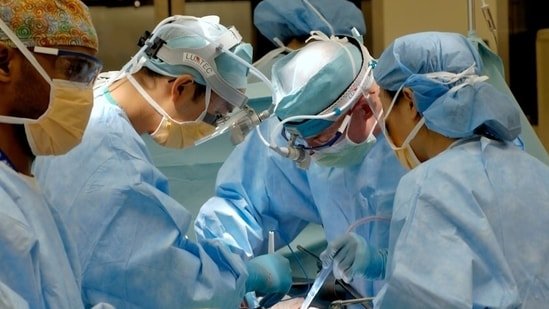
Inaya was barely two weeks old when a rare pancreatic condition threatened her life — and doctors raced to perform a world-first robotic surgery. Inaya was diagnosed with a rare endocrine condition called Congenital Hyperinsulinism (HI), where the pancreas produces too much insulin, causing dangerous drops in blood sugar.
Also read | A pulmonologist busts common myths around Tuberculosis: From infection risks to treatment facts
Persistent Hypoglycemia
Inaya was admitted to her birth hospital with repeated hypoglycemia attacks. Despite receiving the highest concentrations of intravenous glucose, her blood sugar continued to drop to critical levels. With her condition unstable, she was referred to Dr Kavitha Bhat, Consultant – Pediatric Endocrinology, Manipal Hospital Whitefield, for a second opinion.
“In newborns, the brain depends almost entirely on sugar for energy. Repeated low blood sugar can cause permanent damage affecting learning, movement, and development. This damage is often silent and irreversible,” explained Dr Bhat.
Genetic analysis report suggested focal congenital hyperinsulinism, a form potentially curable with surgery. An advanced 18F-DOPA PET/CT scan identified a tiny 0.5 cm lesion in Inaya’s pancreas — the size of a pea. The rest of her pancreas was healthy, meaning surgery could offer a complete cure without lifelong medication or insulin injections.
Open vs robotic surgery
In Inaya’s case two surgical options were considered: traditional open surgery or precision robotic surgery. Usually, in newborns, open surgery has a higher risk of removing excess pancreatic tissue, which could cause future diabetes and digestive issues. Given the precision required, the team opted for a robotic-assisted approach, one of the rarest procedures worldwide for babies this age.
A world-first procedure
The surgery was led by Dr Manjunath Haridas, Consultant – Colorectal, GI & Robotic Surgery, along with Dr Arvind Sabharwal, Consultant – Pediatric Surgery, supported by NICU, Pediatric Endocrinology, and Anesthesia teams. Using high-definition robotic optics, the team removed the 0.5 cm lesion with no blood loss, preserving the rest of the pancreas. Inaya’s blood sugar stabilized immediately, with no further glucose infusion needed.
“There are very few reports of robotic pancreatic surgery in infants, and none in a one-month-old child. This is the first reported case worldwide, showing what’s possible when technology, expertise, and teamwork come together for the smallest patients,” said Dr Haridas.
Recovery and hope
Inaya was closely monitored in the NICU for nine days. She was discharged with oral feeds and minimal medications, marking a successful outcome for a tiny fighter who faced life-threatening lows from the very start.
Note to readers: This article is for informational purposes only and not a substitute for professional medical advice. Always seek the advice of your doctor with any questions about a medical condition.
